


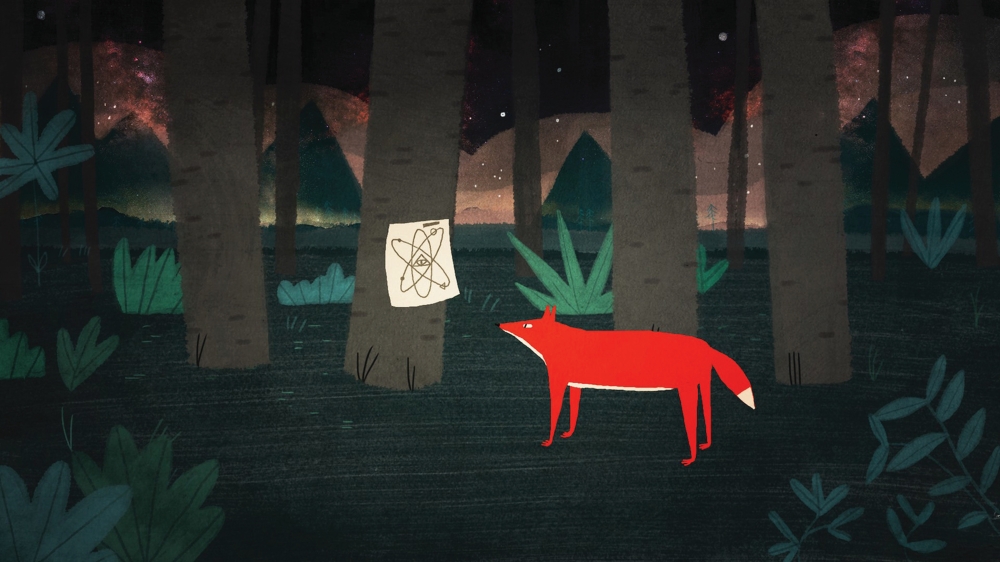


‘Hungarian animation is now experiencing a kind of golden age — with recent awards at top festivals like Ottawa, Cannes and Annecy, where the scene has truly made its mark. And it’s not just about short films.’
As Annecy Festival prepares to shine a spotlight on Hungarian animation, it’s the perfect moment to take a brief but vivid tour through a rich, resilient and often overlooked creative tradition.
It all begins in 1914 with István Kiszly Kató, widely regarded as the father of Hungarian animation. A graphic artist by trade and creator of weekly cartoon news bulletins, Kiszly ventured into film using cutouts — a method both inventive and practical. He produced a handful of short films, including Janos the Knight (1916) and Romeo and Juliet (1931).
In 1928, former painter Sándor Bortnyik opened a school for promotional art — a space that became a breeding ground for talent and experimentation. It was here that a young Gyula Macskássy met fellow graphic artist János Halász. In 1932, the two founded a studio that would go on to produce over 100 animated commercials, working across a wide range of techniques.

Opportunities Abroad
But ambition had limits in prewar Hungary. The political climate and limited artistic freedom led many creatives to seek opportunities abroad. Halász moved to England and rebranded himself as John Halas, co-founding the iconic Halas and Batchelor studio. György Marczincsák, another émigré, became George Pal, later famed for his pioneering stop-motion work in the United States.
In 1948, the nationalization of Hungary’s film industry marked a turning point. Animation was slow to benefit — the country produced only one or two films a year in the 1950s — but seeds were being planted. One such milestone was The Little Cock’s Diamond Halfpenny (1951), Hungary’s first color animation, directed by Macskássy and Edit Fekete.
Up until the mid-1950s, production was handled by Mafilm’s Newsreel and Documentary Studio. But change was brewing. In 1954, Mafilm was folded into the Hungarian Synchronization Co., and by 1959, a dedicated animation department had evolved into what would become the Pannonia Film Studio.

The New Wave
The 1960s ushered in a new era. Under the leadership of György Matolcsy, Pannonia Film broke away from its strictly child-focused roots. A new wave of Hungarian animators began tackling complex philosophical, intellectual and social themes — blending bold visual storytelling with sharp, often subversive, commentary.
Pannonia Film Studio stepped onto the world stage in 1960 with two standout works by Gyula Macskássy: Pencil and India Rubber and Duel. The latter — a powerful allegory featuring a Greek warrior locked in battle with a scientist — portrayed the eternal tension between war and peace. Duel earned the Jury’s Special Prize at Cannes. Just a year later, Tibor Csermák’s The Ball with White Dots captured the Golden Lion at the Venice Film Festival, further cementing Pannonia’s growing international reputation.
But the true breakthrough came with Passion (1961), directed by József Nepp. Using sharp caricature and a modern sensibility, the film broke away from Hungary’s folkloric tradition and dove headfirst into the psychological and social complexities of contemporary life.

During the 1960s, Pannonia dipped into the world of television. Perhaps the studio’s most beloved creation was Gustavus. Inspired by the tone and technique of Passion, this animated satire followed the bumbling exploits of a hapless but well-meaning everyman. His comedic stumbles resonated across borders, and by the 1970s, Gustavus had reached over 70 countries.
As the decade progressed, Pannonia leaned into artistic experimentation. György Kovásznai pushed animation into uncharted territory with Double Portrait, a film painted in oil where the faces of a man and woman continuously transform in a hypnotic dance of color and form. Sándor Reisenbüchler made his striking debut with Kidnapping of the Sun and the Moon, a vibrant collage inspired by Hungarian folk motifs and the poetry of Ferenc Juhász.

Absurdist Humor
A distinctly Hungarian blend of dark, absurdist humor ran through much of the studio’s work. Influenced by the satirical edge of Zagreb and Estonian animation, Pannonia artists wielded sarcasm as a tool for cultural critique. Their stories often reflected the contradictions of everyday life under socialism, exposing cracks with irony rather than outrage.
In 1968, a wave of economic reforms ended the era of rigid Stalinist planning, introducing a new model that gave businesses more autonomy — and more pressure. For Pannonia Film Studio, this meant adjusting to a dual mission: creating artistically ambitious work and making sure it could find a market.

Despite the added challenge, Pannonia thrived in the 1970s. In 1973, Pannonia made its leap into feature-length animation with Johnny Corncob, a vibrant, psychedelic adaptation of a Hungarian folk epic directed by Marcell Jankovics. It was bold, dazzling and a hit — enough so that the studio launched a dedicated feature animation division soon after.
Even as it embraced the mainstream, older animators continued probing ethical and philosophical themes, while a younger generation turned their focus to more contemporary, often urban realities. The result was a decade rich in experimentation. Two of the studio’s brightest gems from the era — Reisenbüchler’s The Year of 1812 (1973) and Jankovics’s Fight (1977) — both took home the Palme d’Or at Cannes, placing Hungarian animation among the elite.

Meanwhile, in Pécs, Csaba Varga took a bold step. He gathered a group of amateur filmmakers and, in 1974, founded the IXILON animation studio — later known simply as Varga Studio. IXILON quickly gained a reputation for its edgy graphic style and content geared toward adults, helping to decentralize Hungarian animation and inject it with fresh perspectives.
Among the many talents of this era, few cast a longer shadow than Marcell Jankovics. He debuted with The Legend of Saint Silvester in 1964 and moved effortlessly across genres and formats. Whether working on children’s programming, avant-garde shorts or lush feature films, Jankovics brought both precision and passion.

Through a Fly’s Eyes
Hungarian animation soared to new heights in the 1980s. Pannonia Film Studio was busier than ever, producing more films, more series and earning more international acclaim. The decade kicked off with a milestone: Ferenc Rófusz’s The Fly (1980), a short film unlike anything audiences had seen before. Told entirely from the point of view of a fly, it reimagined cinematic perspective in animation and earned Hungary its first Academy Award for Best Animated Short Film. Just months later, Béla Vajda’s Perpetual Motion, a surreal and darkly comic elevator odyssey, won the Palme d’Or at Cannes.
Meanwhile, Marcell Jankovics made the feature Son of the White Mare (1981), a hypnotic fusion of Hungarian folklore with Art Deco and Art Nouveau aesthetics. In 1984, it was named one of the 50 greatest animated films ever made by a panel in Los Angeles.

Clay, sand, collage, live action and even computer-aided motion all became tools of the trade. Csaba Varga used clay animation in The Luncheon (1980). Ferenc Cakó pioneered sand animation in Ab Ovo (1987) and later combined plasticine and coal powder in Ad Rem (1989). Gyula Nagy pushed boundaries in Wave of Fingers (1986), using — literally — live fingers as animated figures. Meanwhile, Jánvári’s Labyrinth (1989) showcased early computer-controlled animation, hinting at what was to come.
By 1988, state support was beginning to dry up, and Hungarian Television pulled back its funding for domestic series. At the same time, Pannonia’s monopoly was broken by the founding of Varga Studio — Hungary’s first private animation company — led by Csaba Varga and producer András Erkel.

American Cross-Pollination
One of Varga Studio’s first commissions came from Hungarian-born émigré Gábor Csupó, who was then producing a quirky new American show called The Simpsons. Until its demise in 2005, Varga Studio would emerge as Hungary’s most powerful animation force.
Things quieted down on the Hungarian animation front for a while, especially when it came to festivals, but that all changed with the emergence of a new generation of talent from the renowned animation program at MOME Anim — the animation department at Moholy-Nagy University of Art and Design in Budapest.
MOME Anim has become a hotbed for emerging animation talent, consistently churning out artists whose distinctive, graphically bold designs and surreal, absurdist narratives have made a huge splash on the international stage.

Notable MOME Anim graduates include Réka Bucsi, whose student film Symphony No. 42 was shortlisted for an Oscar in 2014 and whose follow-up, Solar Walk, earned the Grand Prize at the 2018 Ottawa International Animation Festival. Flóra Anna Buda’s 27 took home both the Palme d’Or and the Annecy Cristal in 2023. Other notable alumni include Tibor Bánóczki, Tomek Ducki, Luca Tóth, Nadja Andrasev, Viktória Traub and Balázs Turai, whose Amok won the Annecy Cristal for Best Short in 2022.
Whether it’s the strong teaching foundation, the high caliber of students or, more likely, a combination of both, these recent graduates have revitalized the Hungarian animation scene, leading to some of its most significant international successes. Among the key trends, female animators have come to the forefront, often exploring themes of identity, gender and sexuality in their work.

Hungarian animation is now experiencing a kind of golden age — with recent awards at top festivals like Ottawa, Cannes and Annecy, where the scene has truly made its mark. And it’s not just about short films. Recently, there’s been a growing body of acclaimed animated features addressing timely political and ecological issues. Notable examples include Áron Gauder’s Four Souls of Coyote, Tibor Bánóczki and Sarolta Szabó’s White Plastic Sky and László Csáki’s animated documentary Pelikan Blue.
This renewed global interest has brought long-overdue recognition to Hungary’s storied animation history, while affirming its place on the international stage. What began in the mid-20th century as a niche national industry has now evolved into a bold, boundary-pushing force.
Huge thanks to Anna Ida Orosz for her feedback, corrections and input.
Chris Robinson is the artistic director of the Ottawa Intl. Animation Festival and the author of many books on animation including Cheer and Loathing: Scattered Rambling on Indie Animation, Dreaming a Way of Life: The Films of Lewis Klahr and Raw Outrage: The Films of Phil Mulloy.