


![Anne Shirley [The Answer Studio / NHK / Crunchyroll]](https://dev.animationmagazine.net/wordpress/wp-content/uploads/Anne-Shirley1.webp "Anne Shirley1")


Lucy Maud Montgomery’s Anne of Green Gables books have enjoyed a special place in the hearts of Japanese audiences for almost 75 years. The first translation was published in 1952 as Akage no An, or Red-Haired Anne, and it became an immediate hit and remains popular there. The heroine of Sosuke Natsukawa’s recent novel The Cat Who Saved the Library is spurred into action when she discovers the library’s copy of Anne has vanished.
Anne Shirley is an orphan who’s sent by mistake from an asylum to Marilla and Matthew Cuthbert, a brother and sister who own a small farm on Prince Edward Island, Canada. They had planned to adopt a boy to help with the chores but decide to keep Anne, despite some misgivings. They quickly discover she’s a chatterbox with a vivid imagination. Anne describes her feelings in extravagant terms, gives romantic names to features of the local landscape, makes comic mistakes and excels in school.
![Anne Shirley [The Answer Studio / NHK / Crunchyroll]](https://www.dev.animationmagazine.net/wordpress/wp-content/uploads/Anne-Shirley-11.jpg)
A Force of Nature
As much of traditional Japanese culture focuses on the beauties of nature through the changing seasons, Anne’s love for the forests and streams of Canada resonates with Japanese readers. Many young Japanese women have also envied Anne’s freedom to speak her mind and make her own choices about life.
The novel has been filmed many times, beginning with a now-lost 1919 feature starring Mary Miles Minter. It’s also been animated several times, including two versions in Japan. Anne of Green Gables (1979), a 50-episode television series, was directed by Isao Takahata in 1979 for Nippon Animation’s World Masterpiece Theater. Takahata edited the first six episodes into a 100-minute theatrical feature in 1989, which was re-released in 2010. The series has been posted on YouTube; the DVD/Blu-ray set of the feature is currently out of print, although viewers with region-free players can find it on eBay. Sullivan Animation also adapted the books into a 26-episode series (Anne of Green Gables: The Animated Series) that aired on PBS in the U.S. and TVOKids in Canada (2001-2002).
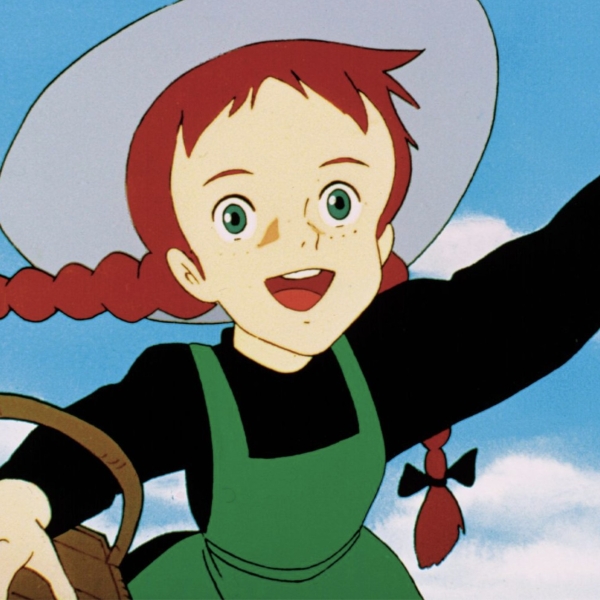

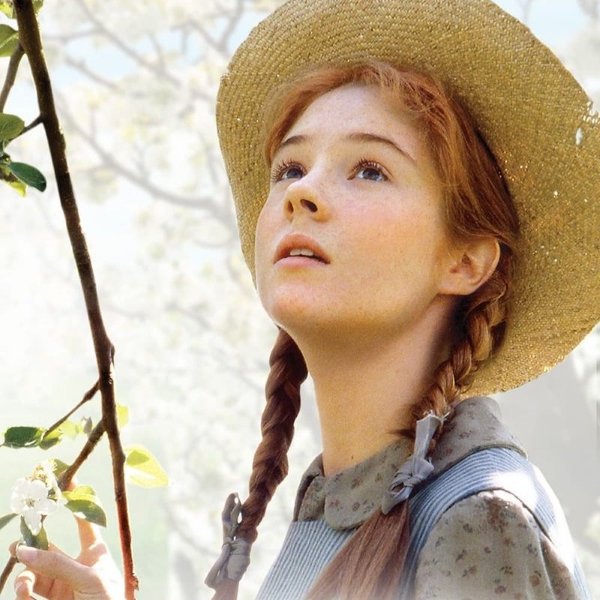
Anne Shirley (2025), a new 24-episode adaptation directed by Hiroshi Kawamata and produced by The Answer Studio in Tokyo, is currently being simulcast on NHK and Crunchyroll. The two versions — Takahata’s and Kawamata’s — offer insights not only into the differing approaches of the two directors but into the changes the Japanese animation industry has undergone in the last three decades.
Much of Takahata’s work celebrates the natural beauty of Japan, and he offers a poetic vision of Anne’s fantasies. As she renames a nearby pond “The Lake of Shining Waters” and imagines a cherry covered with white blossoms as a bride, Takahata fills the frame with flowers, surrounding the characters. The opening sequence features animation by Hayao Miyazaki of Anne driving a carriage that flies through blizzards of flower petals. (Miyazaki also did some layouts and backgrounds for the first episodes before leaving to direct The Castle of Cagliostro. The reasons for his departure are the subject of widespread discussions in online forums.)

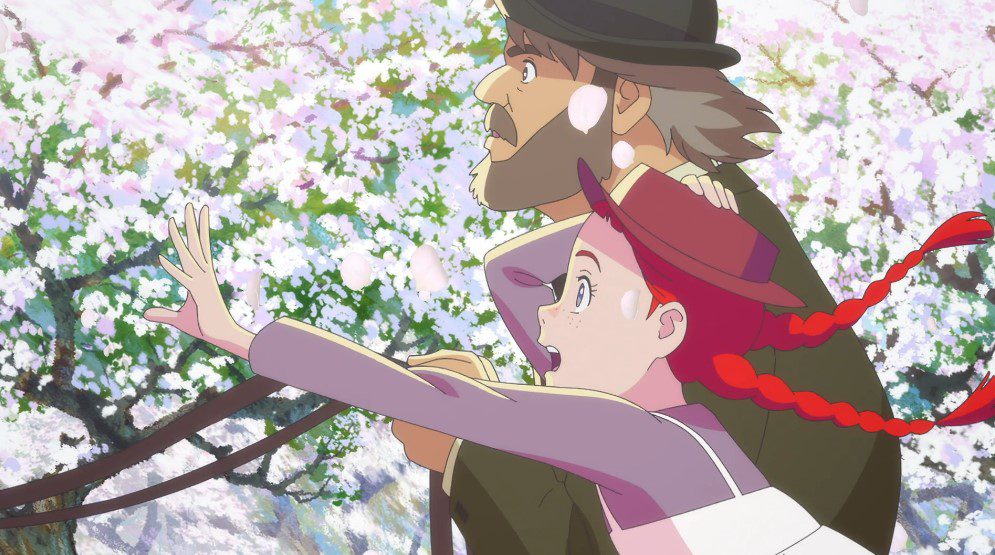
Kawamata, whose previous work includes Detective Conan: The Quarter of Silence (2011), the 15th Case Closed feature, uses drawn and CG animation to present a more realistic vision of Anne’s world. The backgrounds in Takahata’s version are clearly watercolor paintings that suggest perspective; Kawamata’s Prince Edward Island feels more three-dimensional.
‘As Takahata and Kawamata demonstrate, Anne Shirley’s singular blend of imagination and determination touches readers of all ages — whether they wish to tell off a meddlesome old woman or envision the inner life of a flowering tree.’

Although Yoshifumi Kondō, the future director of the beloved Whisper of the Heart (1995), was the character designer on Takahata’s series, the program was obviously made on a very limited budget. There are problems with the animation and cleanup. The appearance of the human characters sometimes shifts between scenes, and they often look disproportioned. The gentle Matthew Cuthbert has a blob of a mustache under his nose. In the intervening decades, Japanese artists have grown more skillful at animating humans. The characters in Anne Shirley are more crisply drawn; Matthew’s features and anatomy are delineated more clearly and accurately, which fits Kawamata’s more realistic vision of Anne’s adventures.
In both versions, the title character poses problems for the artists. Some of Anne’s speeches run several paragraphs, and much of the dialog in both series is taken directly from the book. Speechmakers are notoriously difficult to bring to life in animation. Famed Disney artist Marc Davis once said, “Maleficent just stood there and talked directly to the other characters. That’s extremely difficult to bring across.” He contrasted Maleficent with his next villainess, Cruella de Vil, who “was pitted against the other characters, eye to eye, mind to mind.”
![Anne Shirley [The Answer Studio / NHK / Crunchyroll]](https://www.dev.animationmagazine.net/wordpress/wp-content/uploads/anne-shirley.jpg)
Spunky Role Model
Takahata and Kawamata tackle the problem using imagery from Anne’s visions and the reactions of the people around her to break up the declamatory passages. The Cuthberts learn to love Anne quickly and quietly: They’re often amused by her ramblings. Their neighbors’ reactions range from bewilderment to indignation. Early 20th century ideas of propriety have faded, and when Anne upbraids Marilla’s smug friend Rachel Lynde for dismissing her as a skinny, red-haired and ugly, the modern viewer sides with Anne. (Her later apology is a typical flight of overblown rhetoric.)
![Anne Shirley [The Answer Studio / NHK / Crunchyroll]](https://www.dev.animationmagazine.net/wordpress/wp-content/uploads/ann-Shirley2.jpg)
Despite major changes in juvenile literature, Anne of Green Gables, which was originally published in 1908, has endured along with other popular heroines such as Jo March (Little Women), Matilda Wormwood (Matilda), Pippi Longstocking, Nancy Drew and Hermione Granger (Harry Potter series) — all of whom are celebrated for their bravery, intelligence and strong personalities.
Anne’s popularity seems destined to continue, both on the printed page and on the screen. As Takahata and Kawamata demonstrate, her singular blend of imagination and determination touches readers of all ages, whether they wish to tell off a meddlesome old woman or envision the inner life of a flowering tree.
Anne Shirley debuted in Japan on NHK in April. The series is currently available on Crunchyroll in the U.S.