Iginio Straffi’s much-anticipated CG-animated 3-D feature Gladiators of Rome is set to open the Los Angeles-Italia Film, Fashion and Art Festival this Sunday (February 17). The Rainbow Media founder and the man behind the popular Winx Club franchise will also be honored with the event’s Italia Excellence Award. The fest will also screen the Winx Club 3D: Magical Adventure feature film on February 20th at 6:30 p.m.
“Top quality animation is not the exclusive property of Pixar and Dreamworks and Fox,” Straffi recently told The Hollywood Reporter. “We think we have a top-quality product here, and we’re pleased it’s making its way to the important U.S. market.”
Festival founder Pascal Vicedomini, called Straffi “a visionary” and said he is “a perfect example of how contemporary Italian artists combine creativity with entrepreneurial skill.”
Gladiators of Rome (which was formerly called Not Born to be Gladiators), has an estimated $45 million price tag and is billed as one of the most expensive Italian films ever made. It opened in Italy last October. The plot follows the adventures of a young orphan named Timo, who is saved by the founder of the most famous Gladiators’ Academy of Rome. The young boy shows no interest in becoming a fighter, but everything changes when the beautiful daughter of the academy founder comes back to Rome. The script is by Michael J. Wilson (Ice Age, Shark Tale).
Sunday’s premiere at the festival will be in Italian with English-language subtitles. The official Paramount launch for the film will likely come in April or May, with the film dubbed into English. The festival will also pay homage to actor Al Pacino by awarding him the Jack Valenti L.A. Italia Legend Award. The L.A.-Italia Fest runs Feb. 17-23 at Hollywood Chinese Theatre.
William Watts Biggers, the co-creator of the popular animated series Underdog died at 85 of undisclosed causes last Sunday. Biggers, who was also a novelist, was part of the influential team that created the popular toon while working for New York City advertising firm Dancer Fitzgerald Sample. The team came up with the toon while on an assignment for General Mills to come up with vehicles to promote breakfast cereals.
Underdog originally debuted on NBC in 1964 and ran in syndication until 1973. It featured Shoeshine Boy, who turned into the heroic Underdog whenever his love interest, Sweet Polly Purebred, was being attacked by villains like Riff Raff and Simon Bar Sinister. When Underdog became a success, Biggers and his partners left Dancer Fitzgerald Sample to form their own company, Total Television, with animation produced at Gamma Studios in Mexico. In 2007, the show inspired a live-action/CG hybrid Disney feature, which was directed by Frederik du Chau and starring Peter Dinklage, Jason Lee and Amy Adams.
A native of Avondale Estates, Ga., Biggers attended Emory University Law School before moving to New York City when he was 20. He started in the mailroom at DFS and eventually became the VP in charge of handling the account for General Mills, DFS’s biggest client. In addition to Underdog, he contributed to scripts and theme songs for lesser-known cartoons like Tooter Turtle and Go Go Gophers.
Biggers also wrote the successful 1968 book The Man Inside and worked into his 70s with the novel Hold Back the Tide, which was published in 2001. He was also the VP and- and co-founder of the Boston-based Victory over Violence, which was dedicated to creating a positive force in the media. The org used Underdog to raise awareness for its cause.
Scrat is looking for a few good interns. That’s right, Greenwich, Connecticut-based Blue Sky Studios, the company behind the durable Ice Age movies and this summer’s upcoming Epic feature has announced its 2013 summer internship program. Billed as a fun, exciting and educationally packed 10 weeks, the Blue Sky Studios internship program offers aspiring animators a chance to work in a real-world environment. Each intern is specially selected and placed in a department that best fits their skills and interests. Throughout this period, they will be mentored and supervised by a Blue Sky pro in that field.
The studio encourages computer science, animation or production management students to apply for this internship program. Blue Sky will be posting more details in the weeks to come, but applicants can get a head start by gathering two letters of recommendation from either professors, or professionals in the business. For artistic positions, applicants will need to create an on-line portfolio and/or reel to show off their best work. The application process opens on Feb. 25 and closes on April 12, 2013. The internship program runs from June 3 until August 9, 2013.
Internship is open to all college students currently in their senior or junior years. Applications from those who have graduated within the three months prior to the internship start date will be accepted as well.
French company Studiocanal has joined forces with Les Armateurs to produce the upcoming animated feature French Riviera, reports Variety. Based on a story by graphic artist Richard Zielenkiewicz (aka Monsieur Z), the film also showcases a script by Joel Cohen and Alec Sokolow (Toy Story). The action-adventure pic, which mixes CG characters with 2D backgrounds, will also be directed by Zielenkiewicz.
Set on the French Riviera in the 1950s, the design-heavy animated feature follows a cat burglar who steals a stash of diamonds. According to Les Armateurs president and acclaimed producer Didier Brunner (Kirikou, The Triplets of Belleville, The Secret of Kells, Ernest and Celestine), the look of the film will be reminiscent of those snazzy airline ads from the ’50s and early ’60s.
Les Armateurs and Studiocanal co-produced Michel Ocelot’s third Kirikou feature Kirikou and the Men and the Women as well as the recent Ernest and Celestine, which both performed well at the French box office. Studiocanal’s rich animated slate also includes Arte Cinema’s steam-punk adventure thriller Le monde truque (A Fake World), which will be directed by Jacques Tardi and Belgian helmer Ben Stassen’s The House of Magic.
Pixar’s latest animated short The Blue Umbrella, which debuted this month at the Berlin Festival, will make its U.S. premiere at the South by Southwest (SXSW) Film Conference and Festival (March 8-16) in Austin. Directed by Saschka Unseld, the short is slated to play in theaters with Monsters University beginning June 21, 2013.
The official synopsis is as follows:
“It is just another evening commute until the rain starts to fall, and the city comes alive to the sound of dripping rain pipes, whistling awnings and gurgling gutters. And in the midst, two umbrellas—one blue, one not—fall eternally in love.”
Here is the list of the other animated projects that will unspool at South by Southwest in March:
Cicada Princess
Director: Mauricio Baiocchi
Cicadas spend a long time planning…
The Event (USA/UK)
Director: Julia Pott
Love and a severed foot, at the end of the world.
The Gold Sparrow
Director: Daniel Stessen
In a black and white world artists must defend their color.
In Hanford
Director: Chris Mars
In Hanford is artist Chris Mars’s fantastic exploration of real incidents in Hanford, Washington, where the local environment was poisoned as a result of cold war era nuclear arms manufacture.
Kishi Bashi – “I Am The Antichrist To You”
Director: Kishi Bashi
A surreal stop motion collaboration between avante-pop/violinist Kishi Bashi and acclaimed animator Anthony Scott (Coraline, Paranorman). An abandoned puppy awakes in a post-apocalyptic world with vivid memories of his love and all that he lost.
Marcel, King of Tervuren
Director: Tom Schroeder
Greek tragedy enacted by Belgian roosters.
Oh Willy… (Belgium/France/ Netherlands/Luxembourg)
Directors: Emma De Swaef, Marc James Roels
Forced to return to his naturist roots, Willy bungles his way into noble savagery.
Old Man
Director: Leah Shore
For more than 20 years Charles Manson has refused to communicate directly with the outside world. Until Now.
The Places Where We Lived
Director: Bernardo Britto
A man wakes up with a weird feeling. His parents are selling his childhood home.
Shelved (New Zealand)
Director: James Cunningham
Two loser robots discover they are being replaced… by humans
French distributor Mediatoon Distribution has announced a spate of new international broadcasting sales for its 2D animated series Little Spirou (78 x 7). Additionally the Spirou brand is celebrating its 75th anniversary this year with special events and project launches.
Following the show’s presentation at MIPCOM last fall, Little Spirou has been picked up by Noga (Israel), TG4 (Ireland), TV Catalunya and TV Galicia (Spain) and TeleQuebec (French-speaking Canada). Additionally, DVD publication company Kaibou has acquired the rights for the debut season for Canada in order to plump out their kids’ content catalogue. Previously announced sales include M6, Teletoon (France), FTBF (Belfium), RTS (Switzerland) and Nickelodeon Asia.
In honor of the mischievous little Spirou’s 75th anniversary, Mediatoon is organizing a series of events in France, Belgium and Switzerland. These will include the Spirou Tour through 10 cities, exhibitions and the launch of new comic books. In addition to Little Spirou, the brand boasts two other animated series: Spirou (52 x 26) and Spirou & Fantasio (39 x 26), sold in over 120 countries.
We couldn’t get enough of Google’s wonderful animated tribute to Valentine’s Day and the 154th birthday of George Ferris, the inventor of the Ferris wheel this year. The Feb. 14th interactive Doodle features two Ferris wheels, packed with different animals. Once you click on the heart button, the wheels spin and pictures of two different animals appear. The two animals make a love connection and then, another click, will show you the two animals out on a date—a bear and an octopus go out for sushi, or a turtle shows up late (of course) for a romantic dinner date with a frustrated rabbit.
“Early in the process we decided on depicting a scene with two, side-by-side Ferris Wheels among a landscape of other amusement park rides,” notes Google’s Doodler Brian Kaas. “Then when two Ferris Wheel carts happened to stop across from each other we thought that was the perfect moment for two characters to have a love at first sight moment. We thought it would be fun to push a big button to generate a whole series of combinations.”
Kaas says the team ultimately decided that the cast of characters should all be animals and the result of their initial encounter should be a date.
“We simplified the characters and focused on making the animals as engaging, colorful and personable as possible without worrying about their day jobs,” he explains. “For the resulting dates, we used newspaper comic strips and their three-panel composition as inspiration for style and narrative structure. The comic strip format gave us room to tell a wide variety of stories and the horizontal format worked nicely in our layout. Once we decided on comics, the date scenarios really just starting writing themselves. As always, we had more ideas than time to illustrate and animate.”
Production distribution and rights management company Kid Glove has officially announced its new branch in São Paulo, Brazil. The news was released today by the outfit’s president and founder Brenda Wooding.
Centrally located in the Jardins district of Brazil’s largest city, the new office will serve as an international hub for bringing Brazilian producers and animators together and creating partnerships throughout the global entertainment industry. Wooding, who heads the new operations in São Paulo, has decades of experience in facilitating the production and broadcast of animation around the globe, along with expertise in making the most of the myriad of governmental support available to the entertainment industry through production funding and coproduction treaties. Kid Glove clients include Sprite Animation, Film Roman, Starz Animation (now Arc), Moody Street Kids, Bardel Entertainment, Baby Genius, and the ABPI-TV (Brazilian Association of Independent Television Producers).
“This is an exciting time in the Brazilian animation community as Brazil is becoming a hub of new creative animation and production talent whose fresh ideas are sparking interest from broadcasters around the world,” says Wooding. “Additionally, it’s an industry that receives considerable support from the government through production funds and coproduction treaties with a number of countries including Canada, Germany and now the U.K.
Heather Kenyon, who serves as the lead creative executive at Kid Glove, continues to work out of the company’s U.S. operations in Los Angeles.
Facebook is teaming up with Pixar animator Matt Jones to come up with a new approach to online emoticons. Jones, who has also worked as storyboard artist on the Wallace and Gromit shorts.
“Facebook was canny enough to realize that traditional emoticons are quite bland,” he told Buzzfeed of his role in creating the social network’s future emoticons. “At Pixar we consider emotional states every day with every drawing we make. Our work is informed by the years of study we do, constantly studying people’s gestures and expressions in real life.”
Jones, who is freelancing at Facebook, came to work at the social media org through Dacher Keltner, who was already working to revise emoticons in his role as the co-director of the University of California-Berkeley’s Greater Good Science Program. Keltner provided Jones with a copy of Charles Darwin’s The Expression of the Emotions in Man and Animals, which featured photographs and descriptions of human and animal emotion, with Jones tasked to visualize the abstract feelings.
The new characters may lack some facial features but will have eyebrows:
Jones credits this choice to his animation background, explaining that “as long as you have eyebrows, you are safe.” They may also be multicolored. “You don’t want to offend anyone,” he notes. “Colors will be a racial issue.”
After hitting a home-run with his blockbuster CG-animated feature Tad, the Lost Explorer (Tadeo Jones), Spanish helmer Enrique Gato will direct Capture the Flag, a new 12 million euro ($16 million), produced by Telecinco Cinema, El Toro Pictures, Lightbox and Ikiru.
According to Variety, the family adventure project centers on a greedy Texas millionaire’s desires to claim the moon as his private property. His schemes are challenged by an energetic 12-year-old boy, his girlfriend and a robot chameleon.
The script is written by El Toro founder Jordi Gasull, Javier Barreira and Neil Landau (Melrose Place) from a treatment by Gasull and Patxi Amezcua. Telecinco Cinema’s Barrois and Alvaro Augustin will present the first-draft screenplay at the Berlin Film Market.
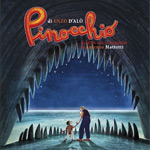
Italian director Enzo D’Alò serves up a faithful new animated feature based on the original Adventures of Pinocchio.
Although Italian author Carlo Collodi wrote his hugely influential children’s novel The Adventures of Pinocchio in 1883, many people remember Walt Disney’s 1940 animated feature when they recall the tale of the wooden boy. This year, thanks to the hard work of Italian director Enzo D’Alò and his talented team of artists at Cometa Film (Italy), 2d3D (France), Walking the Dog (Belgium) and Iris Productions (Ireland), animation lovers are treated to a lovely new adaptation, which is much more faithful to Collodi’s original vision. We recently had the chance to chat with D’Alò about his new feature, which opens in Italy later this month and is featured at Cartoon Movie in March:
Pinocchio
Animag:We know you’re very busy with your film’s Italian premiere coming up in the next few weeks. Can you tell us a bit about the origins of the project?
Enzo D’Alò: Well, I started working on the film back in 1999. I presented the trailer for the movie, and it was well-received by RAI, but we had to stop working on it because we found out that Roberto Benigni (Life Is Beautiful) was also working on a live-action version of the book. So, I continued to work on my 2001 movie Momo. I continued to work on the script, and fortunately, we also found ways to produce the animation using new technologies, via Toon Boom’s Harmony software. It was around 2008, when we went back to production. This time around the film is all done digitally, the backgrounds are done using Photoshop. The delay in production opened up lots of new doors for us.
We had used Toon Boom before, mostly on the TV series that we worked on. We collaborated closely with the Toon Boom staff to create a strong paperless pipeline.
I kept in my head the plans I had for the movie, and better versions of the software would come along during the development process. I believe we were the first in Europe to create a movie digitally. When you are working on a digital production, you can keep fine-tuning it, change the compositing, and constantly make it better. To be honest, it was a lot of work for my team and they had to learn a lot quickly in the beginning. But they picked up speed after the first six months.
Pinocchio
How was the work split between the studios?
D’Alò: We shared the bulk of the work with the other studios in France and Luxembourg; there were about four studios in Italy that helped with the project as well. We did the storyboards in Italy. It was very important to really research the locations. The landscapes that Collodi had written about were all here in Tuscany, so the team came to the region to do research and photography. It’s all actually the same locations used in the 1947 live-action adaptation of the movie, which stars Vittorio Gassman. Once you climb to the top of the hills, you can even see the sea, which plays an important part in the second half of the book.
Pinocchio
Of course, Pinocchio has inspired numerous movies and TV series, and animation fans have loved Disney’s 1940 version for many decades. How is your movie different from all the other previous adaptations?
D’Alò: We stayed very close to the original text. We even used a lot of the original dialog, because most of it sounds contemporary. It was incredible for me to discover that we didn’t need to change much for today’s audiences. It was also important for us to keep Pinocchio’s relationship with the Blue Fairy intact. In the book, the fairy is a blue-haired girl, and Pinocchio has a crush on her, so that is a strong motivation for him to be a good boy.
Overall, it was very important for us to present the true version of Pinocchio to the world. I like the Disney movie very much, but our film is closer to Collodi’s vision. For example, in the Disney film, the cricket becomes Pinocchio’s conscience. In Collodi’s book, there are two kinds of animals, those who judge Pinocchio, like the cricket, and those who are really his friend. There’s a dog in Collodi’s book that helps Pinocchio from the Green Fisherman. He helps Pinocchio escape only because of their friendship. The dog values their friendship, and doesn’t judge Pinocchio. That’s what a true friend does.
Pinocchio
Can you perhaps give us some personal insights about why the story of Pinocchio has such a strong hold on our collective imagination?
D’Alò: The wonderful thing about Pinocchio is that everyone imagines something different when they read the book. It’s the third most popular book in the world, right below The Bible and the Koran, and the other two are religious books.
What I think is wonderful about the book is Gepetto’s relationship with Pinocchio as a father. Like many fathers, Gepetto wants his son to be a certain way, and the child doesn’t want to do what his father wants him to do. He is a carpenter, and he makes his son out of a log of wood. I think that’s a very powerful image.
The American author Paul Auster wrote beautifully about Gepetto and his relationship with his son Pinocchio. He said a father fears the day when his child begins to give him gifts. This is also true when Pinocchio saves his father from the shark. And yes, we have a shark in the movie, just like the book—which is different from Disney’s version, which had that giant whale. It’s logical, because Collodi sometimes refers to the shark as a sea monster.
Pinocchio
What’s your take on the state of the animation industry in Italy?
D’Alò: Our animation industry suffered a lot because of the financial crisis. It’s very hard to find financing these days. That’s the biggest problem. Also, when there’s not continual work in the country, the good animators leave the region and find work in places like Germany and the U.S. We hope Pinocchio can help reverse that trend and Italian producers will think that animation can be a good business investment.
Pinocchio
What are some of the animated movies that have been a big influence on your work?
D’Alò: I have always admired the quality of animation in Disney’s original, animated Alice in Wonderland. I also like many of the Pixar films, especially Monsters, Inc. When the story works well, and it’s helped by the technology, it makes for a wonderful experience. I think if a story is strong, you can actually have less animation. In European animation, we really have to move forward in the story department.
I think it’s important for the audience not to pay attention to the technology we use in a movie. You have to use the cinema as a medium not to just show off your technical capabilities. Sometimes we see movies that are made just so people can show off what they can do. The history of media tells us that what’s important is that you communicate something, not how you do it. When you’re directing a movie, it’s your job to find the best way to tell the story, and the technology should be used to help you do that job. It shouldn’t be about the technology.
Pinocchio
So, what are your feelings now that the movie is finally opening in Italy and other key territories after working on it for such a long time?
D’Alò: This is one of the first times that we have finished an animated movie in Italy that we can export to the world. It’s been an important challenge for me. When RAI Fiction proposed this project to me, it was very hard for me to say no. Pinocchio is my fifth movie, and I think you really need experience to tackle such a big title. You need to feel free to take some risks and do something completely different. I have been very lucky to have such wonderful, talented people with me on this movie. Everyone in the many studios working on the film was charmed by the story and worked day and night to make it better. I was also very fortunate to have these new technologies that helped us bring to animation the illustration style of our production designer Lorenzo Mattotti. When we saw how the film was coming along, we truly felt very excited and proud.
Pinocchio will premiere in Italy on February 21 and in France on Feb. 20. The film will have its U.S. premiere at the N.Y. Intl. Children’s Film Festival on March 16 and will also be featured at Cartoon Movie in France.
Warner Bros. Animation takes the old Teen Titans characters in a totally new direction in the upcoming Cartoon Network series.
It’s a well-known fact that some of the more recent superhero movies and TV shows have a tendency to get a bit too ponderous and brooding. Luckily, you can always rely on the funny folks at Warner Bros. Animation and Cartoon Network to add some much-needed humor to the otherwise dreary lives of characters burdened with saving the human race over and over again. This spring, viewers will get a chance to see a completely different side of Robin, Starfire, Raven, Beast Boy and Cyborg—the feisty team known as Teen Titans, who had their own popular show for five seasons (2003-2006) on Kids! WB and Cartoon Network.
Created to play well with Cartoon Network’s other humor-driven toons such as Adventure Time and Regular Show, Teen Titans Go! zeroes in on how our teen heroes spend their time when they are not on duty. You can rest assured there are lots of opportunities to play elaborate pranks, eat junk food, go for joy rides and use their superpowers in silly ways. As the show’s exec producers Michael Jelenic and Aaron Horvath tell us, the new toon is going to be worlds apart from, say, Chris Nolan’s heavy Batman movies!
“The show was born out of the DC Nation shorts, which were made by some of the crew from the original series,” says Jelenic. “They were really successful and people seemed to love them, so [Warner Bros. Animation’s exec VP of creative affairs] Sam Register brought me and Aaron over to work on the series. We weren’t involved with the original production, but we totally get the flavor of the show. We also wanted to push it in a new comic direction.”
Teen Titans Go!
Jelenic also points out that he and fellow exec producer Horvath come from backgrounds that seem to be polar opposites.
“I’ve worked on traditional superhero shows such as Batman:The Brave and the Bold and ThunderCats, and Aaron has done lots of comedies such as MAD and El Tigre, and he has little knowledge of superheroes, except Batman.” he says. “So this project allowed us to merge our sensibilities and to filter these characters through a hipster millennial look.”
The producers both admit that they enjoyed the freedom they had to play with characters that were loved by fans worldwide.
Teen Titans Go!
“The shorts were very successful, but they were inside. You wouldn’t get some of the jokes if you didn’t know these characters and the world they live in,” says Horvath. “We wanted strong characters that we could put in any comic situation. Since we’re going from script to production and following a less traditional storyboard pipeline—straight to animatic—we’re able to really take advantage of the situations and the personalities, and fine tune the jokes.”
According to Jelenic, Teen Titans Go! is one of the least traditional superhero shows he has seen.
“I feel very comfortable saying that since we are going for some really out-of-the-box material here. We try to stay true to the core of the characters, but we try to put them in situations that we haven’t seen DC superheroes in before.
Teen Titans Go!
So who is the real audience for this new Warner Bros. toon?
“Our core audience is six- to 11-year-olds, but the show’s humor and spirit has a lot in common with Adventure Time and Regular Show,” says Jelenic, who began his career as an intern on Mike Judge’s hilarious King of the Hill series. “That is the type of world that our characters exist in, rather than a traditional superhero show. If you’re coming to the show to get some traditional DC superhero action, then you are going to be surprised. Our challenge is to make sure people get the tone and understand the show in terms of its comedic elements.”
As the producers explain, the show creators tried to stay away from the old “gang goes on a mission” storylines and focus instead on the teen heroes hanging out at Titan Tower.
“They are constantly doing stupid things and try to have fun, just like college kids who are hanging out at the dorm, and exploring their freedom like students do during their freshman year,” says Jelenic. “They’re constantly doing stupid things, or fighting over things that have very low stakes; for example, Raven tells them about a mythical sandwich, whose ingredients are split up across the galaxy, and they have to collect all the individual items to make this amazing sandwich.” And yes, there are episodes in which meatballs and tacos play major roles.
Teen Titans Go!
Horvath says the success of MAD convinced the studio brass that it was feasible to do a weekly Flash-animated series that has a fast turn-around.
“MAD is visually all over the place, and with Teen Titans Go! we have the benefit of putting together tight animatics before it’s animated. We get a sense of what’s working and what’s not working before we send it to Canada [Bardel in Vancouver and Copernicus in Halifax]. The awesome thing about the process is that I can really dig into a storyboard or a scene, and do a lot of retakes in the house before we send it outside.”
Jelenic and Horvath both emphasize the fact that the show has been a labor of love for the animation team.
Teen Titans Go!
“The series’ directors and their team have come up with ways to really push Flash animation and make it even more complicated,” says Horvath. “Seriously, we’re very happy with the way the show looks—every background, every character—a lot of work has gone into all the details to make it a great-looking show.”
Of course, the team is quite aware of the fact that some old die-hard fans of the DC characters may not be too pleased with this brave, new approach.
“We know that some of them are very concerned about what they’re going to find in the show,” says Jelenic. “We hope they are going to be in for a pleasant surprise.”
Teen Titans Go!
Horvath says that it’s obvious that he and Jelenic aren’t going to imitate what Glen Murakami, the creator of the original show, did 10 years ago.
“That series had a great anime influence, but I was personally never influenced by anime. I am a huge Looney Tunes fan…Listen, if you like these characters, you are going to find that they are pretty much the same, but we’re pushing for comedic effects. This show is about hanging out with these characters, so it’s dramatically different from the old version. However, the same characters anchor both projects, so we’re hoping that will bring back the old fans, too. Maybe for the season finale, we’ll wrap up all the loose ends left over from the old series to make everyone happy! You never know!”
Cartoon Network will premiere Warner Bros. Animation’s Teen Titans Go! in April.
Innovation and creativity in the feature space is alive and well at the 15th edition of Cartoon Movie in France.
A Spanish 3D blockbuster about an Indiana Jones-type adventurer (Tad, the Lost Explorer), a hand-crafted animated project about the friendship between a mouse and a bear (Ernest & Celestine), and a full-length CG-animated adventure starring Dick Bruna’s preschool sensation Miffy are three of the eclectic titles featured at the Cartoon Movie event held in Lyon, France March 8-10 this year. The success of this unique event is a true testament to the variety and sheer number of animated movies that have been produced and distributed in Europe over the past few years.
“High-quality and very creative projects are presented again this year in Lyon, whether commercial films for children or films addressing social issues aimed more at an adult audience,” says Cartoon Movie’s general director Marc Vandewyer. “This is the cultural diversity, the richness of Europe.”
Vandewyer says the organization has made further efforts to invite more distributors and sales agents from non-European countries. In addition, a whole day is now devoted to gaming ventures in the continent. “Animated features are the only audiovisual genre capable of selling better in the international market than its home market,” he adds.
Tad, the Lost Explorer
Among the features presented in their entirety are Benjamin Renner, Vincent Patar and Stéphane Aubier’s Ernest & Celestine, Thomas Bodenstein’s Knight Rusty, Jan Rahbek’s Marco Macaco, Kari Juusonen and Jørgen Lerdam’s Niko 2, Enzo d’Alò’s Pinocchio, Ute von Münchow-Pohl’s Raven the Little Rascal and Enrique Gato’s Tad, the Lost Explorer.
Seven films will be presented under the “In Production” banner: Alessandro Rak’s The Art of Happiness (Italy), Olivier Jean-Marie’s Oggy and the Cockroaches (France), Eric Omond’s Loulou’s Secret (France, Belgium), Torill Kove’s Hocus Pocus, Alfie Atkins (Norway, Denmark) and Esben Toft Jacobsen’s Beyond Beyond (Sweden, Denmark). In addition, 19 films are presented during the “In Development” sessions, while 21 titles are discussed “In Concept.”
Cartoon Movie is one of the most popular co-production events designed to promote European co-productions and allow producers to pitch their projects to secure financing, find international partners and interest international distributors and sales agents. Over 50 pitch sessions are planned for the upcoming edition, with over 700 industry professionals expected to attend the program.
Ernest & Celestine
France will be represented by 15 projects, while the Nordic countries will offer 10 projects, followed by Germany (five), Spain (four), United Kingdom (three), Poland (three) and the Netherlands (three). This year, 25 percent of the projects are produced in stereoscopic 3-D and 16 percent of the films target young adults and adults.
To learn more about the 15th edition of the event, visit www.cartoon-media.eu.
Cartoon Movie Pics at a Glance: Here are quick takes on some of the new features presented at the event:
Raven the Little Rascal
Raven the Little Rascal Directed by: Ute von Münchow-Pohl, Sandor Jesse Produced by: Akkord Film, Studio 88 (Germany) Synopsis: Based on a popular children’s book series by Annet Rudolph, the movie follows the adventures of the mischievous Little Raven, who has to ask for help from his friends Woolly the Sheep and Eddie the Bear after he damages the dam at the end of their forest. Standout Qualities:“The look of the film is traditional, high-quality, multi-layered 2D with well animated characters and awesome looking backgrounds like in the Disney movies back in the days before CGI,” says producer Dirk Beinhold. “This makes it very appealing to younger audiences, even to first-time moviegoers. But we also have an excellent stereoscopic 3-D version of the seven-layered 2D-animation available.” Budget: According to the producers, the film cost about $6 million. Success Story: The producers point out that when Madagascar 3 opened in Germany five weeks after Raven, the box office numbers only dropped about 4%, while most of the other films dropped 30-40%! Half a million tickets were sold in German speaking territories so far. The film will open in France in March. Biggest Challenge: “Working with our limited budget and yet making a movie that looks like a $25 million production,” says Beinhold. “I was new to the world of animation with my background being in story development and international co-financing. But I learned that a good story is just as important in animation as it is in real live action.” Cartoon Movie Connection: The film’s co-producer Roland Junker of Studio 88, has presented projects in the past at Cartoon Movie. Raven is sold worldwide through Beta Film/Wunderbox. The producers are also staring production on the next Raven the Little Rascal film and are hoping to presell some territories as well.
Niko 2: Little Brother, Big Trouble
Niko 2: Little Brother, Big Trouble Directed by: Kari Juusonen, Jørgen Lerdam Produced by: Anima Vitae (Finland), Ulysses Filmproduktion GmbH (Germany), A.Film (Denmark), Tidal Films/Magma Productions (Ireland) Synopsis: On the night before Christmas, Niko the reindeer must deal with his mom getting re-married and has to look after his little stepbrother. Inspiration: “We waited quite patiently for the right idea for the sequel, as we wanted to make a movie that would hopefully be better than the first one,” says producer Antti Haikala. “The most important content in the Niko films comes from daily life, even if the movie is an exciting adventure as well. So the main inspiration was to find this daily life content which was of course Niko having to deal with his stepbrother and putting him into a totally new and challenging situation as a kid.” Budget: About 7.3 million euros or $9.5 million. Standout Qualities: “Our story deals with very basic issues of being a kid in a contemporary family situation,” says Haikala. “Blending this with exciting adventure and the universe in beautiful Lappish wilderness makes the film something that is not often seen on the big screen.” Biggest Challenge: The producers note that dividing the work between many studios and having a modest budget were their biggest challenges. “Finding ways to create high quality and maintaining it throughout the film in such circumstances is always challenging, but at least our audience and the team (which is often far more critical) has been pleased with the results,” says Haikala. Tools: The stereoscopic CG animation was created using Maya, rendered with RenderMan and composited with Nuke. Alembic geocaches were used in the pipeline.
Marco Macaco
Marco Macaco Directed by: Jan Rahbek Produced by: Nice Ninja ApS (Denmark), Sola Media GmbH (Germany) Synopsis: In his dreams, Marco Macaco is a cool cop solving major crimes, but in real life, he is just a beach officer on a tropical island where nothing seems to happen. His hopes to win beautiful Lulu’s heart get shattered when charming Carlo arrives on the island to build a gigantic monkey-shaped casino right on Marco’s beach. Inspiration: As writer and producer Thomas Borch Nielsen tell us, the film’s director Jan Rahbek had made a very funny graduation movie called The Space Monkeys at The Danish Film School. He has a special love for monkeys and wanted to continue with a movie in the same slapstick comedy style. Budget: About 2.5 million euros, or $3.4 million. Standout Qualities: “Marco Macaco is a true slap-stick comedy, which we don’t see that often around anymore,” says Borch Nielsen. “Combine that with a giant robot, a sea monster, pirates and a scooter, and you have a comedy cocktail you cannot resist!” Challenges: “To produce a movie with a very high quality of animation on a low budget is always a challenge,” notes Borch Nielsen. “But luckily the pipeline was thought through and the team very talented, so we managed to do it.” Tools: The characters are CG-animated in Maya. The backgrounds were made as matte paintings to create a more organic feel. The production was rendered with 3Delight and composed in Nuke. Cartoon Movie Connection:Marco Macaco has been presented at Cartoon Movie in all categories from “Concept” through “Development” and “In Production” to this year’s “Final Movie” version. “The event has been a great help throughout all stages of the production,” says the producer.
Rise of the Zelphire
Rise of the Zelphire Directed by: Arthur Qwak Produced by: 2d3D Animations (France) Synopsis: In this alternate 19th century universe, traumatized children have developed supernatural powers. Led by Sylvan, they join forces to end the reign of darkness and to fight against Baron Vilnark’s evil plans. Based on the graphic novel by Karim Friha. Inspiration: Friha was inspired by the writings of Victor Hugo, Charles Dickens and Jules Verne. Professor Wernes, one of the main characters of the story, is a caricature of German naturalist, geographer and explorer Alexander von Humboldt . The graphic style is an homage to the works of Goya, Gustave Doré, Manet, Arthur Rackham and Tim Burton. Standout Qualities:“The right to be different is the main subject of The Rise of Zelphire,” says the film’s producer and 2d3D founder Florent Mounier. “It’s a sensitive issue that concerns all of us: This is the reason we’ve been captivated by the story and the world of Karim Friha! Our film has a real vision on two different levels—it carries a timely message of acceptance and also offers unique visuals with characters that look like realistic puppets.”
Miffy: The Movie
Miffy: The Movie Directed by: Hans Perk Produced by: Telescreen Filmproducties, Mercis, KRO Youth (Netherlands), A. Film (Denmark) Synopsis: Miffy the rabbit’s first feature revolves around a treasure hunt with her friends through the zoo. In the process of solving the five clues Father and Mother Bunny give them, Miffy and pals meet all kinds of animals on their fun adventure. Inspiration: Producer Sjoerd Raemakers, who has been involved in Miffy projects for over 15 years, explains that the idea for a film emerged out of the success of the 3D animated TV series (2003) and its resulting 24- and 11-minute specials. The film is based on the works by Dutch children’s author and illustrator Dick Bruna, whose first Miffy book was published in 1955. Budget: 3.4 million euro, or about $4.5 million. Standout Qualities: Miffy’s many fans around the world (the books have sold over 85 million copies) have seen her adventures in short format, but this colorful stop-motion animated film will be her first bow on the big screen. Challenges: “Back in 2003 we started discussions with the rights owners, Dick Bruna/Mercis BV about the general idea. We did not immediately get their consent, as Miffy was and is a classic and therefore any audiovisual works would be approached with great reserve,” Raemakers explains. “However, we were granted the right to investigate matters, by for instance testing existing materials in a cinema-like environment.” The project wasn’t officially agreed on until 2005. Raemakers adds that production challenges were creating international appeal and remaining true to Bruna’s work. Cartoon Movie Connection: Raemakers has first hand experience with the value of the event: “We made the first presentation [at Cartoon Movie] and then met with 6 Sales from Spain, who came on board as the international sales agent.”
Knight Rusty
Knight Rusty Directed by: Thomas Bodenstein Produced by: Caligari Film (Germany) Synopsis: Knight Rusty is no ordinary hero—but the scrap metal knight likes to brag about his bravery, even though he prefers a life of comfort. It’s only when he realizes he might lose his beloved damsel, Bo, that he gets his act together. With the little dragon Coke by his side, Rusty must save the entire kingdom of Scrapland from the rule of the Evil Knight. Inspiration: As producer Gabriele Walther points out, the film is based on the Ritter Rost children’s books by Jörg Hilbert and Felix Janosa. “What fascinated me was the unique world of Scrapland, where all the characters are created from recycled scrap pieces,” says Walther. “Knight Rusty is a cash register, the king is a toaster that starts to glow when he’s angry. Horses are built from motorcycles; tools, teapots and cups have an opinion and move. In total we have more than 400 moving objects all coming together in an incredible battle scene. It’s an homage to the mechanical world and gives recycling a very creative approach.” Budget: 10 million euros, or $13.4 million. “When we screened the film to a professional international audience, people came back to me asking what our budget was, estimating it to be 40 million euros. When I told them the real budget, they couldn’t believe it!” Walther recalls. Standout Qualities: Walther believes the unique design and setting of the story combined with its action and strong comedy elements are highlights of the film. “During the premiere of Knight Rusty, kids where jumping in their seats with joy contaminating their parents with laughter. This is when I knew, we’ve done a good job,” she notes. The producer adds that they combined an American approach to storytelling with European technical expertise to create 3D worlds without a “Pixar budget.” Challenges: Walther cites the crowd scenes, such as the huge battle and a tournament. Certain 3D models, like the twin-headed dragon, also proved technically challenging. Tools: The CG, key-frame animation was done in Maya. Cartoon Movie Connections: The producer notes that Knight Rusty made its Cartoon Movie debut last year during the “In Progress” program with just the story, character and set designs. “We are very happy to present the completed film at this year’s Cartoon Movie and are convinced the film will draw the attention of many participants,” she adds.
Toei Animation and Manga Entertainment will bring popular anime series One Piece to fans in the U.K. as a packaged DVD box-set for the first time, it was announced by Ryuji Kochi, managing director of Toei Animation Europe and Jerome Mazandarani, Manga’s head of marketing and acquisition. The two companies have also partnered on Dragon Ball Z in the U.K. as well.
Created by Eiichiro Oda, and adapted as an animated series by Toei Animation Co., Ltd., One Piece follows the adventures of well-meaning pirate, Monkey D. Luffy as he launches a quest to uncover the legendary “One Piece” treasure buried by the Pirate King Gold Roger. On his journey to discover the treasure to become the next Pirate King, Luffy and his swashbuckling crew sail straight into the action as they face off against notorious enemies. The franchise’s latest feature One Piece Movie Z (directed by Tatsuya Nagamine) has earned over $76.3 million in Japan since its release in December.
“We are excited to see the release of One Piece to fans in the UK and are delighted to continue our partnership with Manga Entertainment,” said Kochi. “One Piece’s embrace outside of Japan is a testament to our talented team of writers and animators who brought this vibrant series to life through years of dedication.”
Animation historian, author and producer Jerry Beck has left his post as editor of the Cartoon Brew website. Beck, who formed the popular blog with partner Amid Amidi in 2004, said he will focus his energies on his animation screenings in Los Angeles and New York, teaching cartoon history at Woodbury University, consulting with Warner Home Video and continuing his efforts to get classic cartoons out of the vaults for wider fan enjoyment.
“For those wondering where I’m going — I’m planning to continue doing what I’ve been doing. I’m also committed to several new book projects, and have a few brand new ideas I’d like to pursue,” he posted on Cartoon Brew. “I’ll also maintain a presence on the web, through my Facebook page and with my old site, www.cartoonresearch.com.”
We wish Jerry the best of luck with his future ventures and will continue to enjoy seeing him at all the toon events around town.
If you are in Toronto next week and feel like checking out a wonderful evening of cool animated music videos, TV ads and narrative shorts, we recommend TIFF’s Packaged Goods: Artful Animation, scheduled for Feb. 20th at 7 p.m. at TIFF Bell Lightbox.
Curated by Rae Ann Fera, the show will also feature a special appearance by Gerald Ding, Creative Director of New York City-based agency Psyop, who will offer his take on the sate of the art after the screening. Psyop has created spots for leading brands, including Coca-Cola, IBM, Nike, AT&T, Volkswagen, MTV, Starbucks and Adidas, and has garnered numerous industry awards including two Emmy Awards and multiple Cannes Lions. See below for complete series details.
Among the projects included in this year’s edition are William Joyce and Brandon Oldenburg’s Oscar-winning short The Fantastic Flying Books of Mr. Morris Lessmore, C2C’s The Beat, Passion Pictures’ Converse ad, Diplo’s Set It Off, Flying Lotus’ Tiny Tortures, Andrew Thomas Huang’s Solipsist, Dan Charbit’s Infime, Kaleb Lechowski’s R’ha, Tomek Baginski’s Witcher 2: Assassins of Kings trailer, Pedro Conti’s One More Beer and Gotye’s Easy Way Out.
There are at least 14 new animated features heading our way in 2013, but Disney/Pixar’s Monsters University has already generated a lot of pre-release buzz among toon fans. This week, a new trailer for the much-anticipated release, which is directed by Dan Scanlon hit the Internet.
The story follows original Monsters Inc. characters Mike (Billy Crystal) and Sully (John Goodman) as they meet for the first time in college. After focusing on their shared rivalry more than their college classes, Mike and Sully are kicked out of class and forced to join a fraternity of fellow scare rejects in order to compete in the Greek Scare Games and earn a spot back in the program. The rest of the voice ensemble includes Steve Buscemi, Joel Murray, John Ratzenberger, Dave Foley and Julia Sweeney. Once again, Randy Newman offers the hummable music. The pic will be out in theaters on June 21st.
We were sad to hear that legendary vfx and animation studio Rhythm & Hues has filed for bankruptcy after a deal for Indian-based Prime Focus to buy the Oscar-winning house fell through. The company is nominated for two Oscars for its effects work on Snow White & The Huntsman and Life of Pi and has already won an Annie, four VES Awards and special effects BAFTA for its work on Ang Lee’s Life of Pi. According to effects industry blog VFX Soldier, Rhythm & Hues has told employees that payroll is delayed.
Like Digital Domain and many other smaller vfx studios, R&H has had a hard time competing with competition from studios in other countries which offer sizeable government tax incentives and cheaper labor. Since its formation in 1987 by vfx visionary John Hughes, the studio has won numerous awards and accolades for its vfx work for features such as Babe, Cats & Dogs, The Golden Compass, Scooby-Doo and the Alvin and The Chipmunks movies as well as top-notch TV spots like the famous Coke Polar Bear ads.
MGA’s Lalaloopsy rag dolls are getting their own animated Nickelodeon series. Nick announced today that it has ordered 52 episodes of the animated preschool series, Lalaloopsy, set to premiere in spring 2013. Based on the best-selling line, the half-hour series celebrates diversity, friendship and teamwork and stars the Lalaloopsy rag dolls—Mittens Fluff ‘n Stuff, Bea Spells-a-Lot, Rosy Bumps ‘N’ Bruises, Jewel Sparkles, Peanut Big Top, Spot Splatter Splash, Crumbs Sugar Cookie, Dot Starlight and their group of friends.
The Lalaloopsy characters magically came to life when their last stitch was sewn and each have a unique personality based on the fabrics that were used to make them and a special pet. They come together for daily adventures in a whimsical world of silly surprises called Lalaloopsy Land. Lalaloopsy is co-produced with MGA and Moonscoop Productions.
“Kids adore the Lalaloopsy line and will now be able to engage with these characters in a whole new way when we bring them to life on TV for the first time,” said Teri Weiss, exec VP of production and development, Nickelodeon Preschool. “The Lalaloopsy world is filled with magic and surprises that will delight preschoolers while teaching important lessons about teamwork and friendship.”
“We are delighted to partner up with Nickelodeon, the greatest kids’ TV brand in the U.S. to air this outstanding series based on an award-winning brand,” said Isaac Larian, CEO of L.A.-based MGA Entertainment, the company behind the controversial Bratz Dolls, Moxie Girlz and Little Tykes. “The series is certain to fuel the brand to new heights.”
U.K.-based indie outfit Three Stones Mediahas launched an Enterprise Investment Scheme (EIS) fund to promote production of animated kids’ projects including the twice BAFTA-nominated Rastamouse, supported by One World Investments and Enterprise Private Equity. The government scheme is designed to help small businesses raise finance by offering a range of tax reliefs to investors who contribute towards the fund. The scheme offers companies an alternative to co-production when bringing concepts to life.
The fund is seeking up to £10 million ($16 million) for investment into companies involved in the production of animated childrens’ television programmes. Three Stones is talking to creators and producers to find projects that have a strong authored voice and with excellent potential to attract audiences via established broadcasters. The fund will also support the chosen projects to strengthen their potential across all platforms and to maximise the value of the IP in the children’s licensing domain.
Three Stones Media producer Greg Boardman notes, “We are creating Three Stones Media as a great business to invest in for great storytelling. One World Investments has been integral to the success of Rastamouse and has seen its journey from conception through to where it is today, so to have them involved and backing the Fund is invaluable. The animation industry is constantly evolving and getting bigger each year and we are excited to help fund new projects, and through our experience, we look forward to assisting and identifying further investments for the Fund.”