A new Canadian-U.S. kids entertainment company bulbKIDZ has launched, with industry veterans Nancy Aries Koff and Kiersten Halstead at the helm, announcing their first original preschool animation project, Gopher It! (52 x 11’). Working with Award-winning Canadian creators Andrew Sabiston (Super Wings, The Remarkable Mr. King, Ranger Rob, The Moblees) and Ron Rubin (Beetlejuice, X-Men, Avengers, Care Bears), this Canadian production is now in development, planned for Fall 2022 (Season 1) and Spring 2023 (Season 2).
bulbKIDZ focuses on premium children’s and family content through the identification of key intellectual properties that inspire, entertain and connect with young viewers and their families for co-viewing opportunities. The company acquires, develops, produces and distributes captivating projects for global consumption.
“Our main objective is to develop strategic partnerships in creating and distributing meaningful and relevant entertainment on all platforms worldwide, making for great storytelling,” says Koff, Co-Founder and EVP Content Strategy & Global Sales. “We provide programming solutions for multi-viewing targets, connecting culture to kids.”
Gopher It!
Aimed at kids three to six, Gopher It! is an adventurous edutainment series about a young gregarious gopher who travels all over the animal kingdom to help, and learn from, an unforgettable bunch of furry, scaly and feathered friends. From pole to pole and every habitat in between, travel with our hero Chester on his extraordinary escapades as he visits the wildest destinations on earth. Adventure, learning, laughter, music and heart are at the core of every episode. So get ready, get set … and let’s, Gopher It!
“Gopher It! falls perfectly in line with our company mission to develop diverse content with international appeal, through entertaining relatable characters, music, and engaging content for preschoolers to tweens,” says Halstead, Co-Founder and EVP Creative Development & Global Operations. “We’re thrilled to be working with the talented Andrew Sabiston and Ron Rubin on Gopher It! as they have years of experience in bringing characters’ voices to life.”
“With his boundless curiosity and playful, caring heart, Chester dials into the way kids think. We can’t wait to see our little gopher travel the world with bulbKIDZ,” says Sabiston.
Rubin adds, “We’re truly excited to GO, GO, Gopher It! and are thrilled to know that Chester is in such great hands with Nancy and Kiersten!”
Kiersten Halstead and Nancy Koff
Collectively, Koff and Halstead have a rich history in the children’s entertainment space, with over four decades of experience in development, production, licensing and distribution. The duo have worked on multiple highly successful animated titles including Pac-Man and the Ghostly Adventures (Disney XD), Crayon Shin-chan (TV Asahi), Skylanders Academy (Activision & Netflix) along with multiple original series such as Kong – King of the Apes (Netflix), Tarzan and Jane (Netflix), Super Monsters (Netflix), S.M.A.S.H! (HBO Max & Super RTL), among many others.
bulbKIDZ offers production management, in full partnership, from start to finish. Having proven experiences in early IP creative development, pre-production, production, and post-production management with premium global studio and vendor resources to compliment broadcasters’ content needs worldwide, Koff and Halstead have acquired a deep understanding of the creative process and global sales, offering a holistic, personal approach to every project.
In addition to Gopher It!, bulbKIDZ continues to strategically seek out unique children’s titles for all platforms.
Edtech company Magikbee is buzzing about the transformation of its popular kids’ video app KiddZtube into KidsBeeTV, borrowing the “Bee” from its parent brand and reinforcing its commitment to being “the kids’ app that cares.” Like bees help plants grow, the new brand wants to have a positive impact in kids’ development.
“We needed a brand that clearly expressed our values — family fun, positive education and diversity,” explained Hugo Ribeiro, Magikbee’s CEO. “We have more than a safe, fun and educational app for kids. We have an interactive video experience that sparks imagination and curiosity. And we also care a lot about parents. They can monitor kids’ activity, questions answered, and, to protect their kids from being too much time in front of a screen, daily time limits can be set up.”
In the last few years, there was a major growth in the offer of streaming services for kids. Magikbee needed to stand out showing what makes it different.
The name change is accompanied by a refresh on the brand’s visual identity, with a new colorful palette that suggests diversity, in line with its global expansion strategy. The U.S.A. and the Middle East are the two main markets of KidsBeeTV, but the app has customers worldwide in more than 200 countries. The app pursues a diversified catalog to answer to a variety of kids’ interests and to meet the demands of a growing worldwide community of parents that seek to find content that respects cultural differences and, at the same time, resonates a universal language.
KidsBeeTV
Magikbee has been licensing content for KidsBeeTV from the best studios and content producers. The most recent agreements were inked with studios like Millimages (Molang and Mouk), Twist Animation (TuTiTu), Xilam (Where’s Chicky) or Aurora World (Yoohoo and Friends). Some YouTubers, like Caletha Playtime and Get Matt, are also making their way into the app, but without the social network’s unboxings or product placement — only positive meaningful messages are allowed to pass KidsBeeTV filters conducted by teachers.
Good-quality, engaging and age-appropriate videos continue to be the core of the app. The videos are curated by teachers and other specialists, and to make the experience less passive, the app offers pop-up quiz questions (ABC, Colors, Counting, Language, Maths, Science, among others) on top of the videos.
“For more than a decade, YouTube was almost synonymous with video streaming. At the time we started our platform, it made sense to present it as a safe alternative to YouTube for young kids. The name ‘kiddZtube’ reflected that mission. But now our mission is broader,” said Ribeiro.
KidsBeeTV
The CEO came up with the idea for the app because of a challenge he was facing as a parent: finding a safe environment for his daughters to watch videos without the risk of crossing paths with inappropriate or even disturbing content, such as the violent parodies of Peppa Pig and other cartoons widely reported a couple of years ago. As he deepened in the searches, he found that there was a need for wider curation.
“We know the importance learning in the early years plays on kids’ development and we are committed to helping them discover their abilities and reach their full potential. This is not a curriculum-based app, nevertheless, we do have curriculum-based entertainment and activities. The main purpose of the app is to be fun. Being educational is a natural consequence of the kind of content we hand-pick and the way we choose to present it to the kids. They learn best when they are having fun,” Ribeiro noted.
The platform features now more than 500 hours of video and plans to add more IPs monthly aimed at kids up to 8 years old. Having no ads and an image-based interface, it is perfect for young kids, especially toddlers and preschoolers.
From Monday (April 19), WarnerMedia’s TOONAMI channel will be getting a fresh branding and identity overhaul, establishing the channel in a more grown-up dimension, asserting itself progressively more amongst young adult superhero and anime enthusiasts.
The new-dubbed TOONAMI: Home of Superheroes has upped the ante and will now also offer young adult superhero enthusiasts across Africa a 24-hour programming line-up, jam-packed with top-rated animated and anime-focused content. Fans will be taken to the mysterious world of DC Comics franchises for the best of iconic heroes and heroines from film and series including Batman, Superman, The Green Lantern, Young Justice and The Justice League, as well as popular animated series such as Teen Titans and anime-focused programming like the international hit anime phenomenon, Dragon Ball Super.
Toonami
With a new design, brand new colors and a layered visual effect, the new TOONAMI identity, developed by WarnerMedia’s in-house creative team, was produced by South African company, Wicked Pixels — a multi-award-winning studio specializing in high-end animation, visual effects and motion design. The new simplified logo is a modernized reinvention of the old with a nod to the ‘80s and is calibrated to accompany the brand across all linear and non-linear platforms. The visuals are honed to appeal to young adults, anchored on four themes. These pillars reference 2D styling representing comic books and manga, 3D styling aligning the brand with the gaming world, bringing spectacular action into play, and connecting the audience with the contemporary digital communication codes through pictogram, shapes and visual puns.
The refreshed TOONAMI visuals are complemented by a new musical theme, composed especially for the channel by Africa’s first music and audio agency, Audio Militia. The award-winning agency collaborated with WarnerMedia to produce the new soundtrack, mixing four different orchestrations to accompany the channel’s new look and feel.
“Adult Animation is arguably the fastest-growing animation category with the most headroom for growth, and our refreshed TOONAMI channel reflects this change, targeting young adults with action and animation content,” said Guillaume Coffin, Head of Affiliates & Advertising France, Benelux, Middle East, Turkey, Africa & General Manager for Turkey. “TOONAMI, the only channel entirely dedicated to superheroes, meets the growing demand for die-hard superhero and anime enthusiasts alike, offering plenty of pulse-raising, action-packed series, new, exclusive movies and original documentaries for millennials.”
Newly added to the channel, to kick start the refresh, is the anime series Fire Force, based on the Japanese manga series of the same name. In this new series, the city of Tokyo is plagued by a deadly phenomenon: spontaneous human combustion! Luckily, a special team is there to quench the inferno: The Fire Force! With new member Shinra and his devil footprints, they’re going to save the city from turning to ash. Viewers can tune in Monday to Sunday at 16:45 CAT.
Programming highlights also include the Saturday Morning Movies block, which kicks off at 8:30 CAT with upcoming presentations including Justice League: The Flashpoint Paradox (April 17), Batman & Mr. Freeze: Subzero (April 23) and Green Lantern: First Flight (May 1). Fans of one of the Dark Knight’s most iconic animated incarnations can also relive the Gotham adventures of Batman: The Animated Series every Wednesday at 20:00 CAT.
TOONAMI, Home of Superheroes Channel, is available in 18 countries across Africa for all the superhero and anime-themed action young adults need.
The Russian contingent wrapped a successful Digital MIPTV with a slew of international deals. In total, more than 35 companies from the country participated, including animation leaders Soyuzmultfilm, Platoshka studio and Riki Group, which closed the show by announcing a number of deals:
TOONZ Media Networks picked up AVOD rights for Kikoriki and Pincode. The projects will be available on MyToonz platform in India, Africa, Latin America, U.S.A. and Spain.
Common Sense Network’s new app Sensical, set to be launched on Q2 2021 will show all adventures of Riki’s round cartoon stars (Kikoriki, BabyRikiand edutainment spin-off Pincode) in the U.S.A. and Canada.
Smile TV (Greece and Cyprus) licensed exclusive TV rights for Pincode and non-exclusive for Panda and Krash.
Deagostini secured exclusive premiere rights in Italy for Tina & Tony. In addition, the partner will develop the project non-exclusively in the territories of Italian-speaking Switzerland, Malta, Montecarlo, San Marino and Vatican State.
Be Be Bears
Digital Television Russia Media Holding secured new international partnerships for three of its children’s series:
Beijing Joy Culture Media Co.Ltd. (China) inked an agreement to distribute four seasons of CGI comedy Be-Be-Bears and two seasons of nature-focused Leo and Tig — both produced by Paravoz Studio — on local TV networks and digital platforms.
Brands and Rights 360 (Europe) has been appointed the exclusive distributor of Leo and Tig and Fantasy Patrol, which follows the amazing adventures of three young witches. Leo and Tig will head to Spain and Portugal, while Fantasy Patrol makes magic in Spain, Portugal, Italy and France.
MeteoHeroes
Mondo TV Iberoamerica, part of Mondo TV Group, has announced a major agreement with a number of broadcasters in Latin America through which four specially chosen episodes of the very popular environmentally themed animated kids’ show MeteoHeroes – co-produced by Mondo TV and the leading Italian weather forecasting center Meteo Operations Italia (MOPI) – will be broadcast on or around Earth Day (April 22). The four episodes will demonstrate the diversity of themes and regions covered by the series – including an episode set in Latin America – as well as underlining the show’s engaging blend of comedy, adventure and environmental themes.
A number of broadcasters plan to air the episodes, with more expected to confirm their participation in the coming weeks. On board are Señal Colombia, TV Perú and its children’s channel IPe, SER TV (Panama); TVN Chile – via its children’s channel TV Educa Chile, Pakapaka (Argentina) and Canal Once (Mexico), all broadcasting the shows the week of April 22. Canal Once plans a second broadcast on the weekend of May 1-2 to mark Día del Niño (Children’s Day) in Mexico. Private channels involved include Megavisión (El Salvador), TC Televisión (Ecuador), TV Jamaica, Trece (Paraguay), Primo TV (U.S. and Puerto Rico), the English-language network of Hispanic pay TV leader Vme Media; Colorvisión (Dominican Republic) and Red Uno (Bolivia).
Dinocity
APC Kids has secured a raft of deals for its new preschool series DinoCity (52 x 5′), produced by Riki Group in partnership with Animax Production. New partners for the playful 2D animated series about a family of dinosaur urban dwellers include Piwi+ (Canal+ Group, France) and MBC (MENA) taking pay TV rights, along with ERT (Greece) and Ketnet (Flemish Belgium) securing free TV rights, with exclusive free TV rights and non-exclusive SVOD rights going to Menart in the Balkans (Slovenia, Croatia, Bosnia & Herzegovina, Macedonia).
These new partners join previous sales, which include SPTN’s Tiny Pop (U.K., Ireland) picking up exclusive TV rights and launching earlier this month, Italy’s DeA Kids, taking exclusive pay TV rights, pubcaster YLE, which has secured TV rights for Finland, and Canal+ in Poland where the series launched last month on Minimini+.
Fugget About It
9 Story Distribution International scored multiple international sales for its primetime animated comedy Fugget About It (46 x 22′) with new partners Amazon Prime Video and Comedy Central in Germany, Switzerland and Austria — launching July 1 and May 5, respectively.
The adult-targeted toon about ex mobster Jimmy Falcone and his family relocated to Regina, Saskatchewan by witness protection originally launched on TELETOON at Night, and became the #1 most-watched Canadian show on the block for adults 18-49. Developed for the TELETOON at Night Pilot Project and picked up as a Hulu original series, Fugget About It was created by Nicholas Tabarrok and Willem Wennekers, and developed by Jeff Abugov. Executive producers are Nicholas Tabarrok, Willem Wennekers, Jeff Abugov and for 9 Story, Vince Commisso and Steven Jarosz.
On the Edge
On the Edge Conservation has launched British Sign Language episodes and subtitles for its popular YouTube series about lesser-known endangered animals, to make the content more accessible to kids who are hard of hearing and to promote reading skills. By 2050, nearly 2.5 billion people are projected to have some degree of hearing loss worldwide.
The On the Edgeseries (which features Lexi, a wannabe DJ and aye-aye from Madagascar; Eric, a university student who is a Chinese pangolin from Asia; and Tegan, an outgoing and quirky Kakapo from New Zealand) has been hugely popular with YouTube audiences. Watch it here.
Blue & Malone: Impossible Cases
Goya Award-winning animated short Blue & Malone: Impossible Cases is now available to stream on Spanish platform Filmin. Directed by Abraham López Guerrero (upcoming Hispanic-Chinese feature co-pro Dragonkeeper) and produced by ESDIP Animation Studio, The Impossible Journey, Salon Indien Films and Wise Blue Studios, the hybrid film picks up Berta’s (Aura Garrido) story 20 years after the first short Blue & Malone: Imaginary Detectives. Returning to the theater she visited with her grandmother before her violent death, Berta reconnects with her imaginary childhood friends Mortando Malone (Alex O’Dogherty) and Big Blue Cat (José Luís García Pérez) who help her recover her desire to dream with the help of a magic “desadultizer” button. The short’s Goya win qualifies it for consideration in the 2022 Oscar race.
Miss Bellyfoo
BRB Internacional and Foo Entertainment signed an agreement for the worldwide distribution of the series Miss Bellyfoo. The 3D animated series was conceived and created by Chris Djuritschek, President and Creative Director of Foo Entertainment. The 26 x 26′ hybrid series for children 3-9 years old is being written by award-winning screenwriter Jeffrey Scott.
Synopsis: A world full of music. A magical place full of wonders and adventure. Welcome to Daba Diba Duba Land, the land of music, dance and melodies! Accompanied by our heroine Miss Bellyfoo on her adventurous path through the land of music, that with the support of her loyal friends and a crazy professor, is always fighting the evil Mastermoll and his wicked helpers, who only seek to achieve one goal: to rule over Daba Diba Duba Land…
Moonbug Kids
Moonbug Entertainment Ltd. announced a strategic partnership with Noga Communications, one of Israel’s leading television broadcasting channels, mediated by Yosi Fox of LDI. As part of the partnership, Moonbug will launch a new Moonbug Kids branded digital linear channel, available to consumers starting in April, and a Moonbug Kids-branded channel within Noga’s subscription video on demand platform, BIGI, by the end of this year.
Families across the country will have access to over a thousand episodes of Moonbug content and from 21 of its world-renowned IPs, including CoComelon, Little Baby Bum, Go Buster, ARPO, My Magic Pet Morphle and more. Content will be available in Hebrew with several non-dialogue titles for children to build an understanding of non-verbal communication like body language and facial expressions.
There’s a new kid on the global box office block: Over the weekend, the new Toho anime feature Detective Conan: The Scarlet Bullet swooped in as the top taker, pulling ahead of smash hit Godzilla vs. Kong and knocking the kaiju brawling actioner out of first place for the first time in weeks. The 24th Detective Conan movie premiered in Japan, China and additional markets to the tune of $37 million. According to the film’s official Twitter, the latest installment scored 2.2 billion yen (~$20.5M USD) in Japan. The film also debuted at No. 1 in China with an estimated $16.8M. Like Demon Slayer -Kimetsu no Yaiba- The Movie: Mugen Train, The Scarlet Bullet lit up IMAX screens in Japan with $1.2M, the fourth biggest open for a local title.
Originally slated for release last year, Detective Conan: The Scarlet Bullet is the latest anime feature based on Gosho Aoyama’s Case Closed manga, which started in 1994. Themed to the delayed 2020 Tokyo Olympics, the movie takes place as the Japanese capital prepares to host the “World Sports Games,” including the debut of a new Hyperlinear bullet train. But as the world watches, disaster strikes: a series of sponsor company leaders are kidnapped… and Conan is on the case. The movie is produced by TMS/V1 Studio and directed by Tomoka Nagaoka (Detective Conan: The Fist of Blue Sapphire.
Back to the big box-office heavyweight of the year, WB/Legendary’s Godzilla vs. Kong is getting close to another major milestone, adding another $12.2M from 41 overseas markets to its $300M+ offshore take and bringing the Adam Wingard flick’s global total to $390.2M. GvK pulled ahead of Tenet last weekend to become the No. 1 grossing release of the pandemic in the U.S., and has now taken the title worldwide. In China alone, the pic has earned an estimated $177.1M — making it the highest-grossing Monsterverse entry in that market — and $22M of its $35M IMAX take.
GvK is also blasting the competition domestically, where it maintains the No. 1 title in North America and pulled in another $7.7M in its third frame (domestic cume: $80.5M). The pic is screening in 3,001 theaters in the region and averaged over $2,500 per screen this weekend despite being available to stream on HBO Max for no additional rental fee.
Another big pop culture release, WB/New Line’s Mortal Kombat fought its way to $5.7M from 28 overseas markets in its second frame, bringing its international take to $19.2M. Russia is the videogame flick’s biggest market, adding $1.9M at No. 2 for a $9.6M cume. The title debuted in Mexico (No. 2, $725K), Indonesia (No. 1, $666K) and Spain (No. 1, $578K) this week. It opens in Australia next weekend.
Down Under, Sony Pictures Animation’s Peter Rabbit 2: The Runaway is hopping along, bouncing back into the No. 1 with $2.2M in its fourth weekend, bringing the hybrid family sequel to $13.5M. Elsewhere, Peter and pals got their paws on an additional $2.4M (int’l gross, $14.7M).
Disney’s Raya and the Last Dragon, now in its seventh week, took in another $1.9M domestically through a bit less than 2K theaters for a fourth place finish at the theatrical box office, despite simultaneous availability on Disney+ Premier Access (for a $30 fee). The Southeast Asia-inspired fantasy adventure has quested to a domestic cume of about $37.7M, added to a $58M overseas gross for a worldwide estimate of $95.7M.
And WB’s Tom and Jerry continues to entertain audiences around the globe, pulling another $2.3M from offshore markets this weekend for a worldwide cume of $105.4M ($62.8M int’l). The cat and mouse hybrid comedy also came chasing tail back into the top five domestically this weekend with $1.1M in its eighth week across 2,028 cinemas. The pic had a 31-day free streaming run on HBO Max from its Feb. 26 release.
Netflix has released a trailer for the upcoming next installment of the Emmy Award-winning animated adult anthology Love Death + Robots, launching May 14 globally. The upcoming Vol. 2 will include eight new animated shorts, with a third installment featuring eight more coming in 2022.
Love Death + Robots is a blast of the future with its roots deep in the past. Show creator Tim Miller teamed up with director David Fincher after years of wanting to make adult animated features and short films at his animation house Blur Studio. When his directorial debut Deadpool hit big, they saw their opportunity and the anthology series found a natural home at Netflix.
“We couldn’t have been happier at the response to the show,” Miller said of the success of the first season. “It was exactly the kind of passionate reception from animation fans David and I hoped for, but for many long years had been told wouldn’t happen.”
For Vol. 2, Miller was joined by Oscar nominee Jennifer Yuh Nelson (Kung Fu Panda 2 & 3) as supervising director. Together, they sought talented and diverse animation directors from around the world, for a blend of styles and stories ranging from violent comedy to existential philosophy.
“It’s a tonal and stylistic Jenga game, trying to figure out which director might best handle what story,” Yuh Nelson noted.
Love Death + Robots
Love Death + Robots Vol. 2:
Automated Customer Service (10 minutes). Directed by Meat Dept (Kevin Van Der Meiren, David Nicolas, Laurent Nicolas). Animation company: Atoll Studio. Based on a story by John Scalzi.
Ice (10 minutes). Directed by Robert Valley. Animation company: Passion Pictures. Based on a story by Rich Larson.
Pop Squad (15 minutes). Directed by Jennifer Yuh Nelson. Animation company: Blur Studio. Based on a story by Paolo Bacigalupi.
Snow in the Desert (15 minutes). Directed by Leon Berelle, Dominique Boidin, Remi Kozyra, Maxime Luere. Animation company: Unit Image Based on a story by Neal Asher.
The Tall Grass (8 minutes). Directed by Simon Otto. Animation company: Axis Animation. Based on a story by Joe Lansdale.
All Through the House (4 minutes). Directed by Elliot Dear. Animation company Blink Industries. Based on a story by Joachim Heijndermans.
Life Hutch (10 minutes). Directed by Alex Beaty. Animation company: Blur Studio. Based on a story by Harlan Ellison.
The Drowned Giant (10 minutes). Directed by Tim Miller. Animation company: Blur Studio. Based on a story by J.G. Ballard.
CelAction, in association with U.K. entertainment skills development org ScreenSkills, is providing two free training courses in its popular CelAction2D software — used on hit animated shows like Peppa Pig, Bluey and Mr. Bean. The courses in animation (May 17-28) and rigging (June 7-18) are designed to bring participants up to professional standards and prepare them for work in the animation industry.
“With the U.K. animation industry thriving, our home-grown talent needs to be well-equipped to take on animation and rigging roles on new productions. As such, ScreenSkills is pleased to support CelAction to offer these free online courses,” said Abigail Addison, animation production liaison executive for ScreenSkills.
“The generous help of ScreenSkills enables us to provide training that will nurture and support creatives who aspire to work in the most exciting and in-demand jobs in the industry,” said Andy Blazdell, CEO of CelAction. “We want to bring in new and diverse talents as well as help those who may have been affected by the pandemic.”
Applications for the remote courses are open to persons able to work in the U.K. through the CelAction website.
London-based CelAction has been providing animation software solutions to the 2D industry for over 20 years, helping to create massively successful and award-winning shows for clients such as Aardman, Karrot Entertainment, Folimage and Tiger Aspect. Their flagship produce, CelAction2D, allows small teams of animators to work on complex projects using advanced skeletal-based rigs, creating high-quality animation in short time-frames in a variety of visual styles. www.celaction.com
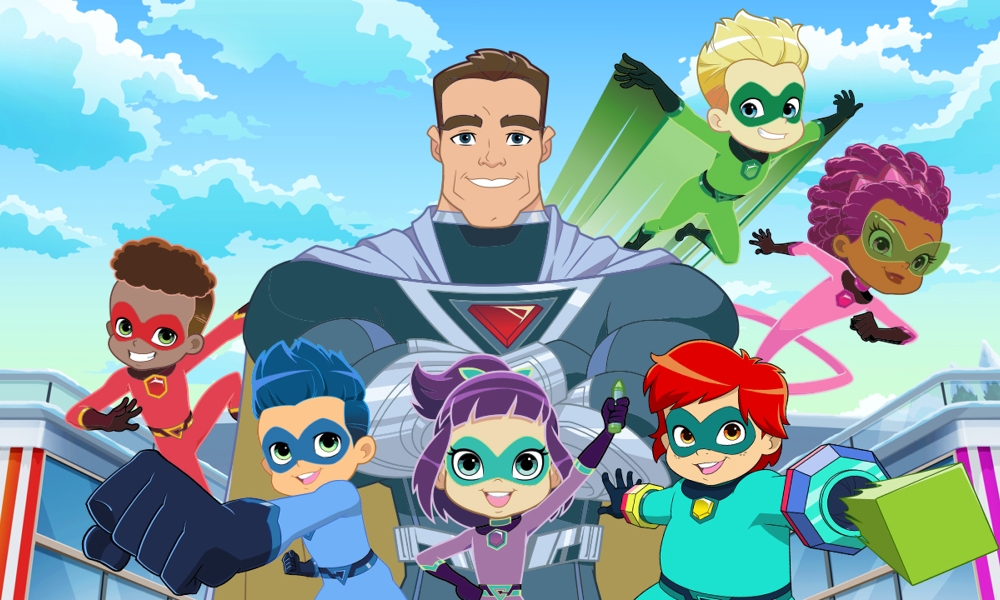
Genius Brands International announces the official launch of Stan Lee’s Superhero Kindergarten, which premiers on April 23, streaming exclusively on the company’s Kartoon Channel! new episodes of the 26 x half-hour series will debut each week.
Stan Lee’s Superhero Kindergarten is one of the last creations from the genius mind of the late Stan Lee, and stars the voice of iconic big screen action hero Arnold Schwarzenegger, who is also an executive producer on the series. The action-adventure comedy for kids and families focuses on the adventures of six unique kids who are learning to master their super skills, along with their ABCs. With the help of their teacher Arnold Armstrong (a.k.a. Captain Fantastic, the greatest superhero to ever live!), they will learn the values of teamwork and health while also protecting their town from rivals.
“This is a deeply personal project for me and I am so pumped to introduce it to the world,” said Schwarzenegger. “Not only has it allowed me to bring to life the work of the fantastic Stan Lee, but the series also touches on subjects I’ve spent my life working on, from health and fitness tips and anti-bullying messages to inclusivity and diversity. It brings me great joy to share that messaging with kids in a way that is vibrant, dynamic and most important — fun! It’s an honor to have worked with Stan Lee and I know he would be proud of the message we’re delivering.”
Synopsis:
With great power, comes great MESS! The school day at Superhero Kindergarten is a lot like that at any other kindergarten…except these six extraordinary students have a secret… They are superheroes!
It all began five years ago when Arnold Armstrong faced off in a final fight against his nemesis, the evil Dr. Superior, that left him powerless. Little did anyone know that during the fight, super-energy particles rained down on a group of unsuspecting toddlers. Now, those toddlers are kindergarten students at Greenville Elementary School who, with the help of Arnold Armstrong, must learn to control their powers as they go on super adventures! Arnold Armstrong’s mission: to train these kids to use their super-powers safely and without wrecking the school or revealing their identities.
Characters:
Arnold Armstrong/Captain Fantastic teaches the kids how to use their powers for good!
Pedro/Power Pedro might be the smallest kid in his class, but his super strength makes him the strongest kid…in the world!
Patty/Patty Putty can stretch her body, melt like slime, bounce like a super ball and absorb tremendous impact thanks to her stretch power!
Billy/Blocker has the power to create solid building blocks out of energy that he uses to literally build a wall around himself, others and just about anything!
Lin/Cray Cray loves to draw and she’s good. So good that everything she draws — from doorways to bridges, comes to life thanks to her crayon power!
Jackson/Jackson Jet’s flight powers are a little embarrassing. They come from gas — his own!
Vik/Sticky has super adhesive skin which gives him stick power! When it activates everything and anything sticks to him!
Stan Lee’s Superhero Kindergarten is voice-directed by Emmy winner John Landis, with Steven Banks, former head writer for SpongeBob SquarePants, serving as head writer. The series is produced by Genius Brands and Stan Lee’s POW! Entertainment in association with Schwarzenegger’s Oak Productions. Gill Champion, CEO of POW!; Andy Heyward, Chairman & CEO of Genius Brands; Schwarzenegger; and Paul Wachter of Main Street Advisors serve as executive producers.
Following Friday night’s big Annie Awards live-streamed celebration of all things animation, awards season continued to roll on with honors for editors, sound editors and the conclusion of the virtual San Francisco Int’l Film Festival. It takes top talent across the board to bring our favorite animated spectacles to the screen, so let us all celebrate the winners:
In the Shadow of the Pines
SFFILM 2021 came to a close Sunday with an afternoon ceremony for the juried Golden Gate Awards and Audience Awards, hosted online at sfflim.org and awarding more than $17,000 in cash prizes.
Animated Short ($750): WINNER: In the Shadow of the Pines, Anne Koizumi(Canada)
In awarding the animated short prize, the jury commented that the director “creates a memorable tribute to her father with unique animation, effective writing, and a moving use of mixed media, leaving the audience with a lasting connection to the film.”
Family Film ($750): WINNER: To: Gerard, Taylor Meacham (U.S.A.; DreamWorks)
The jury praised the film for its “dynamic and inspiring story line and connected with the overarching themes of generosity, kindness and belief in yourself. The film’s creators are admired for using exciting animation and creating an engaging plot with little dialogue, that reminds us all of the importance of “paying it forward” and the magic that can happen when we choose to share our gifts.”
To: Gerard
The 71st Annual ACE Eddie Awards, presented by American Cinema Editors, were presented in a virtual ceremony Saturday, recognizing outstanding editing across 14 categories of film and TV. This year’s ACE Golden Eddie for Filmmaker of the Year was bestowed on Oscar winner Spike Lee (accepted by his daughter, Satchel Lee). Lynzee Klingman, ACE and Sidney Wolinsky, ACE received Career Achievement Awards. (Full list of winners here.)
Best Edited Animated Feature Film: The Croods: A New Age | James Ryan, ACE Onward | Catherine Apple Over the Moon | Edie Ichioka, ACE Wolfwalkers | Darragh Byrne, Richie Cody, Darren Holmes, ACE WINNER: Soul | Kevin Nolting, ACE
Best Edited Animation (Non-Theatrical): Big Mouth “Nick Starr” | Felipe Salazar Bob’s Burgers “Bob Belcher and the Terrible, Horrible, No Good, Very Bad Kids” | Jeremy Reuben BoJack Horseman “Nice While It Lasted” | Brian Swanson WINNER: Rick and Morty “Rattlestar Ricklactica” | Lee Harting
Rick and Morty “Rattlestar Ricklactica”
The Motion Picture Sound Editors presented the 68th Annual MPSE Golden Reel Awards in a full-virtual ceremony Saturday night, recognizing outstanding achievements in sound editing in 22 categories encompassing feature films, long- and short-form TV, animation, games, special venue and more. The MPSE Filmmaker Award was presented to director George Miller (Mad Max, Happy Feet). The Career Achievement Award, honoring Dennis Drummond, was presented to re-recording mixer David Giammarco. (Nominee information below abridged for space, see the full list of nominees here.)
Outstanding Achievement in Sound Editing – Feature Animation The Croods: A New Age | DreamWorks Onward | Disney-Pixar Over the Moon | Netflix Wolfwalkers | Apple TV+ WINNER: Soul | Disney-Pixar
Supervising Sound Editors: Coya Elliott, Ren Klyce | Sound Designer: Ren Klyce | Supervising Dialogue Editor: Cheryl Nardi | Sound Effects Editors: Kimberly Patrick, Jonathan Stevens, Steve Orlando | Foley Editors: Thom Brennan, Dee Selby | Foley Artists: John Roesch, MPSE; Shelley Roden, MPSE Music Editors: Sally Boldt, Justin Pearson
Outstanding Achievement in Sound Editing – Non-Theatrical Animation Long Form Batman: Death in the Family | Warner Bros. The Boss Baby: Back in Business “Get That Baby” | Netflix DuckTales “Let’s Get Dangerous!” | Disney The Epic Tales of Captain Underpants “The Xtreme Xploits of the Xplosive Xmas” | Netflix The Loud House “Schooled” | Nickelodeon To Your Last Death | Coverage Ink / Quiver Distribution WINNER: Mortal Kombat Legends: Scorpion’s Revenge | Warner Bros. Animation
Supervising Sound Editors: Rob McIntyre, MPSE; D.J. Lynch | Supervising ADR Editor: Mark A. Keatts, MPSE | Sound Effects Editors: Lawrence Reyes, Roger Pallan, Ezra Walker | Dialogue Editors: Mike Garcia, MPSE; Kelly Foley Downs, David M. Cowan, Patrick | Foley Sound Designers: Marc Schmidt, Evan Dockter | ADR Editors: Mark Mercado, Jon Abelardo | Foley Editors: Roberto Allegria, Derek Swanson
Mortal Kombat Legends
Outstanding Achievement in Sound Editing – Animation Short Form Archer “Cold Fusion” | FX The Boss Baby: Back in Business “Escape from Krinkles” | Netflix Canvas | Netflix Clone Wars “The Phantom Apprentice” | Disney+ Star Trek: Short Trek “Ephraim and Dot” | CBS All Access (Paramount+) Wizards “Spellbound” | Netflix WINNER: Baba Yaga | Baobab Studios
Supervising Sound Editor: Scot Stafford | Sound Designers: Andrew Vernon, Jamey Scott, MPSE | Sound Effects Editor: Brendan Wolf | Music Editor: Rex Darnell
Outstanding Achievement in Sound Editing – Computer Cinematic Destiny 2: Beyond Light | Bungie Ghost of Tsushima | Sony Interactive Entertainment Ori and the Will of the Wisps | Xbox Game Studios Marvel’s Spider Man: Miles Morales | Sony Interactive Entertainment Star Wars Jedi: Fallen Order | Electronic Arts WINNER: The Last of Us Part II | Sony Interactive Entertainment
Supervising Sound Editor: Shannon Potter | Sound Effects Editors: Patrick Ginn, Kyle Bailey, Michael Finley, Chad Bedell, Eric Paulsen, Keith Bilderbeck, Jim Diaz | Foley Artists: Dawn Fintor, Alicia Stevenson | Audio Director: Robert Krekel | Sound Designers: Justin Mullens, Beau Jimenez, Neil Uchitel, Jesse Garcia, MPSE; Michael Marchisotto | Supervising Music Editors: Rob Goodson, Scott Shoemaker | Music Editors: Anthony Caruso, Tyler Crowder, Sonia Coronado, Adam Kallibjian, Adam Kallibjian, James Zolyak, Ted Kocher, Scott Bergstrom, Tao-Ping Chen
Outstanding Achievement in Sound Editing – Computer Interactive Game Play Ghost of Tsushima | Sony Interactive Entertainment Marvel’s Spider Man: Miles Morales | Sony Interactive Entertainment Star Wars Jedi: Fallen Order | Electronic Arts WINNER: The Last of Us Part II | Sony Interactive Entertainment
Audio Director: Robert Krekel | Supervising Sound Editor: Shannon Potter | Supervising Dialogue Editor: Maged Khalil Ragab | Supervising Music Editors: Rob Goodson, Scott Shoemaker | Sound Designers: Neil Uchitel, Beau Jimenez, Justin Mullens, Jesse Garcia, MPSE; Michael Marchisotto, Derek Brown, Jordan Denton | Dialogue Editors: Grayson Stone, Julius Kukla, Thomas Barrett, Jaime Marcelo, Erik Schmall, Duncan Brown, Cesar Marenco | Foley Editor: Eolyne Arnold, MPSE | Sound Effects Editors: Patrick Ginn, Michael Finley, Kyle Bailey | Music Editors: Anthony Caruso, Tyler Crowder, Tao-Ping Chen, Sonia Coronado, Adam Kallibjian, Samuel Marshall, James Zolyak, Ted Kocher, Scott Bergstrom | Foley Artists: Dawn Fintor, Alicia Stevenson
Home video, reading and DIY picks from the April ’21 issue of Animation Magazine (No. 309),
The Legend of Korra: The Complete Series
The follow-up to Nickelodeon’s animated epic Avatar gets the luxe full series Limited Edition SteelBook treatment this month. Created by Bryan Konietzko and Michael Dante DiMartino, Annie and Emmy winner Korra is set 70 years after the first show’s arc and follows the new Avatar as she faces the challenges, duties and responsibilities of her destiny. The four-book collection features new front and back cover art by Caleb Thomas and includes legacy Blu-ray bonus features. Limited to 10,000 copies. [Paramount/Nickelodeon, $98 BD]
Bored teens pin their hopes on rock ‘n’ roll in Kenji Iwaisawa’s almost entirely self-animated feature about a trio of delinquents on a quest for musical glory, trying to impress their peers and avoid a rival gang on the way. An Annecy selection and OIAF Grand Prize winner, this lo-fi slacker comedy features music by Shintaro Sakamoto and comes with making-of featurette, short films by the director and more bonus riffs. [Shout! Factory, $27 BD]
One of the most highly praised films of the year and a strong awards season contender, Pete Docter and Kemp Powers’ tale of a not-quite-dead band teacher’s (Jamie Foxx) quest to inspire a spark for life in an unborn soul (Tina Fey) and get back to Earth to fulfill his dreams arrives on a variety of physical platforms today — including exclusive sets from Best Buy (SteelBook) and Target (with ltd. edition gallery book).Heavenly bonus features cover the movie’s music, artistry, technical feats and philosophy, as well as deleted scenes, commentary and more. [Disney, DVD/BD/4K]
Take in the fantastical journey of Disney’s newest heroine and her scaly sidekick in this lush hardcover edition, packed with never-before-seen development art, character sketches, storyboards and color scripts. Kalikolehua Hurley, a cultural relations lead at the studio, and film producer Osnat Shurer author this colorful exploration of Raya’s warrior quest and the fantastical, Southeast Asian-inspired land of Kumandra. Forewords by directors Don Hall and Carlos López Estrada, co-directors Paul Briggs and John Ripa. [Chronicle, $43]
Your Career in Animation: How to Survive and Thrive (Second Edition)
Industry veteran David B. Levy (currently director of animation for Disney+) revises his comprehensive go-to guide to Toon Town for 2021. Advice from more than 150 top talents — including Brooke Keesling (Bento Box), Mike Hollingsworth (BoJack Horseman), Andrea Fernandez (The Cuphead Show) and Oscar nominee PES (Fresh Guacamole) — will help guide your every step, from getting the most out of school, making yourself marketable, job (or no job) tips and even setting out on your own. Plus, key resources to help you quickly find training, networking and showcase platforms. [Allworth, $20 / $15 ebook]
Your Career in Animation: How to Survive and Thrive
Ctrl + Art + DlY Puppet Kit
London-based stop-motion animator Jennifer Kidd (Norman Picklestripes, Isle of Dogs) has pivoted her popular hands-on workshops online in These Difficult Times, and now she’s made it even easier for home learners with her Pro Puppet Building Kit. Containing all the physical materials needed to craft your own animatable model at home, the kit also includes access to Kidd’s four-hour Zoom course and online tutorials. [£65-75 including shipping, educational discounts available | control-art-delete.com]
Blender 2.91
Learning how to be a 3D artist involves understanding technique, workflow and best practices more than knowing specific programs. Sure, you can dive into Maya or Houdini or 3ds Max or Cinema 4D, etc. But as a budding artist, the cost of these programs may be out of your price range. This is where Blender comes in: It’s robust, full-featured, is actually used in production and it’s open source — which means it’s totally free.
Blender 2.91 is the latest build— and frankly, I’m a little embarrassed that I haven’t given it the attention that it deserves. The list of features is exhaustive, and ranges from modeling to sculpting to animation to cloth to volumes, to even things that other 3D programs have very little of: internal compositing, tracking, editing and 2D/3D hybrid drawing tools.
For me, a few of the brighter highlights in 2.91 are as follows: The Grease Pencil feature is designed to be for 2D animation, while existing in 3D space. The strokes become editable objects. And, traditional 2D tools like onion skinning provide a familiar workflow. New Grease Pencil features in 2.91 include the ability to import black and white images and convert them to Grease Pencil objects. Also, you can paint masks which will act as hold-outs between foreground and background animations.
Cloth tools had been introduced in earlier versions, but the developers have taken this feature further. Cloth sculpting has been made more robust by including collisions. Users already had ways to pull surfaces around to create wrinkles and buckling in cloth while retaining the surface area, but the collisions now allow one to drape cloth on characters.
There are also sophisticated FX with volumes where you can convert fluid volumes to meshes or vice-versa, meshes to volumes. And you can displace these volumes with procedural textures.
The list goes on and on. But, despite the fact that a Blender review is long overdue, and I’m glossing over just how powerful the program is, my primary reason for bringing it up now — in an issue focused on education — is how accessible it is. Everyone with a computer can use it, which means everyone can learn 3D (and 2D) animation without the expense of a software license. While there are many offers of educational or indie licenses of competing 3D programs — $750 can still be out of range for someone just starting out. Blender removes those limitations.
As a helpful hint that I frequently applied when I was first starting out, I would use tutorials from other software packages, and learn how to do them in the package I was using. For example: I had learned 3ds Max initially, so when Maya was released, I would use Max tutorials to force myself to rethink the approach and recreate it in Maya. Blender is as powerful as most other programs out there. There are hundreds of hours of training for it. But try looking at Maya or Cinema 4D or 3ds Max tutorials and try to recreate them in Blender. By doing so, you are learning the techniques and methodology of working in 3D, and not just where the correct buttons are in the software.
Stan Winston School of Character Arts
Let’s step away from strictly animation and visual effects, at least from a digital perspective, and turn to the practical side of things: The special effects, the creatures, the miniatures and the puppets. In this world of CG domination, we sometimes lose track of our brothers and sisters who make things for real. These exceptionally talented artists have skills that have been groomed through apprenticeships and experience.
So, where would you go to learn these skills? If you go down to Best Buy and buy a computer, you have taken your first step to being a digital artist. All that is required now is 10,000 hours working on the computer. To actually fabricate a thing, there is a lot more involved. There is clay, silicone, machining metal, armature forging, and just so much more than popping open ZBrush and starting to sculpt.
Fortunately, the late Stan Winston — one of the kings of practical effects — has a namesake online School of Character Arts, which has hundreds of hours of training material covering everything from design to prosthetics to animatronics to wigs(!) to sculpting and beyond. The courses are taught by people who are actually doing it in films and television, and who are using the latest techniques. The brain trust is vast.
Similar to something like Pluralsight, you can search around for the exact tutorial you are looking for, but the real power lies in the Pathways, where you are led through a series of courses as a deep dive into a particular subject: Design, Fabrication, Eyes, Teeth, Mold Making, Model Making, Filmmaking, etc. I love this approach because you are learning it as a skill and a craft, rather than simply solving a problem.
Additionally, the community on the School’s site is active and and very responsive. The instructors interact with the students when they have questions. The students interact with each other. So, the knowledge isn’t coming strictly from the tutorials: You are getting feedback from your peers, just like school.
In fact, I am a member of the School not because I want to change my career and be a special effects (as opposed to visual effects) artist, but rather because I need to know what these guys can (and cannot) do, so that we can work together to benefit from each other’s strengths. The knowledge also allows me to understand the language of their world so I can better communicate.
For those on the digital side of things, you can learn a lot from actually making real things. Sculpting in clay gives you more understanding when sculpting in ZBrush. Designing wigs provides insight into grooming hair in XGen. Fabricating real clothes helps Marvelous Designer artists. Painting real miniatures helps texture artists. Not to mention how digital models work with 3D printers that provide pieces for the fabrication of special effects stuff, as well as the computer assistance when designing animatronics. There is much to learn!
FXPHD
It’s been a good five years since I’ve last done a review on FXPHD, and I have continued to be a paying member since then because I feel that the content is so good for VFX artists who are trying to up their game.
FXPHD works on a subscription model, where you have access to nearly all of the courses at any time for a monthly fee. These courses range from relative beginners to artists who have been in the field for years. And they span across a plethora of techniques (compositing, modeling, sculpting, animation, FX, environments, matte painting, editing, tracking, you name it) and across even more software packages (Maya, Nuke, Houdini, Cinema 4D, After Effects, ZBrush, Photoshop, Katana, Clarisse, RenderMan, etc., etc.,etc.).
There are also deep-dive masterclasses for Color Grading in Resolve for an additional cost. But believe me, they are worth it. Frankly, I feel that every VFX artist should go through at least a rudimentary course in color grading.
The courses are all taught by instructors who have been in and are still in the industry, using the same techniques in actual production workflows that they are teaching you. My favorite is probably Victor Perez, a VFX supervisor in Mexico whose knowledge is deep and his presentation is expansive. If you want to know more about pulling greenscreens than just throwing on a keylight and sampling the color, Victor explains not just what tools to use, but why — on a mathematical level — you choose to use those tools. And this kind of approach spans the courses — it’s not just about the how, it’s about the why.
Yes, the content is fantastic. Your FXPHD subscription provides you with a VPN license to many of the software packages you are learning about. Houdini and NukeX (as well as most other software) hold a hefty price tag if you are just starting to learn and you aren’t yet making money with your skillset. FXPHD provides you with the tools to learn. There are plenty of training sites on the internet, but I can’t think of any off the top of my head that provides this kind of benefit.
Recently, I supervised a 360 video shoot, which I knew nothing about. FXPHD was my first stop to get up and running on the techniques before the project got underway and I needed to at least look like I knew what I was doing. One of the courses partially taught by VFX veteran Scott Squires. (Look him up! He’s done a few things.)
So whether you are just starting out, or whether you are a years-long veteran, the industry never stops changing, and we never stop learning. FXPHD has been and will continue to be one of my primary sources to keep my skill set ahead of the curve.
Todd Sheridan Perry is an award-winning VFX supervisor and digital artist whose credits include Black Panther, Avengers: Age of Ultron and The Christmas Chronicles. You can reach him at todd@teaspoonvfx.com.
***This article originally appeared in the 2021 International Education & Career Guide in the April ’21 issue of Animation Magazine (No. 309)***
At this time of the year, many students and young hopefuls are putting together their portfolios. They hope to apply for academic programs, internships and their first professional jobs. As someone who has created portfolios, and reviewed many portfolios over the years, here are some tips from me and my colleagues:
Nobody likes making a portfolio. It is the creative equivalent of a proctology exam. That anxious, inadequate feeling you have while doing it is something we have all felt. It was years before I felt my portfolio really reflected my capability as an artist. Yet, it is something we all have to do.
In this digital age, the word ‘portfolio’ has become an outdated generic term for your samples. Very few businesses expect a big, black, zippered folder stuffed with drawings anymore. Most reviews today are done online; on your application, you list a link to your samples page.
Professional HR folks tell me you should make your link easy to access, and don’t make them have to deal with passwords. If you have too many impediments, they’ll just move on to the next candidate.
Have some samples of your life drawing from the model. Beyond your personal style, it is from these we can judge your raw talent and ability. I’ve seen people hired without a lick of animation, but their drawing was strong.
Do a page of human hands, the hardest thing to draw.
Do a page of animals.
Have some examples of your sketchbook. Drawings from real life. Action poses from watching a sporting event. A dog catching a frisbee. People in a coffee shop. Edit your sketchbook — don’t leave in scribbles, grocery lists, friend’s phone numbers.
“Sometimes, we get a thick portfolio with too many pieces. Choose your best artwork, limit to maybe 20 or less pieces.” — Silvia Hoefnagels.
Most reviewers are looking at 20-30 portfolios at a time. So, you got to impress us in the first 30 seconds. Put your best stuff first, a good piece at the end, and weak stuff in center.
Don’t put you stuff in chronological order starting with your earliest animation. We don’t care about how far you’ve come. Show us what you can do now.
Don’t draw famous characters like Mickey Mouse or Spider-Man. We pros don’t always agree on how to draw them correctly, so it is suicide for you.
If you have clips of films or animatics you made, keep them to around three to five minutes or less. No reviewer has time to appreciate a profound cinematic experience. After a few minutes they’ll skip ahead to the next piece.
“Clear facial expressions and hands in boards and animatics.” — Thomas Richner.
“Demonstrate a spectrum of styles or you will get typecast. Going in, if I know the show style I’m applying for, I frontload the portfolio with the closest thing I have (or create it). Have them understand instantly that you are the right person for their needs. That’s how I broke into the business. I knew what they were looking for and I did a bunch of appropriate samples.”— Lance Falk.
“In everything, demonstrate your willingness and ability to go beyond the generic, obvious, easy creative solution. Put observation and thought into the work.” — Spyros Tsiounis.
It is good to post professional work you have done, but don’t rely on that alone. Some people made their portfolio entirely of one commercial project: the storyboards, the characters, the layouts. Show other stuff as well.
Add a resume (CV, whatever). List places you’ve worked, even if they are not related to the arts — fry cook at Burger King, etc.
When you are done, show your portfolio to someone whose opinion you trust. Some of your pieces may be redundant. It is hard to edit your own stuff, because you’ve put blood in everything. You are too close to it. Get a fresh eye.
Keep updating your portfolio with new stuff. Reviewers notice when a majority of your samples are 10 years or older or they’ve seen them before.
If you get rejected, just remember that ‘no’ does not mean ‘no forever,’ it means ‘no this week.’ Next month the whole working situation may change. I once applied to a studio that was about to close. But they didn’t tell me that. They gave me their standard rejection, “Work on your drawing,” etc. Don’t argue. Learn from the good critique you are given, implement their notes and try again. Success does not always go to the best artist, or the best hustler. Success goes to the stubborn.
To newcomers, the whole system may seem unfair, but please understand we all had to go through it. I was turned down by Walt Disney Studio twice. I got in on the third try, and ended my eight-year career there looking at portfolios. You can win if you believe in yourself. Just keep your eyes on the prize, and good luck!
Tom Sito is an award-winning animation industry veteran and professor of cinematic arts at USC. His many movie and TV credits include The Little Mermaid, Beauty and the Beast, Aladdin, The Lion King, Who Framed Roger Rabbit, Pocahontas, Shrek, The Prince of Egypt, Spirit: Stallion of the Cimarron, Osmosis Jones, Looney Tunes: Back in Action, Fat Albert, He Man and the Masters of the Universe, She-Ra: Princess of Power, Superfriends and many others. Sito is the author of Drawing the Line: The Untold Story of Animation Unions, Timing for Animation and Eat, Drink, Animate: An Animator’s Cookbook.
When doing production, I rank efficiency above all.
More important than talent and more critical than experience, working efficiently opens up the opportunity for more revisions and refinements while simultaneously saving time, money and wear-and-tear on your grey matter.
No matter how talented or experienced you are, if you take the long way around, you will inevitably waste time and money and the quality of your work will subsequently suffer, or at minimum not be as good as it could be if you only worked more efficiently.
Save Your Thoughts and Clicks
When you start a new project, always put a shortcut of this folder on your desktop. Constantly navigating through your computer, then your hard drives, then your folders, then your subfolders, takes time and extra thinking, whereas having your project shortcuts on your desktop clears the visual and mental clutter, taking you immediately to your project without needing to stop and think.
Starter Kits Boost Productivity
Chances are, if you are a staff member of an animation team or visual effects house, you do very similar work from day to day. This being the case, why not create a starter kit that will give you a head start for each project?
To illustrate this point: 2D vector character animators almost always utilize the same pre-made body parts for each shot or each episode of a cartoon. The animators are provided with hands, arms, legs, various facial expressions and more that can be quickly and easily assembled to produce animation. This is a very powerful concept that should be applied to all production work across the board.
Imagine the waste of re-creating the exact same content from scratch instead of implementing premade templates. Shockingly enough, many (if not most) production artists do just that.
For example, 3D modelers should create a starter kit that has all of their most used textures already set up in a 3D file. It’s a huge waste of time to sift through massive directories of textures each time you need to create a model if you frequently use the same assortment of textures. Go ahead and create a file that has textures applied to null objects so they are already setup and ready to go from the start.
Moreover, if you use recurring models such as shingles, trees, bricks, plants, vehicles, etc., create a starter kit file that has all of these models already setup with textures applied so you can get a big jump on the task at hand.
Recycle Your Work
After each project is completed, categorize and archive all of your content so you can reuse and repurpose it later.
For example: If you are an animator, save each walk cycle. If you are an architectural modeler, save each building. If you do landscapes, save each tree, each bush, and each plant. Put all of your content in ready-to-go files so you can use that as a starting point for each new project.
Setting up an elaborate starter kit will save you lots of time, untold amounts of clicks, and relieve you of mental strain from trying to remember where a whole bunch of files are located. Not needing to browse through potentially dozens of directories, only to locate the same handful of files you frequently use, will greatly improve your efficiency and focus and will afford you more time to revise and improve the quality of your work.
Once you establish this as a habit, there will soon come a time where you will never again need to start any project completely from scratch. And this will help you, your projects and your company realize more gains both in quality as well as cost-savings, while simultaneously making your job easier and more enjoyable all around.
Martin Grebing is the president of Funnybone Animation Studios. He can be reached at www.funnyboneanimation.com.
ASIFA-Hollywood’s 48th AnnualAnnie Awards, honoring overall excellence as well as individual achievement in animation across 36 categories, were held tonight as a live streamed virtual ceremony this Friday, April 16. The star-studded presentation, often a predictor for the Oscar animation races, bestowed multiple honors on awards-season favorites Soul(seven wins, including Best Feature) and Wolfwalkers (five, including Best Indie Feature) — which tied for most nominations this year with 10 each; graphic novel-inspired streaming series Hilda (three) and Genndy Tartakovsky’s Primal (two).
The virtual awards show made the best of its format, with lively presenters such as Josh Gad, Matthew Rhys, Philippa Soo, Eva Whittaker, Patrick Warburton, composer Michael Giacchino and directors Sergio Pablos, Jill Culton, Nora Twomey and Matthew A. Cherry. Many of the award winners offered hilarious and poignant acceptance speeches, especially the team at Cartoon Saloon who stole the show with their clever and creative spots. Hats off to everyone at ASIFA for producing such an entertaining and satisfying virtual show. Of course, we do look forward to going back o the live version of this annual event in 2022, fingers crossed.
BEST FEATURE: Soul | Pixar Animation Studios
BEST INDIE FEATURE: Wolfwalkers | Cartoon Saloon/Melusine Productions for Apple/GKIDS
BEST SPECIAL PRODUCTION: The Snail and the Whale | Magic Light Pictures
BEST SHORT SUBJECT: Souvenir Souvenir| Blast Production
BEST SPONSORED: There’s a Monster in My Kitchen| Cartoon Saloon, Mother
BEST TV/MEDIA – PRESCHOOL: The Adventures of Paddington “Paddington Digs a Tunnel to Peru” | Blue-Zoo Animation Studio and Nickelodeon Animation Studio
BEST TV/MEDIA – CHILDREN: Hilda “Chapter 9: The Deerfox” | Hilda Productions Limited, a Silvergate Media Company, Netflix Inc. and Mercury Filmworks
BEST TV/MEDIA – GENERAL AUDIENCE: Genndy Tartakovsky’s Primal “Coven of the Damned” | Cartoon Network Studios
BEST STUDENT FILM: La Bestia| Gobelins, l’école de l’image | Directors: Marlijn Van Nuenen, Ram Tamez, Alfredo Gerard Kuttikatt
Primal “Coven of the Damned”
BEST FX FOR TV/MEDIA: Jurassic World: Camp Cretaceous “Welcome to Jurassic World” | Production Company: DreamWorks Animation | FX Production Company: DreamWorks Animation and CGCG Inc. | Emad Khalili, Ivan Wang, Chris Wombold, Kyle Goertz, Kathy D. Tran
BEST FX FOR FEATURE: Soul | Production/FX Company: Pixar Animation Studios | Tolga Göktekin, Carl Kaphan, Hiroaki Narita, Enrique Vila, Kylie Wijsmuller
BEST CHARACTER ANIMATION – TV/MEDIA: Hilda | Hilda Productions Limited, a Silvergate Media Company, Netflix Inc. and Mercury Filmworks | David Laliberté
BEST CHARACTER ANIMATION – FEATURE: Soul | Pixar Animation Studios | Michal Makarewicz
BEST CHARACTER ANIMATION – LIVE ACTION: The Mandalorian | Production Company: Lucasfilm | FX Production Company: Image Engine | Nathan Fitzgerald, Leo Ito, Chris Rogers, Eung Ho Lo, Emily Luk
BEST CHARACTER ANIMATION – VIDEO GAME: Marvel’s Spider-Man: Miles Morales | Insomniac Games | Brian Wyser, Michael Yosh, Danny Garnett, David Hancock
The Mandalorian
BEST CHARACTER DESIGN – TV/MEDIA: Amphibia “The Shut-In!” | Disney TV Animation | Joe Sparrow
BEST CHARACTER DESIGN – FEATURE: Wolfwalkers | Cartoon Saloon/Melusine Productions for Apple/GKIDS | Federico Pirovano
BEST DIRECTION – TV/MEDIA: Genndy Tartakovsky’s Primal “Plague of Madness” | Cartoon Network Studios | Genndy Tartakovsky
BEST DIRECTION – FEATURE: Wolfwalkers | Cartoon Saloon/Melusine Productions for Apple/GKIDS | Tomm Moore, Ross Stewart
BEST MUSIC – TV/MEDIA: Star Wars: The Clone Wars “Victory and Death” | Lucasfilm Animation | Kevin Kiner
BEST MUSIC – FEATURE: Soul | Pixar Animation Studios | Trent Reznor, Atticus Ross, Jon Batiste
BEST PRODUCTION DESIGN – TV/MEDIA: Shooom’s Odyssey | Picolo Pictures | Julien Bisaro
BEST PRODUCTION DESIGN – FEATURE: Wolfwalkers | Cartoon Saloon/Melusine Productions for Apple/GKIDS | María Pareja, Ross Stewart, Tomm Moore
BEST STORYBOARDING – TV/MEDIA: Looney Tunes Cartoons “Big League Beast / Firehouse Frenzy” | Warner Bros. Animation | Andrew Dickman
BEST STORYBOARDING – FEATURE: Soul | Pixar Animation Studios | Trevor Jimenez
Looney Tunes Cartoons “Firehouse Frenzy”
BEST VOICE ACTING – TV/MEDIA: Tales of Arcadia: Wizards “Our Final Act” | DreamWorks Animation | David Bradley (Merlin)
BEST VOICE ACTING – FEATURE: Wolfwalkers | Cartoon Saloon/Melusine Productions for Apple/GKIDS | Eva Whittaker (Mebh Óg MacTíre)
BEST WRITING – TV/MEDIA: Big Mouth “The New Me” | Netflix | Andrew Goldberg, Patti Harrison
BEST WRITING – FEATURE: Soul | Pixar Animation Studios | Pete Docter, Mike Jones, Kemp Powers
BEST EDITORIAL – TV/MEDIA: Hilda “Chapter 9: The Deerfox” | Hilda Productions Limited, a Silvergate Media Company, Netflix Inc. and Mercury Filmworks | John McKinnon
BEST EDITORIAL – FEATURE: Soul | Pixar Animation Studios | Kevin Nolting, Gregory Amundson, Robert Grahamjones, Amera Rizk
JURIED AWARDS
Winsor McCay Award: Willie Ito, Sue Nichols (posthumously), Bruce Smith
June Foray Award: Daisuke “Dice” Tsutsumi
Ub Iwerks Award: Epic Games’ Unreal Engine
Special Achievement Award: Howard
***This article originally appeared in the May ’21 issue of Animation Magazine (No. 310)***
The building was the size of a city block, plunked down in rural Greenwich, Connecticut. You could spend an hour walking the place, observing the different cultures of each department, the different crafts and artsy posters on display. It was arguably one of the most impressive animation studios in which we New York commuters had ever worked.
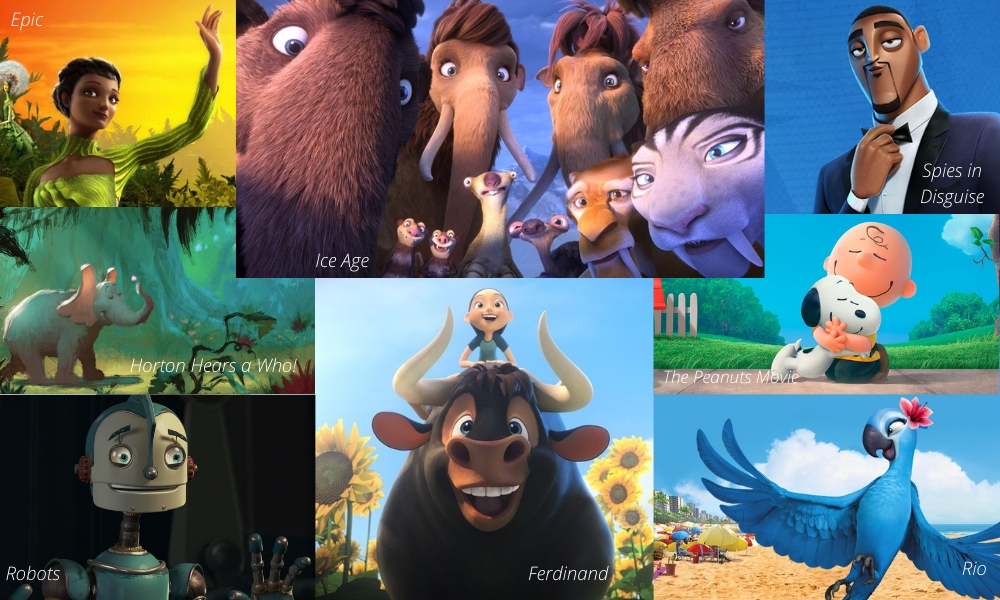
Disney has owned Blue Sky Studios, the only current East Coast feature animation house, ever since it acquired Fox on March 20, 2019. On February 9 of this year, Disney announced that it would shut down Blue Sky after 34 years of operation (the studio opened in 1987) and 13 feature films. And so, an era has ended. I had the unique experience of both working at Blue Sky — briefly, in the storyboard department for the movie Epic — and then writing its definitive art book (The Art of Blue Sky Studios, Insight Editions, 2014). Here’s what I learned, in a nutshell (no Scrat pun intended), as an insider.
Par for the course, Blue Sky started with advertisements. This was around 1990, when CG was still learning to walk. It was the first to animate M&M’s characters in CG, talking to sitcom stars. All of the studio’s commercials looked startlingly realistic, straight out of our actual world (something beyond even Pixar’s purview at the time). For that, Blue Sky landed gigs splashing its animation seamlessly alongside live action — the cockroaches in Joe’s Apartment, the penguin in Fight Club, the singing dead fish in The Sopranos, and so on.
What they possessed was a proprietary program for life-like lighting, developed by programmer Dr. Eugene Troubetzkoy, with digital film recording technology by electrical engineer Carl Ludwig. Michael Ferraro was the systems specialist.
“The very early days of Blue Sky were us sitting in a 900-square-foot office, just programming, myself included – four of us,” Chris Wedge told me in 2013. “After a while they would be writing code, and I would be exercising it, so for a year or two they said, ‘You can do this with the code. Try it out!’ and I’d try it out. I could make a shape, I could make another shape, I could put shapes together. I could put a surface on it, I could make it look like it cast a shadow. Month by month, year by year, we started building up these capabilities, building the software. You couldn’t buy this stuff back then. Everybody’s stuff was proprietary. It was forward-engineering. We were making it from scratch.”
The ultimate breakthrough was “Radiosity,” the way light bounced off surfaces and (gasp!) textures – this made their worlds believable and immersive. And this made the short film Bunny (1998) look real. Wedge’s direction gave it heart. The combination led to an Academy Award.
Blue Sky’s rendering of fur was a huge breakthrough in the 1990s (how much fur do you see in Pixar’s Toy Story?)and so the studio ran with that into Ice Age (2002). The studio attests that the Ice Age film series is (or was in 2013) the most popular animated film franchise globally. They said that its themes of mixed family dynamics, of love overpowering dysfunction, transcend borders. Oh, and apparently the side-character-as-a-running-gag shtick? The folks at Blue Sky looked at DreamWorks’ sidekick characters and pointed to their own Scrat v. Acorn saga with a boastful, “We did it first!”
[chris-wedge.jpg + CarlosSaldanha.jpg] cap: Studio founder Chris Wedge (left) and director Carlos Saldanha (Rio, Ferdinand) stayed true to their artistic visions throughout the years.
A Haven for Artists
The artists were truly the stars of Blue Sky. The films had visual development by modern masters like Peter de Sève, William Joyce and Mary GrandPré. But everything that made it to screen had a level of artistic integrity. The Rio films look and feel like Rio. Brazilian-born director Carlos Saldanha has become, I was told, a national hero in his homeland. The directors of Horton Hears a Who! were blessed by Dr. Seuss’s widow, and created a whole Seussian style guide. The Charles Schulz estate toured the studio and worked closely in pre-production of The PeanutsMovie. They were wowed by the talent on site! (I know because I was there.)
It was hard not to drop your jaw in wonder. Turn the corner and there was a mannequin wearing a replica of Bomba’s gizmo-covered outfit from Epic.Over to the other side was the amazing room of maquettes. If you wandered over past the sweatboxes (yes, that’s what they, too, called the screening rooms) to the story department, a wall of staff caricatures going back years stretched the length of the hallway. The animators’ bay was particularly remarkable — some ambitious folks had constructed walls around their workstations to resemble tree houses, a pirate ship or a hunting lodge. In my wanderings, I even uncovered some artwork for an unproduced animated shorts program.
There were people who had been there since the beginning, and others who had been industry veterans since the 1980s. Since many of the staff commuted and shared a company shuttle, people mingled who otherwise wouldn’t have met. It created a summer-camp culture of sublimely talented people.
One wall near post-production sported a poster mapping the “History of Animation.” It’s funny. About 50 years stretched between the last big East Coast animation house (Fleischer Studios) and Blue Sky. No film studio close to Blue Sky’s magnitude has graced this side of the world, and probably none will again. But that chart is already out of date. Blue Sky belongs on that poster. Its place in the History of Animation is undeniable. And the films — as well as the memories – will live on.
Jake S. Friedman is an author and animation historian with two books coming out next year. Follow him on Twitter and Instagram @JakeSFriedman.
[Ice_Age.jpg] cap: Scrat as he appears in the Ice Age Films and as illustrated by Peter de Sève.
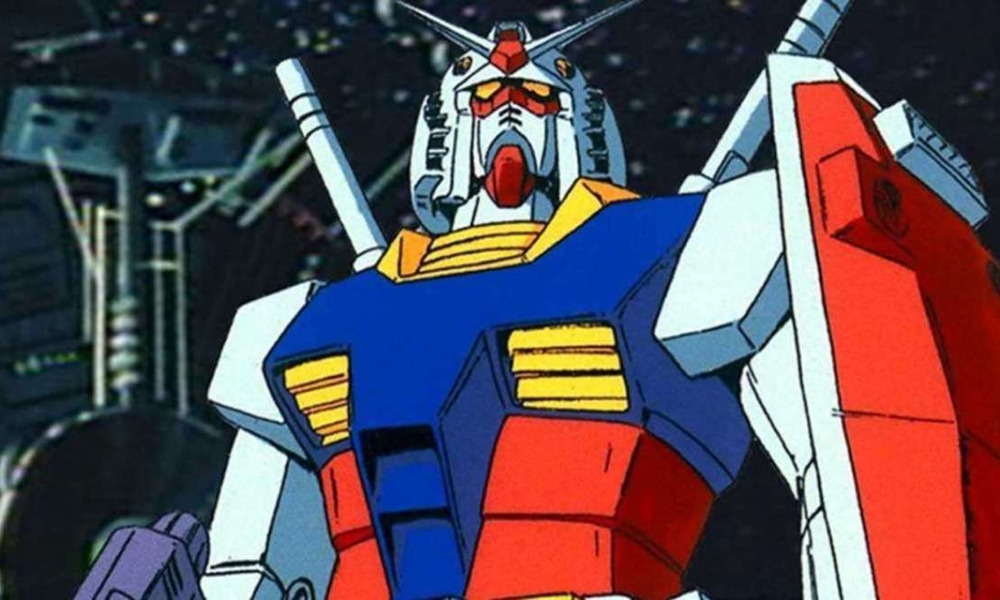
Netflix, Legendary Plan ‘Gundam’ Live-Action Feature Kong: Skull Island helmer Jordan Vogt-Roberts is tapped to direct the flick inspired by the 40+ year old hit anime franchise, with comics writer Brian K. Vaughan (Y: The Last Man) penning the screenplay and exec producing. The new adaptation will be overseen by Legendary’s Cale Boyter and original animation studio Sunrise. Vogt-Roberts is also working on an adaptation of videogame phenom Metal Gear Solid with Sony.
Kristen Wiig, Annie Mumolo Reteam for Evil Stepsisters Flick
On the heels of Netflix announcing its animated musical comedy Steps comes word that Disney+ is adding its own musical comedy re-imagining of Cinderella from the evil stepsisters’ POV to its live-action feature roster, Deadline reports. It’s unknown at this point if the Bridesmaids duo Wiig and Mumolo will appear in the film; Anastasia and Drizella will be cast with younger actresses.
Cinderella
Joye Murchison Kelly (née Hummel) Dies Age 97
The first woman to write Wonder Woman comics died a day after her birthday on April 5. A bright student of the character’s creator, William Moulton Marston, Kelly was a ghostwriter for 70 issues through the 1940s under the house pen name “Charles Moulton”. She began working on Wonder Woman #12 and was only the second woman to write for DC. After Marston died, the publisher hired another (male) writer and Kelly retired from comics in 1947 to marry her first husband.
The pioneer was honored with the Bill Finger Award for Excellence in Comic Book Writing at Comic-Con 2018. In an interview with The San Diego Union-Tribune on the occasion, Kelly reflected, “[Marston] was not writing just an adventure book. He wanted those who read Wonder Woman to be inspired, that the young women who read the stories would be inspired to study and enter the world and have confidence they could accomplish things. I think he felt that a woman’s touch would make the world better.”
Joye Hummel
Watch: ‘Floyd County Unionize’
As animators at Georgia’s largest animation studio (Archers, CAKE, Chozen) push for unionization and reportedly face gag orders on the topic, a team of 20-30 volunteers for the Floyd County Productions Guild used their free time to create an informational and inspiring animated music video featuring an original song set to the classic abolitionist marching song “John Brown’s Body.”
The animated short, its creators note, was designed to “express one idea — that our union can be a force of positivity within our workplace and the state of Georgia as a whole,” adding, “We hope people will be inspired by this film, and ask one more time for our management to recognize our union — we want to help management organize our studio, and ensure that every voice is heard.”
Trailer: ‘The Wind Whistles’
Written and directed by London-based Italian film editor Alessandro Dordoni, Fischia il Vento is based on a true story from his grandfather’s memoirs of being an Italian partisan in World War II — a story which took place 76 years ago today (April 16). Natasza Cetner created the hand-drawn animation, and the filmmakers will begin on the festival circuit this June with the help of Croatia-based distribution co. Bonobo Studio.
Clip: ‘Fast & Furious: Spy Racers’ S4 Premieres
Universal/DreamWorks Animation’s hit Netflix original launched is fourth season today (Friday), which follows the crew to Mexico and invites special guests including Danny Trejo and Paul “Big Show” Wight. In a newly released clip, Ms. Nowhere and the crew infiltrate a masquerade ball to discover why they were framed. But they quickly realize that it takes two to tango in a good fight, but that can be hard when you are fighting ghost agents!
We recently had the chance to catch up with Dave Ansari, the CEO of Canadian animation house Dream Farm Studios. The Toronto- and Poland-based company, which is celebrating its tenth anniversary this year, creates animation and gaming art for broadcast and web applications and works with many advertising agencies, indie and branding agencies around the world. Here is what Ansari told us about his studio:
Can you tell us a little bit about the origins and background of Dream Farm Studios?
Ansari: Let me start with a little bit of backstory from our animation studio. Back when I was a young boy, there used to be a cafe full of life and energy just outside our home. I used to sit down in front of the window and draw the scenes from that cafe, making sure I could seize every emotion with my pen and paper.
As time went by, I got better at drawing and storytelling through shapes, but soon after, I realized expressing feelings and stories was limited when It came to drawing a scene. Intrigued by creating more immersive stories, I got familiar with the world of animation. With the help of my brother, who was into 3D software, we founded Dream Farm Studios, hoping we could create better, more captivating stories than the one from the window of my childhood.
Dr. Dave Ansari
How many people are currently working at the studio?
Excited to enter the world of animation production, we had our first animation project in 2011 with only five artists, most of which were friends we knew. Fortunately, our commitment to quality made more clients keep coming, so we saw the need to increase our in-house staff to accept more significant projects. We currently have a permanent team of 110. Still, that number fluctuates according to our productions, sometimes peaking around 200 depending on the project.
Where is your company’s headquarters and which animation tools do you use?
Our animation studio now has operational headquarters in Poland and Canada (Toronto). Our global team of artists creates exceptional 2D and 3D animations to help our audience grow their dreams and achieve new heights.
We consistently use standard and globally acclaimed software and plugins such as Autodesk Maya, Pixologic ZBrush, SideFX Houdini, The Foundry Mari, Allegorithmic Substance Designer and Painter, Adobe Photoshop, Solid Angle (Autodesk) Arnold, Peregrine Labs Yeti and Maxon Redshift.
What would you say makes Dream Farm stand out in the competitive animation field?
I think what makes our animation studio different is our mentality of exploring uncharted and undiscovered stories that haven’t found their way into animation. We see animation not only as a medium of entertainment but one that can further the understanding of humans and the mysterious universe we live in. One thing that I want to see more in animation are projects that help debunk stereotypical cultural biases about the Black community. In one of our recent projects, we had the idea to empower the Black community on different ways and perspectives of communication while capturing the layers of how lives are affected personally and collectively by the decisions a person or community may make. As a result, we partnered with McBath Media and Tri Destined Studios on a family-friendly 3D animated TV series centered on an African-American family.
The creators of this show, CJ McBath and C Wright, were intentional about showing the diverse perspectives of an African-American family and how they are similar yet different in many views of life using the platform’s animated world. The journey of Black images in animation has been a storied one. This project honors that journey while bringing honesty and complexity to the characters, storylines, and art.
Toucan’s Tears
Can you talk about some of your other big projects?
In the case of 2D animation, we have partnered with great clients, too. It was late July 2020 when Austin Ranson Khemraj, the author and owner of Austin Art Productions, approached us for creating 2D animated short films. Austin, who has published several books, most of which are kids-oriented, had the idea to turn the books into short CGI 2D animated films and the first book to have the plan executed on was Toucan’s Tears.
For the animation method, Austin had provided some animation references that were in line with his vision for the project. Taking the references into account and studying the appropriate styles, we chose the frame-by-frame hand-drawn animation method. Fortunately, the animation is going to have its chance in international animation festivals, and Toucan’s Tears is going to be a beginning for this cooperation.
Our list of other clients includes Firefox, Cambridge University Press, DISH Network, Flare Games and Macbeth Media.
Do you receive any governmental support for your projects?
Our studio has not ever used nor requested any funding from the government. However, Canada is taking immediate, significant and decisive action to support Canadians and businesses facing hardship as a result of the COVID-19 outbreak. I think it’d be helpful for us to use any of the support from the government in the future.
What is your take on the global animation scene today?
The past decade saw a drastic rise in the growth and market value of the animation industry. I believe the more weight the animation industry obtains, the more critical it becomes to define IPs to maximize copyrighting profit. We are currently planning to develop and own our IPs for various services, such as characters and stories, to emphasize IPs in 2021 and beyond. Besides, our R&D team is currently working on interactive game media to lead and inspire animation and game studios worldwide.
How did you studio adapt to the challenging conditions of the pandemic, stay-at-home era?
I believe this pandemic proved to all of us that it’s unnecessary to share physical space for projects to progress in the realm of animation production, but in a profoundly collaborative animation production genre, making a project move at the average pace proved challenging in a COVID-19 reality. Currently, the majority of our staff work at the comfort of their home to make sure their health and well-being is our top priority even in times when there’s a tight deadline. Eventually, it took us some time to get accustomed to handling the projects remotely, but most of our projects have been going without noticeable delay ever since.
Bublar’s subsidiary Goodbye Kansas contributes to the digital creation of Albert Einstein for AI technology pioneer UneeQ and their Digital Humans initiative. As this year marks the 100th anniversary of his Nobel Prize in Physics, the project honors Einstein’s impact on history and on future generations through innovative AI technology.
Goodbye Kansas has – in close collaboration with UneeQ – created a photorealistic 3D version of the famous scientist. UneeQ and Goodbye Kansas have recreated Einstein as a digital human driven by innovative AI to create a first-of-its-kind, meaningful experience that provides a friendly face and personality for those suffering from isolation and loneliness during the pandemic.
“We were delighted to work with UneeQ on this groundbreaking project. It was an honor to create such an iconic face as Albert Einstein’s,” said Anton Söderhäll, Executive Producer at Goodbye Kansas Studios.
“Creating digital humans is one of our most important areas of expertise,” noted said Peter Levin, Group CEO at Bublar Group. “This collaboration with Uneeq is yet another proof that Digital Humans no longer only benefits merely the gaming and film industry but that the expertise also is in demand in many other areas including education, healthcare, customer service and e-commerce.”
The Digital Einstein experience is a part of UneeQ’s Digital Humans offer, where digital companions are able to communicate with people in a way that comes most naturally – using conversation, human expressions and emotional responses to best provide daily interactions that make a difference to people’s lives. Users can interact with the genial AI in real time, take his daily quiz or ask him questions about his life and work.
“Digital Einstein is an exploratory project that we hope positively impacts a problem that needs effective, low resourcing and scalable solutions,” added Daryl Reva, SVP of Revenue Growth, UneeQ. “Actively working across all industries including healthcare and medical settings today, digital humans – more so than chatbots or virtual assistants – create innovative AI through supportive, accessible and meaningful interactions. Having the opportunity to work with the experts at Goodbye Kansas really enabled us to bring Digital Einstein to life.”
Goodbye Kansas prize-winning digital humans team has many years of experience with creating photorealistic people including animation-rigs and creates hundreds of digital faces every year. Goodbye Kansas revenues from projects with Capture alone increased by almost 50 percent for 2020 compared with 2019. Goodbye Kansas has also worked with UneeQ to create additional photorealistic faces, to be released by UneeQ later this year.
Read more about the project on UneeQ’s blog. Digital Einstein can be found at www.digitalhumans.com/digital-einstein.
It’s time to close the coffin on Castlevania — the breakout Netflix anime inspired by the classic Konami videogame will not return after the upcoming fourth season, launching May 13 with 10 episodes. Deadline confirmed the news and reported that the streamer might resurrect its world of heroes, monsters and powerful vampires in a new series with a new cast of characters.
Produced by WOW! Unlimited Media’s Frederator Studios with animation by Austin-based Powerhouse Animation, Castlevania launched in 2017 to a warm reception from fans and critics — which has kept up over the three extant seasons. The adult-targeted toon is a dark medieval fantasy following the last surviving member of the disgraced Belmont clan, trying to save Eastern Europe from extinction at the hand of Vlad Dracula Tepes himself. Castlevania is executive produced by Warren Ellis, Kevin Kolde, Fred Seibert and Adi Shankar. Powerhouse’s Sam Deats is series director.
The cast features the voices of Richard Armitage as Trevor Belmont, Alejandra Reynoso as Sypha Belnades, James Callis as Alucard, Emily Swallow as Lisa, Matt Frewer as The Bishop, Tony Amendola as The Elder and Graham McTavish as Dracula. S2 introduced Adetokumboh M’Cormack (Isaac), Theo James (Hector), Jaime Murray (Carmilla) and Peter Stormare (Godbrand), and the S3 cast includes Jessica Brown Findlay (Lenore), Yasmine Al Massri (Morana), Ivana Milicevic (Striga), Bill Nighy (Saint Germain), Navid Negahban (Sala), Jason Isaaces (The Judge), Toro Uchikado (Taka), Rila Fukushima (Sumi), Barbara Steele (Miranda) and Lance Reddick (The Captain).
Last June, series writer Warren Ellis was accused by several women of sexual coercion, with dozens more women coming forward and giving statements of the award-winning comics creator’s manipulative and abusive behavior toward them. Ellis issued an apology and said he would “try therapy” a month later. Deadline notes the writer had finished the S4 scripts at the time and has had “no further involvement in Castlevania” or a spin-off.
In tonight’s episode of Nickelodeon’s recently premiered puppetry series The Barbarian and the Troll, our brave, plush heroes screw their courage to the sticking place and buckle up for a perilous paddle! Get a sneak peek in the exclusive clip below… if you dare!
Premiering Friday, April 16 at 7:30 p.m. (ET/PT), “Blood, Sweat & Fears” follows the intrepid band on their quest to the witch’s castle. But first, they must pass through the ominous Swamp of Fears, where one’s worst terrors are unleashed. In this fearsome fen, Brendar is surprised to come face to face with a deep-seeded anxiety that will test her leadership in new ways.
From co-creators and executive producers Mike Mitchell and Drew Massey, The Barbarian and the Troll follows Evan (Massey), a bridge troll in search of adventure, and Brendar (Spencer Grammer), a fierce female warrior on a quest to defeat the evil demon who has imprisoned her brother.
The series also features the talents of puppeteers and voice actors Colleen Smith, Allan Trautman, Sarah Sarang Oh, Nicolette Santino, Peggy Etra, James Murray, Jeny Cassady and Gina Yashere.