A new CGI series based on a best-selling children’s book is on the move, with DreamWorks Animation’s Go, Dog, Go! zooming onto Netflix with a 9 x 22′ debut season on January 26.
Based on PD Eastman’s best-selling, classic children’s book (over 8 million copies sold), Go, Dog. Go! follows six-year-old Tag Barker on her adventures in the city of Pawston, a fun-loving community of dogs on the go. Tag is a skilled mechanic and loves anything that goes. With her ingenuity and creativity, Tag can go as far as any plan will take her with her best friend Scooch Pooch by her side.
Executive produced by Adam Peltzman (Odd Squad, Blue’s Clues, Wallykazam!), the series features the voices of Michaela Luci as Tag Barker, Callum Shoniker as Scooch Pooch, Katie Griffin as Ma Barker, Martin Roach as Paw Barker, Lyon Smith as Spike Barker and Gilbert Barker, Tajja Isen as Cheddar Biscuit, Judy Marshank as Grandma Barker, Patrick McKenna as Grandpaw Barker.
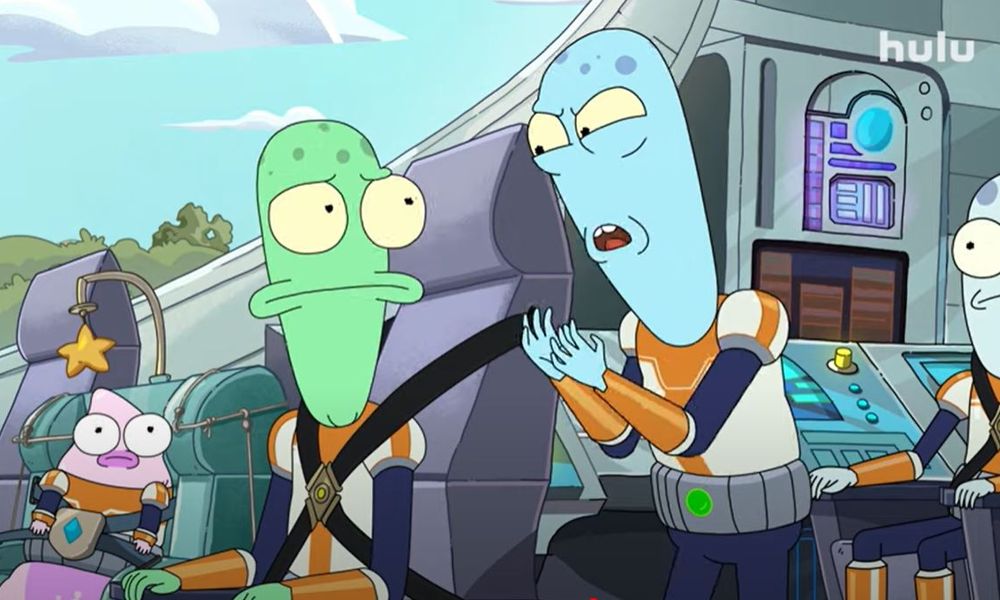
Hulu’s breakout adult animated original comedy Solar Opposites — from two of the twisted minds behind Rick and Morty — is returning to the streamer with eight brand-new episodes on March 26. Solar Opposites originally launched May 8, 2020, becoming Hulu’s most-watched show following the premiere. The announcement promises a second season that is “bigger, funnier, and more opposite than ever before.”
Co-created by Justin Roiland (Rick and Morty) and Mike McMahan (ex-writer’s assistant on Rick and Morty), Solar Opposites centers around a team of four aliens who escape their exploding homeworld only to crash land into a move-in ready home in suburban America. They are evenly split on whether Earth is awful or awesome. Korvo (Justin Roiland) and Yumyulack (Sean Giambrone) only see the pollution, crass consumerism, and human frailty while Terry (Thomas Middleditch) and Jesse (Mary Mack) love humans and all their TV, junk food and fun stuff. Their mission: protect the Pupa, a living super computer that will one day evolve into its true form, consume them and terraform the Earth.
Produced by 20th Television, the series is exec produced by Roiland, McMahan and Josh Bycel.
***This article originally appeared in the February ’21 issue of Animation Magazine (No. 307)***
Max Lang and Daniel Snaddon are no strangers to bringing popular children’s books to animated life. Lang is the helmer of Oscar-nominated The Gruffalo and Room on the Broom and the Annie-nominated and Intl. Emmy-winning 2019 special Zog, while Snaddon also directed Zog as well as Stick Man and worked on The Highway Rat and Revolting Rhymes. Their latest collaboration The Snail and the Whale is one of this year’s well-received shorts making the award season rounds.
The project, which originally aired on BBC One in 2019, is based on a 2003 children’s book written by Julia Donaldson and illustrated by Axel Scheffler and centers on a kind-hearted snail who longs to see the world, so she hitches a lift on a whale’s tail. Nominated for a British Animation Award, the 26-minute short features the late Diana Rigg as the narrator, Oscar-winner Sally Hawkins as the intrepid snail and Rob Brydon as the whale.
Lang says he finds himself easily drawn to the worlds of Donaldson and Sheffler, whose work also inspired Magic Light Pictures’ series of award-winning specials (The Gruffalo, Room on the Broom, The Highway Rat, Stick Man, The Gruffalo’s Child). “Julia and Axel have a great sense for creating memorable stories and characters,” says the German-born director. “There’s a lot of heart and warmth, but also wit and humor in the rhyme and good illustrations. If you work from such a strong foundation it gives you a lot of freedom to focus on the creative aspects of filmmaking. We always try to stay very true to their original vision and add to it, as opposed to changing it.”
Shared Vision
According to the filmmakers, the team began storyboarding and pre-production on the project while they were making Zog in 2018 and wrapped the show in October of 2019. “Balancing both productions was a bit of a trick, so I was glad that there were two of us directing,” says Snaddon, who worked with the talented team at Cape Town-base Triggerfish studios to produce the special. “Our producers, Magic Light Pictures (headed by producers Michael Rose and Martin Pope), are based in London and I was in Cape Town with Triggerfish, so the film is a result of international collaboration. All the images were made at Triggerfish, and at the height of production the team climbed up to around 70ish. The voice recordings, music and post-production were all done in London with Magic Light.”
Max Lang | Daniel Snaddon
Working with a ballpark budget of $2.8 million, the production team used Maya to create the CG animation with the exception of the water effects, which were produced using Houdini. Snaddon explains: “We created a Maya to Houdini, back to Maya then to Arnold workflow for the VFX shots. Arnold’s Scene Source (.ass) files really made this possible. All the comp was done in Nuke.”
Snaddon says while the two main characters are quite different from each other physically, the creative team discovered that in both cases, less was more. “It drove the animators a little crazy in the beginning because they like to move stuff, but once we found the rhythms for our two leads, we found that there is a real connection between the two in their gentle and more subtle motions,” he recalls.
The Snail and the Whale
Beyond the technical details, the production faced various challenges along the way. The team at Triggerfish (Adventures in Zambezia, Khumba) didn’t originally plan to make The Snail and the Whale as they were gearing up for their next feature film, and didn’t think they could split their key supervisors across the two projects. “Luckily, we realized that there was a new generation of very talented and capable young artists who were ready to step into new roles,” says Snaddon. “On Snail, most of our supervisors and leads were fresh in their roles, and did a smashing job! The other big challenge was doing a lot of CGI water on a budget. We had to assemble a whole new VFX team, many of whom were learning Houdini on the fly! We’re very happy with the results, but they were hard-won!”
Lang mentions that on a story level, the filmmakers had to find a way to have two characters relate that don’t have a lot of dialogue or anthropomorphic body language. “In addition, they can hardly share the same frame because of their drastic size difference, and yet so much love and understanding between the two has to come across,” he notes. “We made sure that they are very aware of each other and tuned in to each other’s emotions. We also used the world around them and the water to reflect their feelings and give them shared experiences.”
Lang, who wrote the adaptation with his wife Suzanne, says The Snail and the Whale is one of his favorite picture books of all time. He has read it to his own kids countless times and even loves reading it on his own. “The story and rhymes are so well crafted and fun to read and the illustrations are so beautiful,” he adds. “It’s so touching, and at its core it has a friendship between two characters that couldn’t be more different. It celebrates the beauty of our planet and its environmental message is very clear, but doesn’t hit you over the head.”
The Snail and the Whale
He adds, “I’d been dreaming about making it into a film since we discovered it during the making of The Gruffalo in 2008. It’s a story that is perfect for and can only be told in animation. There is no way around it. And yet its protagonists are even unusual and special for animation, and came with many challenges that we had to find creative and technical solutions for. It also celebrates nature and the beauty of our planet. A lot of films these days try to wedge in too much plot and either become too long or frenetic. We wanted to take a step back from that, and give the story, characters and scope time to unfold. It’s a story that touches me every time I read or watch it. Its message is very universal and relatable.”
For more info, visit magiclightpictures.com and triggerfish.com. Viewers in the U.K. can watch The Snail and the Whale on BBC iPlayer.
Mexico’s fastest-growing animation studio, Demente Animation Studio, and Masked Republic, the multiplatform company “dedicated to the expansion of lucha libre beyond the borders of Mexico,” have signed a production pact which will see the two companies partner to develop new TV and media projects based on the latter’s original IP and industry leading luchadores.
“Without a doubt, directing an animation studio like Demente has been the best experience of my life, and our next step is to create and co-create our own intellectual properties that translate across media platforms because we know that this will add much more value to our company and a much greater reach,” said Carlos Gaxiola, studio CEO. “That is why we have decided to team with Masked Republic to create and develop an animated series and content that shows a great new take on lucha libre which is a big part of Mexico’s identity and takes us back to a glorious past of the golden age of Mexican cinema.”
Guadalajara-based Demente, currently putting the final touches on its first feature-length 2D animated film, has in recent years provided 2D and 3D animation services to major international entertainment companies such as WildBrain, Mattel, Warner Bros., Bardel, Bento Box and Titmouse, among others.
Masked Republic represents lucha libre stars such as Tinieblas Jr., Solar, Penta Zero M, Rey Fenix and Rey Mysterio.
“We are honored and excited to be working with Demente to develop our first original series inspired by the world of lucha libre,” Masked Republic Founder & CEO Ruben Zamora stated. “Our dedication to sharing the wonders of real-life Mexican superheroes, our luchadores, with the rest of the world requires having the right partners with whom a deep understanding of the sport’s cultural significance so that our stories can be unlike any which have been told before, yet remain authentic at the same time. We know that with Carlos and his team, we have found exactly that partner.”
Masked Republic President & COO Kevin Kleinrock added, “Demente’s work as a studio for hire over the last few years has been genuinely impressive. They have worked on numerous hit series and have scaled quickly to become a force in the Mexican animation industry. Working together on our first co-production has created a best-of-both-worlds scenario for Demente and Masked Republic and we can’t wait to dive further into development of our series which is already unlike anything that has come before it. Viewers will not have to be fans of lucha libre to enjoy the story world which will play out on screen. Of course, fans of the real-life sport will get something extra as the universe reveals itself.”
Privately held Masked Republic is the first integrated live event, merchandising and media organization uniquely anchored by lucha libre, representing dozens of the industry’s biggest stars, worldwide merchandising (through Legends of Lucha Libre), event production and management, content production and distribution. The company is headquartered in San Diego, Calif., with offices in San Francisco, Las Vegas, Mexico City and London.
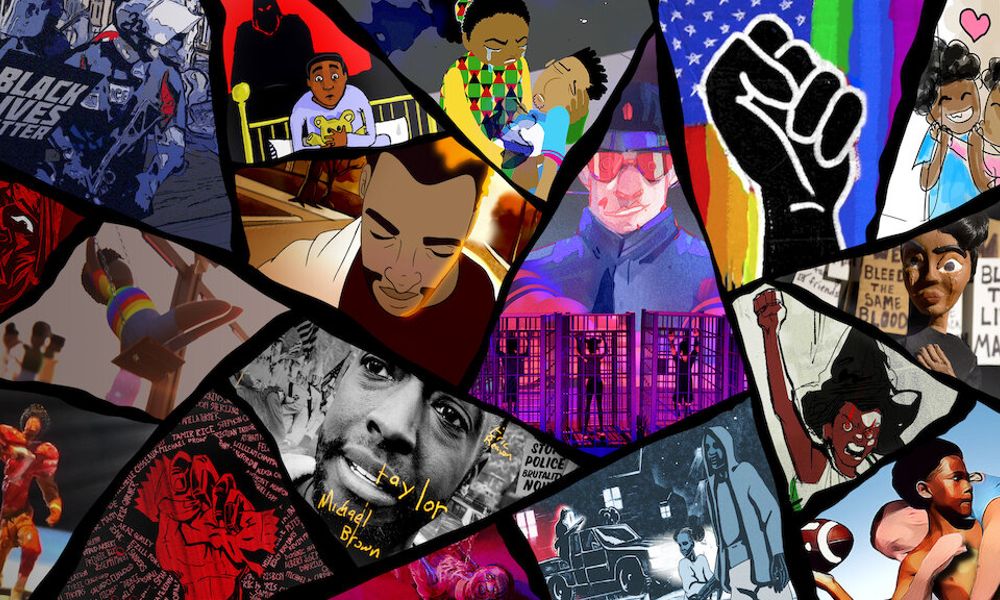
Netflix recently premiered the acclaimed short Cops and Robbers, directed by Arnon Manor and Timothy Ware-Hill. This powerful seven-minute short combines a variety of animation styles and live-action footage and spoken work poetry in response to the murder of Ahmaud Arbery last year. We had the chance to talk to Manor and Ware-Hill about their well-crafted project which has quickly become one of the best-received shorts of the past year.
Cops and Robbers
Can you tell us a little about the origins of your short?
Timothy Ware-Hill: I created the initial non-animated version of Cops and Robbers in response to the video release of the killing of Ahmaud Arbery in February of 2020. This killing angered me, but it did not surprise me, because we as Black Americans have been going through this since the inception of our nation. My hope was to not only express my frustration through an artistic platform, but also to bring awareness to these atrocities that we continue to face.
Arnon Manor: I was outraged at the killers’ cold-blooded audacity when the video of Ahmaud Arbery’s murder was released, and I was fuming when I learned of the apathy and cover up of the police and the judicial system, who did nothing for three months from when the murder actually occurred. I then came across Timothy’s video poem on Instagram the following day, and I was moved and inspired by his powerful words to create an animated version of his poem, so I reached out to him with that idea. I needed to express my anger and also be an ally to the cause in the best way that I knew how. My intent was that the film will spur further outrage at the ongoing police violence towards African Americans and encourage more conversations and action amongst other White allies like me.
Timothy Ware-Hill | Arnon Manor
How long did you work on it and which animation tools did you use?
Both: The project took about six months to complete, from May 2020 to late October 2020. The animation itself took a little over four months, and the last month or so was devoted to post-production, especially sound and music. Because our film encompasses a wide range of animation styles and techniques; 2D, 3D, stop motion, graphics, etc., our artists used a variety of animation tools, such as Animate CC, Toon Boom and After Effects for the 2D animation, Maya and Houdini for 3D, Dragonframe for the stop-motion, Nuke and After Effects for compositing.
Why do you think this particular subject is so important to tackle in animation?
Both: Animation allows us to create imagery that on the one hand can be seen as fantastical and removed from realism, but on the other hand it can drive the emotional aspect of a subject in a way that traditional filmmaking can’t. In the case of our subject matter, because unfortunately we’ve all seen, too often, the shocking reality of video or phone camera footage of people being killed by police, we knew that with animation we can create our own imagined world and hoped we can make an emotional impact in a way that has not been seen before. We wanted to bring a unique aesthetic that can be both beautiful and disturbing at the same time.
We started the project right after the Ahmaud Arbery video was released, and three weeks later the George Floyd murder occurred, followed by the killing of Breonna Taylor. That ignited the summer of unrest in the U.S. and around the world, and our animation production was ongoing as the protests were going on, which gave it a sense of urgency and made what we were creating extremely relevant and personal to everyone involved.
Cops and Robbers
How many people worked on the short and what was your ballpark budget?
Both: We ended up with over 130 people working on the project from around the world, and our budget was zero! Everyone donated their time and talent to the cause.
We divided the film into around 30 segments and brought on teams of individual artists, animators, students and visual effects companies to each create their own visual interpretation of the subject matter within their segment.
What was the toughest aspect of bringing this short to animated life?
Both: We started the animation production in early May 2020, during the COVID lockdown, so the entire animation production and post-production was created remotely and overseen by us using online tools. Arnon was in California, Timothy was in New Jersey, our production hub was in Toronto, and our artists and animators were spread all over North America and the world. None of us have met in person. We had to deal with a variety of time zones, and we also all had day jobs, so scheduling was always a headache and because we were not in the same space together, we had to make sure we were always downloading, watching and commenting on the same versions, which was always tricky. Similar to everyone else who is working from home, we have never appreciated a strong Wi-Fi signal more than during this production!
Cops and Robbers
Can you tell us about the kind of response you have received so far?
Both: As an example, we received an email just the other day from a prominent political news contributor who watched the film, saying it was: “Beautiful. Powerful. Original. Arresting.” We are truly humbled by that response, and the fact that people are reacting to the film’s subject matter and creativity in that way is wonderful to hear. When we started the project, we had no idea how we would even release it. Our original intent was to release the film on social media and hope that it gets a viral moment. The response from Netflix by picking it up and releasing it in 190 countries is incredible and we hope it will make an impact for change.
Can you talk a little bit about the importance of representation and diversity in animation?
Manor: Putting it simply, the animation and visual effects industry needs to reflect what the population looks and feels like. It needs to be a mirror of the society that we live in. We’ve been hearing the catchphrase “diversity and inclusion” for a while now, but it was very important to us to make that phrase a reality on our project. We didn’t settle for just the known and available artists or companies, as that would have whitewashed the project. As a white filmmaker, I have a responsibility to champion the changes needed in our industry and society as a whole.
Ware-Hill: It is so important to have diversity and representation in animation, because it expands the stories that can be told. There aren’t a lot of cartoons that I can reference with fully thought-out Black characters. I wish I’d seen more of myself on screen as a kid in the cartoons that I grew to love. It is also about equity. These opportunities allow Black artists and other POC financial stability, health care, money to buy food and have housing, take care of their families and the ability to create generational wealth.
Cops and Robbers
What are some of your favorite animated TV shows and movies?
Manor: As a kid, I loved to watch The Pink Panther on TV. He was the epitome of cool and I loved the simplicity of the animation. I also really loved some of the Looney Tunes shows and characters, such as Wile E. Coyote, Pepé Le Pew and Speedy Gonzales. Later, as an art and animation student, I was drawn to more surreal styles, such as Jan Svankmajer, Terry Gilliam’s animations for Monty Python’s Flying Circus and Gerald Scarfe’s work in Pink Floyd’s The Wall movie, which had a profound influence on me. My recent favorite is Wes Anderson’s Isle of Dogs. That is a true work of art and a brilliant movie.
Ware-Hill: I watch a cartoon every night to fall asleep, so animation has always been a big part of my life, though I am not an animator myself. Some of my favorite animated TV shows are Teen Titans, The Amazing World of Gumball, Bob’s Burgers, Craig of the Creek, Big Mouth, the original Looney Tunes. As far as features: The Secret of N.I.M.H., Beauty and the Beast, WALL-E, Monsters, Inc., Bébé’s Kids and Coco.
What would you like audiences to take away from Cops and Robbers?
Manor: That things need to change, and we can only do that by being aware of the problem, by being vocal and by creating allyships. We cannot and should not accept the current state of affairs in this country, especially where it seems that every week another African-American person is killed by police, and a new hashtag is created each time. The ongoing police brutality is not normal, and we should never normalize it. I hope the film will move people emotionally, but also give them hope and a desire to step up and help make a change.
Ware-Hill: I hope that when people watch our short, they are charged with the task of becoming true allies. I hope that they are moved to act and to call out hate and racism when they see it. It is through this allyship that we can move forward as a nation and one day get to a place where there are no more Black hashtags from police violence and killings.
Cops and Robbers is now available to stream on Netflix around the world. Watch the directors discuss the short in the clip below:
Common Sense Networks, a for-profit affiliate of Common Sense Media and a Public Benefit Corporation, today announced its inaugural venture, the 2021 launch of Sensical (sensicaltv.com), a free streaming platform offering thousands of age-appropriate, short-form videos for kids 2-12. With a mission to set a new standard in children’s digital media, the ad-supported service thoughtfully filters for quality through a rigorous and proprietary rubric and evaluates content based on the most comprehensive child development research available.
Headed by Common Sense Networks CEO Eric Berger, an industry leader in digital and entertainment media whose appointment was announced this summer, Sensical will answer parents’ essential need for entertaining, age-appropriate content that nurtures the specific emotional, social, and cognitive needs of their children. The immersive and handpicked library will be organized and tiered into three distinct categories: Preschoolers (ages 2-4), Little kids (ages 5-7) and Big kids (ages 8-12).
Every single frame of video will be viewed, vetted and rated by individuals trained in child development and Sensical’s rubric, mentioned above, will ensure that all short-form content from digital-first creators, studios and independent producers are selected based on criteria consistent with Common Sense Media’s 15 years of research and advocacy. By going above and beyond the algorithm-only option currently available on most platforms, Sensical creates a distinctive and demonstrably more effective engagement runway that ensures a true sense of choice for kids. For parents, leaving content choices in the hands of real people vs. software will give them confidence that only appropriate videos are being suggested for their kids.
“Sensical’s mission is to ignite kids’ passions, fuel curiosity, build bridges between children and their parents and make everyone part of the learning journey,” said Berger. “As a free platform offering only age-appropriate fare, we remove every obstacle to accessing a comprehensive, trusted resource for entertaining short-form video from the best possible content creators. Every family can afford to add Sensical to their personal bundle and we couldn’t be more excited to create a distinctive alternative for parents and partner with them in their goal to raise good humans.”
Commenting on the launch, Jim Steyer, founder and CEO of Common Sense Media, said: “Over these past few years we’ve seen an explosion in commercial products and services directed at the audience we serve, but not always with their best interests in mind. We believe there is a meaningful opportunity for Sensical to fill a massive void in the current ecosystem and for Common Sense Networks to innovate in the space for the long-term benefit of kids and families.”
Built on the notion that education is at its best when kids pursue their passions, Sensical’s interface will encourage discovery and exploration by giving kids the opportunity to select from hundreds of defined topics/passions when searching for content. In addition, parents can take the reins of their kids’ personalized queue with an option to select a specific age range, introducing kids to titles that a) are an inherently better fit for their unique personalities and b) will foster deep connections whether families are co-viewing or children are watching independently.
Common Sense Networks’ deliberate investment in short-form is based on recent data noting that:
Watching online videos now constitutes the largest proportion of children’s total TV and video viewing for those over two with an average of 39 minutes a day — more than double the amount of time devoted to online videos three years ago (:19).
More than a third (34%) of children age 8 and younger watch online videos every day, up 42% from three years ago.
With those viewing habits in mind along with data from Pew Research saying that nearly 70% of parents are concerned about the types of products being advertised to their children, Sensical will introduce strict, best in class advertising guidelines that shift the marketplace narrative by exceeding expectations around current standards and practices and offer solutions that still work for brand partners. The free, branded app will lead with protection of kids as its main theme, ensuring digital privacy, featuring clear parental consent options and a clear line of distinction between commercial and noncommercial content.
Berger added, “By and large, parents don’t trust how short-form video is presented to their young children. They often find themselves in a position of hall monitor, trying to steer kids in the right direction, giving them guidance on what is appropriate and hoping they don’t take a wrong turn in the process. By leading with our age-appropriate, passion-based approach, we take the guesswork out of the equation and by doing so, raise the bar not just for Sensical, but also for the industry at large. As kids 2-12 lean in more heavily to their affinity for short-form, we want to embrace it but need to do so with a trained eye for selecting videos that give parents real peace of mind.”
Beloved brands and popular franchises from leading content providers will be featured on the service with plans to add thousands of videos to the library every month. Sensical will feature the biggest and best in entertaining, educational short-form fare from digital-first creators like Azevedo Studios (Funtastic TV), Bounce Patrol, Hevesh5, Sockeye Media (Mother Goose Club), Cosmic Kids Yoga, New Sky Kids, Skyship Entertainment Company (Super Simple Songs), StacyPlays (DogCraft) and Whistle (No Days Off); and studio/distribution partners including ABC Commercial (The Wiggles), Awesome Forces (The Aquabats), Big Big Holdings LLC (It’s a Big Big World), Boat Rocker Studios (Ollie the Boy Who Became What He Ate), CBC & Radio-Canada Distribution, Hoho Entertainment (Shane the Chef, Cloudbabies), Jetpack Distribution (Yoko, Kitty Is Not a Cat), Millimages (64 Zoo Lane, Molang), Nelvana (Mike The Knight, Bakugan), 9 Story Distribution International (Ruby’s Studio, Zerby Derby), One Animation (Rob The Robot, Oddbods), Sesame Workshop (Pinky Dinky Doo, Sesame Studios), Serious Lunch (Operation Ouch, Art Ninja), Studio 100 (Maya the Bee, Small Potatoes), ZooMoo Networks Pte Ltd (ZooMooPedia) and more.
In addition to Sensical’s wide range of content offerings, parents will also be able to access the Sensical Parent Zone, a dashboard tool allowing them to review and manage all of their kid’s viewing activity — including reports on what and how long their kids watch as well as the unique social, emotional and cognitive skills they are learning from the videos they are viewing.
Launching early 2021, Sensical will be available to the widest possible audience of users using an array of streaming devices, smart TV manufacturers and mobile devices (iOS and Android) anchored by a free, branded ad-supported app and live-streaming channels on all major OTT platforms. Over the coming months, Common Sense Networks will be announcing additional family-facing platforms, services, content development and related initiatives.
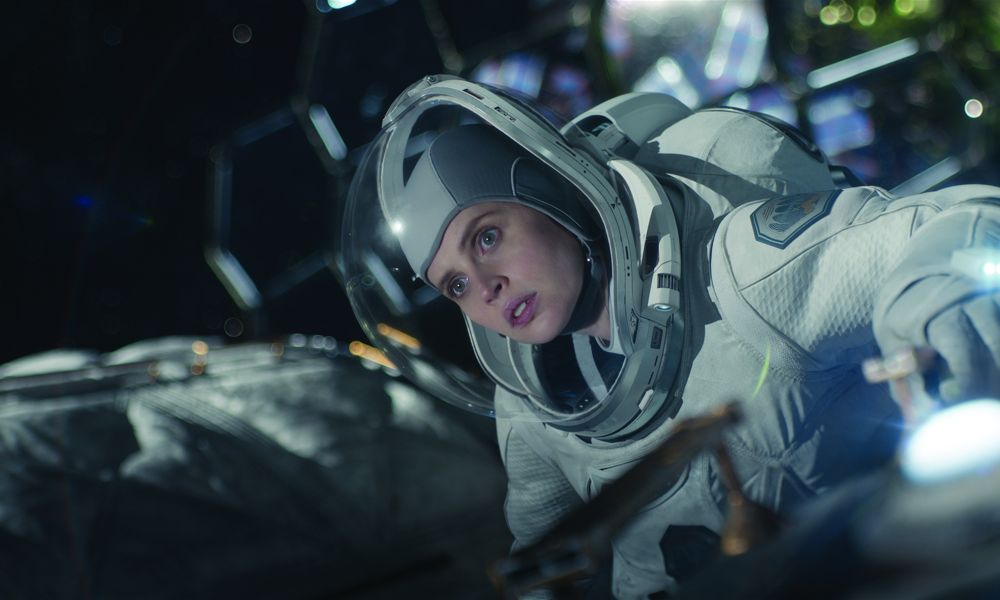
Launched ahead of the winter holidays, The Midnight Sky is a post-apocalyptic feature following Augustine (George Clooney), a lonely scientist in the Arctic, as he races to stop Sully (Felicity Jones) and her fellow astronauts from returning home to a mysterious global catastrophe. Clooney directed the adaptation of Lily Brooks-Dalton’s acclaimed novel, which is now streaming on Netflix globally.
To bring The Midnight Sky‘s out of orbit scenes to life, the film’s producers turned to Oscar-winning studio Framestore. “We had to shoot a pregnant astronaut floating in space; Framestore did a brilliant job with all of it,” Clooney noted.
The Midnight Sky
Framestore assembled a sci-fi dream team to join production VFX supervisor Matt Kasmir; Academy Award-winning VFX supervisor Chris Lawrence (Gravity, The Martian), animation supervisor Max Solomon (Gravity), VFX supervisor Shawn Hillier (Star Wars: Episodes 2 & 3) and Graham Page (Interstellar), delivering nearly 500 shots across the studios in London and Montreal.
The team were tasked with supporting the story through VFX that seamlessly complimented the cinematography by DOP Martin Ruhe, creating high-level CG facial replacements, building the Aether ship and interior, as well as ‘Sick Earth’ and it’s foreboding environment.
“VFX were engaged to provide humanity’s existential threat. Thematically we sought to portray human isolation against the devastating beauty of the universe,” said Lawrence.
The Midnight Sky ‘Space Walk’ before & after
To emulate zero-G and help to sell a pregnant Sully floating in space (Jones was actually pregnant at the time of shooting), digital face replacements were required for the wide, full CG shots; totalling 30 shots in the stand-out ‘Space Walk’ sequence. Incredibly high resolution Anyma scans were combined with cutting edge proprietary shaders to create convincing high-res digital faces, which were then keyframe animated.
“The Anyma capture for the performance gave us an animated mesh of the actor that you can use to drive animation,” explained Page, “but there’s a lot of clean-up work for that to be usable — especially around the eyes and the mouth.”
Animation supervisor Solomon elaborated, “The head motion and eyelines were adjusted to work with specific actions and the position of the camera. In some shots it was quite nuanced, enhancing eye darts and blinks while in others we made broader changes to head angles and eyelines. Considerable sensitivity had to be used though as it was surprising how quickly small adjustments made shots feel broken.”
The Midnight Sky ship ‘Aether’
The Aether, housing the crew returning from their reconnaissance to Jupiter, was designed by production designer Jim Bissell, of E.T. fame, with the support of Framestore art director,Jonathan Opgenhaffen. Drawing from the studio’s archive of spaceship parts, Aether evokes the futuristic feel of the film while staying grounded with the tangible technology of today. Using parts of the ISS, existing NASA technology and cutting-edge 3D printed technology, the team were then able to focus on the details and texture of the ship to make it realistic.
“The buzz word was ‘topological optimisation,’” explained Opgenhaffen. “The ship’s components had to work practically; it’s beauty stems from its functionality and availability of existing and emerging technologies.”
The team also created nuanced, ominous imagery to imply the idea that something has caused this global catastrophe. “Sick Earth is a huge character. It’s purposefully left ambiguous so you ask questions without necessarily receiving answers,” said Lawrence. Layers of clouds, some curling towards the sky mirroring fingers reaching up to space, are the main aesthetic cue. “It’s not a natural phenomenon, so there’s a bit of speed that is visible from space; we played around with FX passes in comp to create additional movement,” added Hillier.
The Midnight Sky, ‘Aether’ interior before & after
The shoot of Augustine on earth took place in Iceland, with 70 mph winds and freezing temperatures; although the actual amount of snow posed some problems. “Unfortunately when they went to shoot the plates, a lot of the snow had melted so we had to replace it,” explained Hillier. “We’d worked on snowy landscapes recently for the first season of His Dark Materials, but we really had the opportunity to push our snow shaders further to hold up in all of the close-up shots of the snow moving across the surface of the ground, with the light scattered through it.”
Pre-production supervisor Kaya Jabar, then at The Third Floor London, led a virtual camera shoot of the set, before designing a virtual LED shoot plan for screens in the observatory. Working closely with Lawrence, Jabar’s team created a suite of tools using Unreal Engine to tie together a virtual camera and an LED screen simulator that was accurate to the exact panels used on the day.
“I do believe that we were amongst the first people to plan it that way,” Jabar noted. “I just applied the logic that if we can virtually plan a shoot and show you what will replace a green screen, then we can do the same with LED screens.”
The VFX on The Midnight Sky needed to be as seamlessly- integrated, photoreal and realistic as possible. “Ultimately, George wanted the drama to be grounded,” added Lawrence, “The language of the film, especially in those moments you’re with George stuck in isolation, is emphasised by the static locked-off camera and beautiful composition of the scene. It was a nice place to be in; to compliment the filmcraft rather than going all out in showy VFX.”
London-based animation studio Keyframe Studios has announced the delivery of the first 13 episodes of the five-minute version of The Adventures of Zeze Zebra. The studio reports high expectations for the new show, as advance screenings have already helped it to seventh place in MIPJunior’s top 30 most-screened list for 2020. It is the only children’s property in the top 10 to be produced without, at time of going to press, a commission, distributor or broadcaster attached.
That strong response is hardly surprising given the very positive reaction to the first Zeze production, a delightful two-minute nursery rhyme-based animation that has enjoyed success on SVOD and AVOD, and early acquisitions from BT Kids, RTL, Hop!, Kidoodle and Ameba as well as Ketchup in the U.K. The extended-format version of The Adventures of Zeze Zebra is again built around the popular two-minute nursery rhyme, but it develops a longer adventure and discovery-based narrative with storylines combining education and activity.
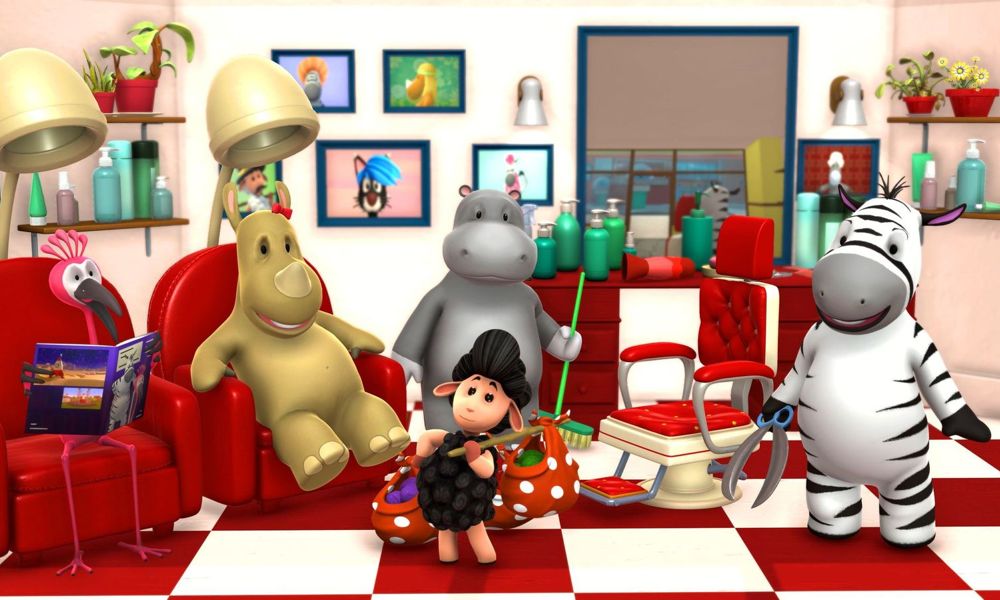
In the extended show, Zeze Zebra, a young and energetic zebra with an abundance of curiosity and imagination, and her best friends – a hippo, a flamingo, a rhino and a sheep – try to figure out the world around them. In each episode they all have an epic adventure – from going to the moon or sailing on the high seas to helping Santa.
Interest in the new format has already been expressed by broadcasters and platforms in North America, the U.K., France and Israel. Another 13 episodes are in production. First/early deals will be announced in the first quarter of 2021.
The Adventures of Zeze Zebra is a technologically innovative 4K 3D CGI production, utilizing Keyframe’s bespoke real-time content production system built around the leading game engine, Unity. This has not only proved a highly effective tool for animators but is also many times faster and more environmentally friendly than traditional processes.
“Zeze has enjoyed enormous traction on the SVODs and more recently AVOD, racking up millions of cumulative views. The data and stats being returned from our AVOD/SVOD partners is really encouraging and it’s rewarding to see The Adventures of Zeze Zebra clearly striking a chord with audiences, inspiring us to offer even more content for Zeze’s fast-growing fanbase,” said Asa Movshovitz, Founder & Animation Director, Keyframe Studios. “With broadcasters in numerous regions now showing interest in the new, extended version, Zeze looks like enjoying a very successful 2021!”
Global film distributor Vertical Entertainment has acquired all U.S. rights for animated feature film The Clockwork Girl from Canadian intellectual property house Arcana Studio. This is Arcana’s second deal with Vertical, which previously released Pixies in 2015.
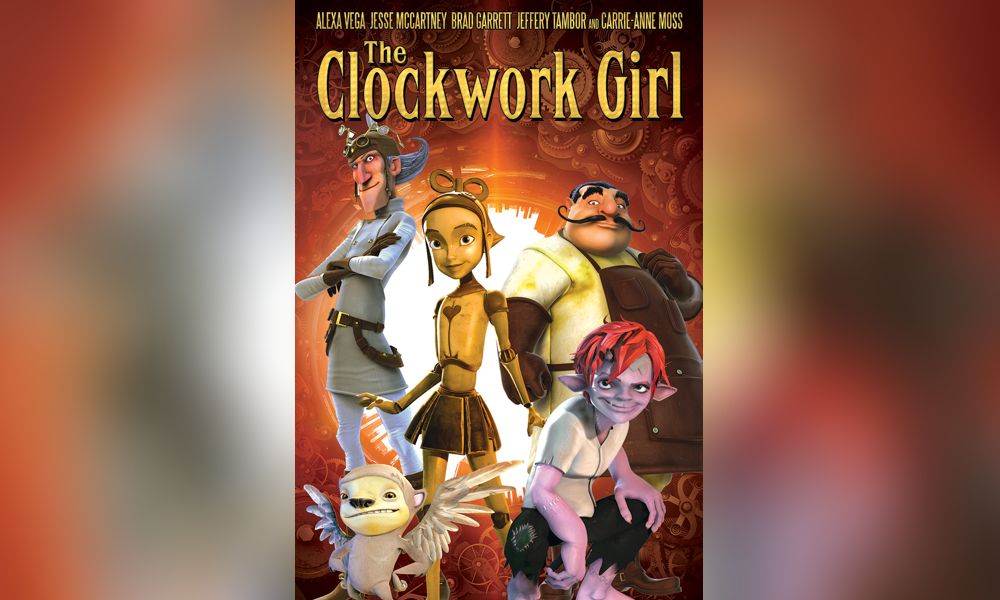
The Clockwork Girl follows Tesla, a robot girl who has recently been given the gift of life. When she meets Huxley, an amazing mutant boy, the duo forms an unlikely friendship that must overcome their warring families. With an important, topical message, the film is ultimately a story of two characters who despite being made out of completely different parts, are similar in their passion to save their town and each other.
The film is produced and written by Arcana CEO Sean Patrick O’Reilly, screenplay by Jennica Harper, directed by Kevin Konrad Hanna with John Han executive producing. The comic book adaptation stars Alexa PenaVega (Spy Kids, Pixies), Carrie-Anne Moss (The Matrix), Brad Garret (Everybody Loves Raymond), Jesse McCartney (Alvin and the Chipmunks) and Jeffrey Tambor (Transparent). The Clockwork Girl is a Dove Approved film, deemed to be “wholesome family entertainment” by the non-profit organization.
The Clockwork Girl is based on Arcana’s successful graphic novel of the same name, created by O’Reilly & Hanna and illustrated by Grant Bond. It was initially published in December 2007 through five issues and was later republished by HarperCollins. The graphic novel received numerous accolades, including the Moonbeam Children’s Book Award for Top Graphic Novel and the Mom’s Choice Award.
“The Clockwork Girl has had an unbelievable journey starting with its humble beginnings as a comic book. Telling Tesla and Huxley’s story has been a passion project and I’m so excited to show this story to the world,” said O’Reilly. “Maya Angelou said, ‘If you’re going to live, leave a legacy’. My directorial debut on Pixies happened with Vertical Entertainment so it feels like I’m coming back home and everything was meant to be.”
Vertical will release The Clockwork Girl in Summer 2021.
Renowned Japanese director Ayumu Watanabe (Space Brothers)will be creating the official poster and trailer for the 23rd Bucheon International Animation Festival (BIAF2021). Watanabe’s most recent feature, Children of the Sea, was one of the top prize winners at BIAF2020.
“The film that depicts the connections between humanity and nature, with a mesmerizing imagery of aquatic life and cosmic mystery, now that humanity is approaching a dead-end while abusing the nature, so the BIAF2020 Grand Prize goes to Children of the Sea,” said BIAF2020 Jury President Anca Damian in a statement; she also served as the festival’s official artist last year.
In Children of the Sea, a lonely girl named Ruka grows weary of her everyday interactions with the handball team and her alcoholic mother. She visits the aquarium she used to go to as a child, and meets two brothers named Umi and Sora who swim freely in the water, beginning a magical summer together.
The metaphorical, memorable film is available on Digital, DVD and Blu-ray in North America from GKIDS/Shout! Factory.
BIAF2021 will be held as usual from October 22-26 in Bucheon, South Korea — just outside Seoul.
Tweenage and teenage horse lovers should mark January 16 on their trail maps and get ready for the world premiere of Star Stable: Mistfall, the new animated series from global entertainment company Star Stable Entertainment, creator of the popular game Star Stable Online.
The show will debut with a 90-minute virtual “red carpet” premiere event on the Star Stable YouTube channel, featuring exclusive access to the voice stars, an unplugged musical performance and a shared viewing experience of all 10 Mistfall episodes.
Hosted by Star Stable influencer Meli Rothberg, the premiere will include actor interviews with Banita Sandhu (Pandora) and Kevin Alves (Locke & Key), as well as with Emmy Award-winning screenwriter Alice Prodanou (Hotel Transylvania, Inspector Gadget, 6teen, My Babysitter’s a Vampire).
The launch event begins at 1 p.m. ET/10 a.m. PT on Saturday, Jan. 16. All episodes will be available to watch later that day.
The animated series is the latest extension of the globally popular Star Stable Online game, which has inspired a new series of Soul Riders books (debuted in 2020) and music hits (500,000 streams for the top song), and is central to the brand’s almost 10-year mission to deliver relatable stories where today’s multi-dimensional girl is the hero across every medium.
Mistfall chronicles the story of Skye Rowan as she navigates a tragic accident, a mysterious island, a magical horse, a fateful friendship, and an epic adventure during ten five-minute long episodes. A long-form version is currently in development.
Anima, the Brussels International Animation Festival, is spotlighting Korea for its 2021 edition. The Focus is presented in collaboration with the Korean Cultural Centre, for the 120th anniversary of diplomatic relations between the two countries.
Anima will be spotlighting the wealth of contemporary Korean animation that reveals a strong identity ready to criticize the shortcomings of its society through striking and challenging realism.
The Focus will be made up of “Korean Colours”, a program of short films from independent filmmakers, and three features: The Shaman Sorceress by Jae-Huun Ahn, (also the director of The Shower, Anima’s closing film in 2018), Motel Rose by Eun-a Yeo and Beauty Water by Kyung-hun Cho.
The films will also be available on the Anima Online platform, introduced by their directors.
Full details of the Anima festival program will be announced January 19.
Anima will be held February 12-21 in Brussels and virtually via Anima Online. More information at www.animafestival.be.
***This interview originally appeared in the February ’21 issue of Animation Magazine (No. 307)***
The name Craig McCracken evokes deep feelings of admiration and respect in animation circles. The friendly toon auteur, who is turning 50 this March, was the creative force behind the popular animated shows The Powerpuff Girls and Foster’s Home for Imaginary Friends at Cartoon Network and Wander Over Yonder at Disney Channel. McCracken, a talented Cal Arts alum who got his first big breaks working on 2 Stupid Dogs and Dexter’s Laboratory, is back next month with a fantastic new show on Netflix called Kid Cosmic. The two-time Emmy winner, who is married to acclaimed animation designer, writer and producer Lauren Faust (DC Super Hero Girls, My Little Pony: Friendship Is Magic) was kind enough to answer a few of our questions during a recent phone interview:
Craig McCracken
Animag: Congratulations on your fantastic new series. Can you tell us a little bit about the origins and inspirations for Kid Cosmic?
Craig McCracken: I wanted to create a show about this period in a kid’s life when they have this naïve confidence that whatever they want to do can happen. I remember when I was a kid, I used to draw comic strips and comic books and didn’t understand why I wasn’t ready to be published at 12. There was another period when I decided to start a t-shirt drawing business and I started drawing cartoon characters and band logos, so I put the word out in school. I thought I was going to have this business where I was going to make tons of money! I had this conviction it was going to work. When developing Kid Cosmic, I wanted to tap into this naïve confidence that all kids have. So, the show is about a kid who has this fantasy of being a hero and that opportunity literally lands at his feet. Would the fantasy play out the way it does in movies or comic-book scenes, or would the reality be much different? That was the basic inspiration.
I read somewhere that you had thought up this concept many years ago. Right?
Yes, I actually started thinking about this idea back in 2009, but the more I thought about it, I realized that this needed to be serialized. I can’t do random 11-minute or 22-minute cartoons with this. This character needs to grow and change, so I put it on the backburner. In recent years, as you know, more networks have been open to the idea of serialization in comic adaptations. So, Netflix came around, and I thought: this is something I’ve been wanting to do for years. I presented the idea to them, and they loved it. So we started production! I started thinking about it about five years ago, and we started with Netflix in early 2018.
Kid Cosmic
Was the show development experience at Netflix different from your previous work?
It was completely different from any of the other previous ways we had approached a new show. I was fortunate to have an animatic for the pilot. The way it worked I went in on a Thursday, and I showed it to Netflix. They called me back the next Wednesday to give me a tour of their future studio facilities. I asked them, “So what is the process for getting a greenlight here?” They said, “We love it. How about making a 10-episode, 22-minute, serialized show?” And I said, “Perfect!” It was really quick and quite an incredible experience!”
Who is your animation production partner on this show?
Mercury Filmworks in Ottawa is animating the show for us. They’re animating the show in Toon Boom Harmony. We have about 45 people in our Netflix Animation team in L.A., and the Mercury Filmworks side has about 110 members at a time. Each episode takes approximately a year and a half from writing start to finish. One of the great things about having 10 episodes to work on is that you can focus on making each episode unique and special, and you’re not churning out volume, which is an opportunity I’ve never had before.
I believe I saw your wife’s name (Lauren Faust) listed as character designer, too.
The thing about Lauren and I is that if you hire one of us, you get the other one for free! [laughs] As I was developing it, Lauren was always there going, here is an idea, oh, here’s an idea. So, she has been part of that and has helped out with some of the writing here and there, too.
Did your young daughter also help with the inspiration?
I think so. What’s interesting is that we have this four-year-old character Rosa on the show, and started writing her prior to having our daughter. As I was developing and writing it, I was noticing things that I got right and also things that I totally didn’t get right about how four-year olds actually are. Her energy and playful spirit are definitely there.
Kid Cosmic
Can you discuss the lived-in, unique visuals of the show?
One of the things I wanted to focus on with the show was to have it grounded in reality. We came up with a design style that reflected that. I started looking at cartoonists that worked more in print media — people like Hank Ketchum (Dennis the Menace), Hergé (Tintin), they have a nice balance between being believable and also being cartoony. We aimed for that print, comic-book approach. Kid and his team are kind of like a punk rock superhero team, so we wanted to focus on a look that was a little bit rough around the edges and not hide the fact that these are drawings. So, for the backgrounds and the line work on the characters, we kind of left that textured, hand-drawn feel in there. We wanted to get across that human quality.
What prompted you to set the story in a desert town in New Mexico?
When I was a kid, my mom used to take me to the desert all the time, and I kind of fell in love with it. It is also rural enough that you can believe that a team of regular people can fight aliens there without everyone finding out. New Mexico is also synonymous with spaceship crashes, and it’s iconic. Another major reason is that it’s a production favor: You don’t have to do buildings and crowds, and can go with horizon lines and mountains and focus on the characters and the story.
Kid Cosmic
What would you say was the toughest part of the project?
The toughest part was doing the serialized aspect of it. When you do random 11-minute shows, each cartoon can stand on its own. But when you are telling one big story, it needs to feel like one piece. It needs to feel like it was written and directed by one person. That was a bit of a challenge to keep that unity in all 10 episodes of the season. When you’re doing a non-serialized show, you have that freedom to have a variety of tone, but with this show, it was a concerted effort to make it feel like a three hour and 20 minute movie broken up into chapters, conceived and written by one hand.
What was the best part of the experience?
I am just really proud of the freedom and trust that Netflix afforded us and that we pulled off what we wanted to do. It’s exactly the show I envisioned and wanted to make, and I’m very happy with the episodes, and super excited about kids finally getting to see it. It’s nice to have a project that I can just tell people, “It’s called Kid Cosmic and it’s on Netflix.” I don’t have to say, “It’s on Friday nights, or maybe they moved it to Monday.” With some of my other shows, the networks would shuffle the schedules around so it was hard to tell people when they were going to air. We’re all really, really proud of the work we’ve done on the show. I am working with my old friend Rob Renzetti, who is the co-exec producer on the show with me. It’s great to partner with someone I creatively trust and have known for about 30 years.
How did the pandemic and stay-at-home restrictions impact the production?
Since March we’ve all been working remotely from home. As far as executing the work, it really hasn’t changed anything. The quality of the work is maintained. What we miss is that before all of this, when we’d get a work print or final episode in, we’d all get together and watch it together. It was a collective feeling of satisfaction and completion. It has actually opened up opportunities to work with people from different places. My lead character designer lives in Canada, one of my storyboard artists lives in Mexico. That has been really nice.
Kid Cosmic
When did you decide you wanted to pursue a career in animation?
I started drawing when I was three or four years old. I was a big fan of Tintin and The Rocketeer and classic comic strips like Krazy Kat. (There is even a line in Kid Cosmic where one character is wandering in the desert just saying “Krazy Kat” repeatedly. That is my homage to the cartoonist George Herriman.) Back then, my dream job was to be a comic-strip artist. But by the time I was ready to get into that industry, it was really dying, so I gravitated towards animation. When I was 12, I didn’t know whether I wanted to work in print or animation, but I think when I was in high school and doing comic books and comic strips, I found that I wanted to add music to them. I would come up with a joke that was based on timing or the way a line was said. That’s when I realized that the way my imagination was working, I wanted to be more of a filmmaker and to work in animation. So I applied to CalArts right out of high school and got in.
You’ve seen the animation industry change a lot in the past few decades. What is your take on the state of the business as we embark on a new year?
I am really excited about the work that is being produced at Netflix, which is unlike anything I’ve seen: They really put a lot of trust and freedom in all their creators. Every project I have seen come through is so different from each other and also so different from what you’d see from another studio. I am really excited about what is going to come out in the years ahead. I think people are going to be surprised by the variety of content and the different voices that are given the opportunity to tell their stories. I think it will be really good for the industry and show people what you can do when you trust creative people to realize their vision. I hope it forces other studios and people to try that, too. Streaming still feels like a new frontier. It reminds me of the time I first started at Cartoon Network: Those were the early days of basic cable. We didn’t even get lavatories in the building back then!
Kid Cosmic
What advice do you give young people who want to create their own shows?
Find your voice. Figure out what you want to do and produce it. Right now there are so many opportunities for people to get their work out on the internet. I always tell people: focus on what you want to say and who you want to be as an artist and stick to that. If you can, before you do your own show, try to get a job in the industry. Getting your foot in the door and working on a production teaches you so much about how the business works, what is required of a showrunner, etc. In my own personal experience, working on four seasons of Dexter’s Laboratory made The Powerpuff Girls that much better. I had that idea when we were making Dexter’s, but I wasn’t ready to make that show until I had some time on another production.
What do you hope audiences will take away from Kid Cosmic?
I hope they relate to Kid and see a real story about real people. The series is about what it really means to be a hero. We focus less on the powers and more on the people. Here is a real kid with authentic experience — he has a range of emotions, he gets angry, frustrated, he struggles. I hope audiences will love these characters and want to spend time with them. I just want them to have a good time watching our show.
Die-hard fans of Orson Welles’ beloved 1942 classic The Magnificent Ambersons have long hoped to see the original uncut version of the movie, which was never released by RKO. Now, thanks to the efforts of filmmaker Brian Rose, the 132-minute rough draft of the movie is the process of being remastered, which will use animation and readings by actors to recreate the original version of the masterwork.
Welles lost control of the editing of his movie to RKO, and the final version was quite different from his rough cut: More than an hour of footage was cut by the studio, and a new happier ending was shot and added. Fortunately, Welles’ extensive notes for how he wished the film to be cut have survived, although the cut footage was destroyed by the studio.
Rose told wellest.net, which focuses on the life and works of the late Orson Welles, that he has been working on the project for two years. “Many scenes could be recreated thanks to surviving frame enlargements,” says Rose. “For other scenes where more complex camera movements were involved, I relied upon stills, diagrams of camera movement and the layout of the sets which, when reconstructed in a 3D space allowed a greater degree of understanding as to how Welles filmed. This enabled a high degree of certainty in capturing what was lost in a way that will hopefully do justice to Welles’ original vision, so much so that it will be possible, for the first time, to see Ambersons in its entirety — all 132 minutes.”
Agnes Moorehead and Joseph Cotten in The Magnificent Ambersons‘ lost boarding house scene. Below: Screen capture of early animation for a reconstruction of that scene. (Courtesy of Brian Rose)
Rose’s goal is not to create a photo-realistic recreation of the lost material, but rather something that will echo it artistically and in the form of the film’s storyboards, “a charcoal and pencil drawing come to life, so that the viewer is both aware of what is new, but also able to appreciate the film as a complete narrative.” The documentarian adds, “I compare this effort to the Japanese art of Kintsugi, which is a method of repairing damaged pottery that does not attempt to conceal the breaks, but rather highlights them, so that one can both appreciate the work as a whole, while also seeing the cracks that highlight its history as an object.”
George Minafer, aunt Fanny Minafer and his mother, Isabel Amberson, talk about the rise of automobiles in an animated sequence from a reconstruction of The Magnificent Ambersons. (Courtesy of Brian Rose)
Rose is a fan of a previous restoration effort by Roger Ryan, which was shown at the Locarno Film Festival in 2005. But he is the first to use animation to fill in the missing gaps of the complete work. “As I did further research, new possibilities became apparent thanks to the available technology, such as reconstructing the sets in a 3D environment to capture a fuller picture of Welles’ original vision,” he notes. “It then seemed only natural that these recreated sets should be populated, and what once began as a small project I could work [on] while in between productions, turned into a major project two years in the works and counting.”
The Magnificent Ambersons was based on the Pulitzer Prize-winning novel by Booth Tarkington and starred Joseph Cotten, Anne Baxter, Dolores Costello, Agnes Moorehead, Tim Holt and Ray Collins and was narrated by Welles himself. The film, which chronicles the changing fortunes of a wealthy Midwestern family and the social changes caused by the automobile age, was nominated for four Oscars (including Best Picture). Rose’s new, restored version of the classic should be ready in time for the film’s 80th anniversary in 2022.
Eugene Morgan arrives at the hospital to visit an injured George Minafer in an animated sequence included in a reconstruction of The Magnificent Ambersons. (Courtesy of Brian Rose)
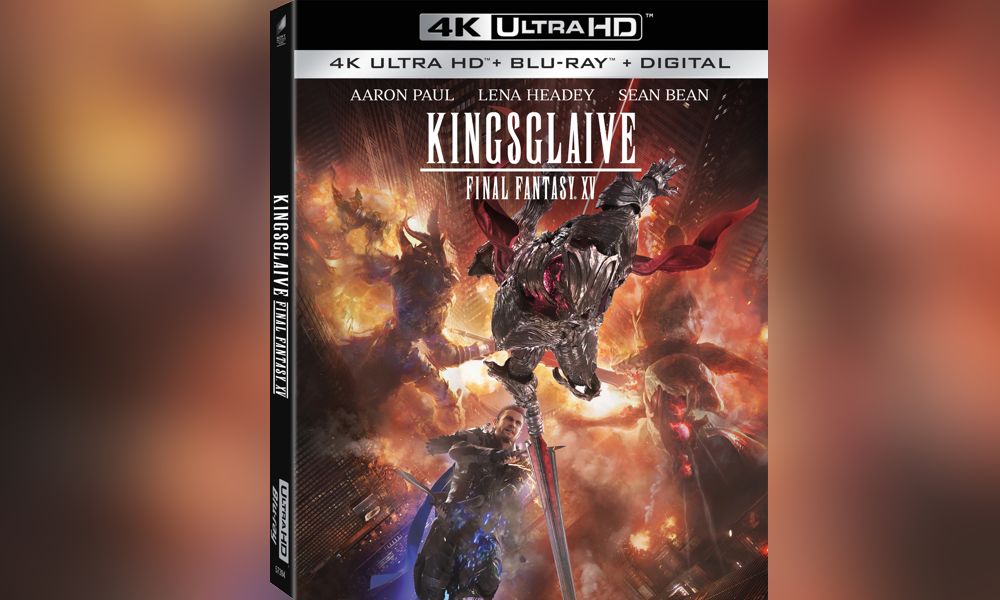
The 2016 gameworld epic Kingsglaive: Final Fantasy XV is getting the 4K remaster treatment, with a new Ultra HD home release set for March 30. Featuring an all-star English dub cast including Emmy winner Aaron Paul (Breaking Bad, BoJack Horseman) and Game of Thrones stars Lena Headey and Sean Bean, the film’s storyline runs concurrently to the events of the FFXV game, which has sold 9 million copies since launch.
Synopsis: The magical kingdom of Lucis is home to the sacred Crystal, and the menacing empire of Niflheim is determined to steal it. King Regis of Lucis (Bean) commands an elite force of soldiers called the Kingsglaive. Wielding their king’s magic, Nyx (Paul) and his fellow soldiers fight to protect Lucis. As the overwhelming military might of the empire bears down, King Regis is faced with an impossible ultimatum — to marry his son, Prince Noctis, to Princess Lunafreya of Tenebrae (Headey), captive of Niflheim, and surrender his lands to the empire’s rule. Although the king concedes, it becomes clear that the empire will stop at nothing to achieve their devious goals, with only the Kingsglaive standing between them and world domination.
The voice cast also includes David Gant as Iedolas, Liam Mulvey as Libertus, Adrian Bouchet as Titus / General Glauca, Alexa Kahn as Crowe, Jon Campling as King Regis, Neil Newbon as Petra, Trevor Devall as Ravus andTodd Haberkorn as Luche.
The 4K Ultra HD combo pack includes Blu-ray bonus features:
A Way with Words: Epic and Intimate Vocals: Aaron Paul, Lena Headey, Sean Bean — along with the filmmakers — reveal the process of creating the vocals for this film.
Fit for the Kingsglaive: Building the World: An in-depth exploration of imagining and designing the one-of-a-kind world of this film.
To Capture the Kingsglaive: The Process: Explore the intricate process of capturing the physical performances at the heart of this computer-generated film.
Emotive Music: Scoring the Kingsglaive: Learn about the creation of the truly innovative and impactful score.
Kingsglaive was written and directed by Takeshi Nozue. The CG animated feature was produced by Square Enix’s studio Visual Works in Japan, Hungarian cinematics/VFX studio Digic Pictures and independent Canadian VFX shop Image Engine.
A new preschool series which seeks to transform passive viewership into active viewership with a STEM and DIY-focussed narrative, Briko (52 x 8′) has made its debut on Turkish children’s channel MinikaÇocuk.
Co-produced by Istanbul-based Fauna Entertainment and by Toonz Media Group, headquartered in Singapore, the show puts a strong emphasis on environmental conservation and recycling, sparking children’s imaginations and inspiring them to take up new creative activities.
The series follows Briko and his best friend Hepi, a white rabbit, who in each episode find a surprise box holding a not very exciting everyday object. Using their imagination and creativity, the friends turn these commonplace items into fun games or artistic crafts. Live-action DIY tutorials inspire viewers to try similar crafts and activities.
With Briko already generating interest among kids, parents and the Turkish press with its eco-friendly bent, Fauna has initiated a licensing & merchandising program in the country, with a dedicated magazine, activity books and STEM-based toys launching this month.
Briko is being represented to buyers by Imira Entertainment, Toonz’s distribution arm, and will be introduced at international markets such as MIPCOM, ATF, MipCancun and Kidscreen Summit this year.
In the new season of DreamWorks’ animated Peacock Original Cleopatra in Space blasting off next week, Cleo’s life is turned upside down when the entire school finds out she’s the savior, and things get complicated when Brian and Akila start dating. Will the group stay focused enough to find the Uta and take on Octavian? Season 3 premieres Thursday, January 14 on NBCUniversal’s Peacock platform.
Cleopatra is a comedic adventure focusing on the untold story of Cleopatra’s teenage years. Viewers can follow Cleo as she is transported 30,000 years into the future, to an Egyptian-themed planet that is ruled by talking cats and where she discovers she is the prophesied savior of the future world. In order to prepare for her role and mission, Cleo is sent to an elite academy where she has to train to take on the bad guys, figure out how to eventually get herself back home to Egypt, as well as tackling the highs and lows of being a teenager in high school.
The voice cast includes Lilimar Hernandez (Knight Squad), Katie Crown (Storks), Jorge Diaz (Fast & Furious: Spy Racers), Sendhil Ramamurthy (Covert Affairs), Sumalee Montano (This Is Us), Jonathan Kite (Two Broke Girls), Kari Wahlgren (Spirit Riding Free) Rhys Darby (Voltron Legendary Defender) and Brian Posehn (The Big Bang Theory).
Based on the award-winning graphic novel series by Mike Maihack, the DreamWorks Animation series is executive produced by Doug Langdale (The Adventures of Puss in Boots) and co-executive produced by Scott Kreamer (Jurassic World: Camp Cretaceous).
Further strengthening their presence in the digital space, kids and family entertainment major Toonz Media Group is partnering with leading digital content distribution platform OTTera to provide the technology support for the Group’s brand-new OTT platform.
As part of the new partnership, OTTera will host and provide the technology support for Toonz Media Group’s OTT channel, as well as distribute the Toonz library across multiple VOD platforms. While the vast Toonz library will enrich the content catalogue of OTTera, Toonz will benefit from OTTera’s advertisement sourcing and service expertise with this partnership.
“This is the first time that Toonz is venturing into the space of white-labelled OTTs and it is crucial for us to have a very strong technology partner in this venture. I am really glad to say that we have found our ideal partner in OTTera. Not only are they one of the best and most competitive over-the-top technology service providers in the market today, they also have phenomenal reach with content distribution,” said P. Jayakumar, CEO, Toonz Media Group.
“We are so pleased to add Toonz Media Group’s quality kids content to our growing list of OTT services. Our shared experience in the children’s entertainment space, paired with their popular IP’s, will certainly make the Toonz channel launch a global success,” said Stephen L. Hodge, co CEO of OTTera, Inc.
The new OTT platform being launched by Toonz will include around 1,500+ half hours of movies and episodic content across different genres, dedicated to the kids and family audience. It will be a one-of-a-kind platform that showcases Toonz’s world-class IPs as well as our licensed titles.
A new 2D-animated world of silliness, play and invention is ready to open up to young U.K. viewers as B.O.T. and the Beasties makes its debut on Cbeebies on Monday, January 11. The latest series from award-winning children’s TV producers Ragdoll Productions will air weekdays at 10:50 a.m. following the premiere.
The 50 x 5′ series introduces preschoolers to the trials and tribulations of a loveable robot called B.O.T. (Beastie Observation Transmitter) as he discovers new worlds and all manner of new Beasties that inhabit them. B.O.T. must collect data on the comically unpredictable Beasties — the mission is never easy, but always very funny!
The show launches with a host of bizarre Beasties from five different worlds, and each episode offers wonderful storytelling as B.O.T. goes on a hilarious Beastie journey of discovery.
Through the production of B.O.T. and the Beasties, Ragdoll launched the professional debuts of
four excellent young animators and two layout artists, all hailing from around England’s Midlands region, where the Stratford-upon-Avon studio is based.
“It has been a privilege to work with these young animators and see how they have developed and contributed to B.O.T. and the Beasties over the life of the project,” said Anne Wood, Founder and Creative Director, Ragdoll Productions. “I believe it is so important to invest our time and support in young people as they are the future of our industry.”
B.O.T. and the Beasties
Ragdoll Productions, a privately owned family company, was founded by Anne Wood in 1984 and has produced more than 1,500 internationally acclaimed children’s programs, including the BAFTA-winning Teletubbies, broadcast in more than 120 countries and territories around the world; the double-BAFTA-winning In the Night Garden; BAFTA-winning Dipdap; the RTS NW Award-winning Twirlywoos;and The Adventures of Abney & Teal, Rosie & Jim, Brum and internationally award-winning Open A Door.
In September 2013 Ragdoll Worldwide, a joint venture with BBC Worldwide, was acquired by WildBrain, a leading Canadian broadcaster, distributor and producer, and they now own the rights to the early Ragdoll catalogue, including Teletubbies and In the Night Garden.
Box offices around the world are hoping for a happier, healthier 2021 as we enter the new year, but a few animation standouts are still pulling masked audiences into theaters where possible.
Disney-Pixar’s Soul has reached an international BO total of $35.2 million, with $25.7M coming from China, where the film’s second week ($13.7M) saw a 149% increase over its debut ($5.5M) and scored the highest per-show average of the weekend’s top 10 titles.
Pete Docter and Kemp Powers’ meaning of life musings also saw week 2 increases across many international markets, including Singapore, Ukraine and Thailand. Soul premiered in South Africa this weekend and is yet to be released in Russia and Korea. Soul‘s top 5 markets: China ($13.7M), Taiwan ($2.1M), Saudi Arabia ($1.5M), Singapore ($800,000), Ukraine ($600K) and U.A.E. ($600K_.
DreamWorks Animation/Universal Pictures’ The Croods: A New Age passed the nine-figure milestone, achieving a worldwide total of $115M this weekend; the colorful prehistoric adventure has pulled in $80.4M internationally (topped by $52.5M from China), adding $7.6M this weekend from 17 markets outside NorAm.
The pic debuted this frame in Ukraine at No. 1 ($600K), held onto the No. 1 spot in Spain for a second week (local cumulative BO: $3.2M) and saw increases in Russia ($6.2M cume) and Australia ($7M cume).
Anime blockbuster Demon Slayer The Movie: Mugen Train officially set a new record as Japan’s highest-grossing film of all time, surpassing Hayao Miyazaki’s Oscar-winning Studio Ghibli fantasy Spirited Away last weekend. The ufotable-produced extension of the hit animated series and manga adventures has remained at No. 1 in its home country for 12 weeks in a row, accumulating an estimated $337M for distributor Toho.
Mugen Train will get a North American release through Funimation Films and Aniplex of America early this year (read more about it in the February issue of Animation Magazine).
In another big shift of 2020, China has been confirmed as the leading market of the global box office for the year for the first time, overtaking North America. Both Soul and Croods posted their top numbers in the Middle Kingdom this week, with the country setting a New Year’s Day record.