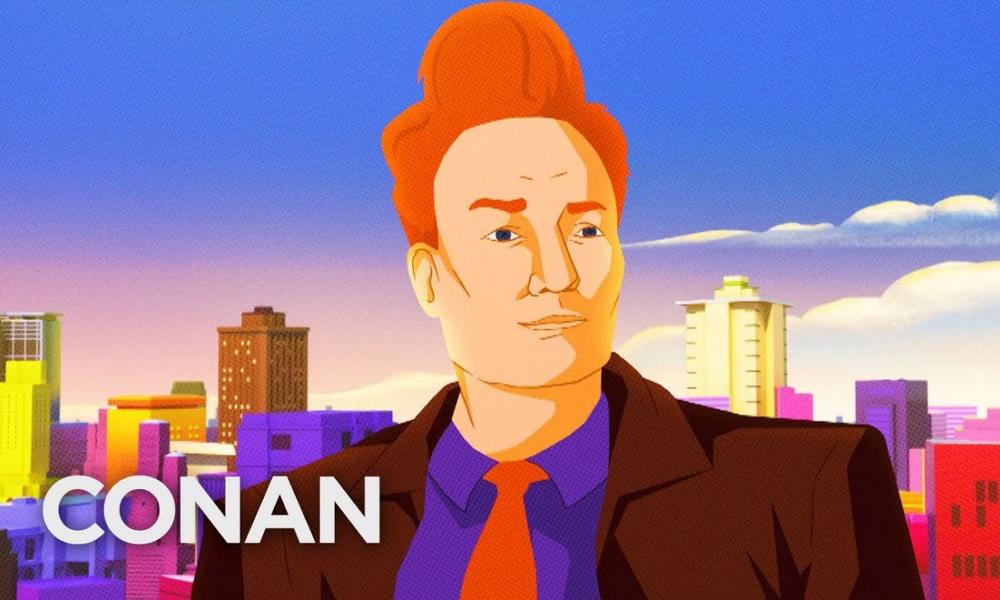
If you have been dying to make your own episode of Conan, now is the time to let your imagination run wild. The show is asking for submissions for a DIY Conan, an entirely fan-made episode of Conan, filled with fan-fave moments. Winners will have a chance to take home 2020 Conan Funko Pop! Figures, electronics, a year’s supply of Snickers bars and more. You just have to act quickly, because the deadline is August 31st.
All you have to do is watch this episode and identify a clip to recreate.
Then create your own version, upload your homage to YouTube, make sure your video is unlisted, submit your work and keep your fingers crossed. Contest participant are encourage to recreate multiple clips, but you should submit them one at a time. Since Conan O’Brien is a huge animation fans, 2D, CG animated and stop-motion episodes are encouraged!
f you’ve been missing the wild adventures of Tigtone, the master-quester and his magically regenerative sidekick Helpy, here’s some news to brighten your day. Tigtone will begin its second season on Adult Swim on Sunday, September 13th at midnight. The official synopsis reads: “With their once idyllic fantasy land now reduced to an idyllic fantasy wasteland, Tigtone the master-questerer and his magically regenerative sidekick Helpy must face all new mischievous monsters, all new enchanted chaos, and all new irresistible quests in their all new baffling adventures! 10 to be exact!”
Tigtone is created by Andrew Koehler and Benjamin Martian, who also serve as executive producers with Blake Anderson (Workaholics). The quarter-hour series combines highly rendered, hand-painted fantasy art, motion capture performance, 2D animation, and pseudo-3D visual effects. The wizards at Titmouse, the award-winning animation production company, have ventured into uncharted territory to pioneer this radical new style, creating a Tigtone universe that is beautifully unsettling. The first season of the show debuted in January 2019.
Nils Frykdahl reprises his role as Tigtone along with Debi Derryberry as Helpy. Returning voice cast members include Jeffrey Combs, Bill Corbett, Lucy Davis, Cree Summer, and Gary Anthony Williams. The second season also features guest stars such as Maria Bamford, Phil LaMarr and Gregg Turkington.
The Academy of Motion Picture Arts and Sciences has announced the finalist films vying for the 2020 Student Academy Awards across Animation, Documentary, Live Action Narrative and Alternative/Experimental. The winning medalists — who have a shot at consideration for the Oscar short film categories — will be announced Thursday, October 15.
This year’s Animation competition sees the return of several of the SAA’s frequently represented schools. In the Domestic sub category, four of the seven films hail from Ringling College of Art and Design (Florida), plus one entry each from Brigham Young University (Utah), Rhode Island School of Design and School of Visual Arts (New York). The International crop has been collected from three of Europe’s most esteemed animation alma maters: Filmakademie Baden-Württemberg (Germany), Gobelins (France) and Supinfocom Rubika (France).
Han Yang & Basil Malek, The Tree, Gobelins, l’école de l’image – France
Last year, the Domestic Gold Medal was awarded to BYU project Grendel, by Kalee McCollaum, with Silver going to Game Changer by Aviv Mano (Ringling) and Bronze to Two by Emre Okten (USC); the International Gold Medal was awarded to later Oscar nominee Daughter by Czech animator Daria Kascheeva (FAMU).
The Student Academy Awards is an international student film competition, established in 1972. Past Student Academy Award winners have gone on to win 11 Oscars, and receive 63 Oscar nominations. Past SAA winners include Pete Docter, Robert Zemeckis, Patricia Riggen, Cary Fukunaga, Patricia Cardoso and Spike Lee.
Stuttgart-based animation sales outfit Sola Media has been acquired by Germany’s Koch Films. Screen Daily reports that Koch Films, which is part of the Koch Media Grop has bought all shares in Solveig Langeland’s sales company. Langeland will continue to be the managing director of Sola and will be supported in content acquisitions by Moritz Peters, who has been building Koch Films’ library in recent years and will be co-managing director of Sola. Koch will also assist Sola in the areas of legal, administration and finance.
Sola Media was founded in 2004 by Langeland. The German company specializes in selling and distributing family animated titles. Among the distributor’s most recent titles are
Kim Hagen Jensen’s Dreambuilders, which was released in the UK last month and Latte and the Magic Waterstone which debuted on Netflix earlier this month. Among Sola’s company’s other catalog titles are Manou the Swift, Moonbound, The Elfkins, Captain Sabertooth, Snow Time and Rabbit School.
Langeland said, “I have appreciated the good cooperation with Koch Films as one of our business partners for many years. I am convinced that, in a constantly changing world, we will be better and stronger together.”
Warner Bros. Animation has announced the voice cast for its upcoming animated feature Batman: Soul of the Dragon, a 1970s-set adventure which is exec produced by Bruce Timm.
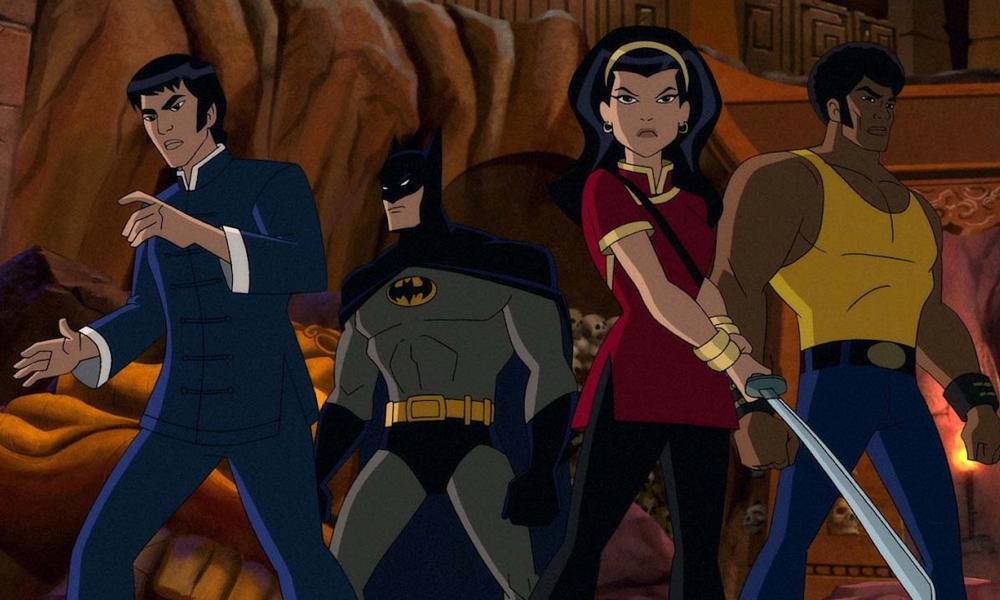
Grimm star David Giuntoli will star as the voice of Bruce Wayne/Batman alongside Arrow‘s Michael Jai White who will reprise his role as Ben Turner/Bronze Tiger for the animated project. The movie will also star Mark Dacascos as the voice of Richard Dragon, Kelly Hu as Lady Shiva, James Hong as O-Sensei and Josh Keaton as Jeffrey Burr.
Batman: Soul of the Dragon is an original story set in the 1970s era which puts the Caped Crusader DC hero against “a deadly menace from his past with the help of three former classmates: world-renowned martial artists Richard Dragon, Ben Turner and Lady Shiva.”
Bruce Timm, based known for his beloved and acclaimed Batman: The Animated Series is executive producing the project. Sam Liu (Reign of the Supermen, Batman: The Killing Joke) is directing and producing from a script written by Jeremy Adams (Mortal Kombat Legends: Scorpion’s Revenge).
LEGO and Star Wars fans got an early holiday gift today as news broke that Disney+ will be streaming the new LEGO Star Wars Holiday Special on Tuesday, Nov. 17th. Viewers will be whisked back to Chewbacca’s homeland of Kashyyyk for “a Wookiee-sized celebration of the galaxy’s most cheerful and magical holiday, aka Life Day!”
The LEGO Star Wars Holiday Special will reunites Rey, Finn, Poe, Chewie, Rose and the droids for a joyous feast on Life Day, a holiday first introduced in the 1978 Star Wars Holiday Special The new LEGO special is the first to debut on Disney+ and will continue the rich legacy of collaboration between Lucasfilm and LEGO.
This special directly follows the events of Star Wars: The Rise of Skywalker. Here is the official synopsis: “Rey leaves her friends to prepare for Life Day as she sets off on a new adventure with BB-8 to gain a deeper knowledge of the Force. At a mysterious Jedi Temple, she is hurled into a cross-timeline adventure through beloved moments in Star Wars cinematic history, coming into contact with Luke Skywalker, Darth Vader, Yoda, Obi-Wan and other iconic heroes and villains from all nine Skywalker saga films. But will she make it back in time for the Life Day feast and learn the true meaning of holiday spirit?”
The adventure continues at home with the release of the LEGO Star Wars Advent Calendar. Available September 1, the Advent Calendar was designed in concert with the development and production of the show and features holiday themed characters from the special. DK will also release the LEGO Star Wars Holiday sticker book, which lets brick fans stick instead of click.
The LEGO Star Wars Holiday Special is a production of Atomic Cartoons, the LEGO Group, and Lucasfilm. It is directed by Ken Cunningham and written by David Shayne, who is also co-executive producer. James Waugh, Josh Rimes, Jason Cosler, Jacqui Lopez, Jill Wilfert, and Keith Malone are executive producers.
***This article originally appeared in the August ’20 issue of Animation Magazine (No. 302)***
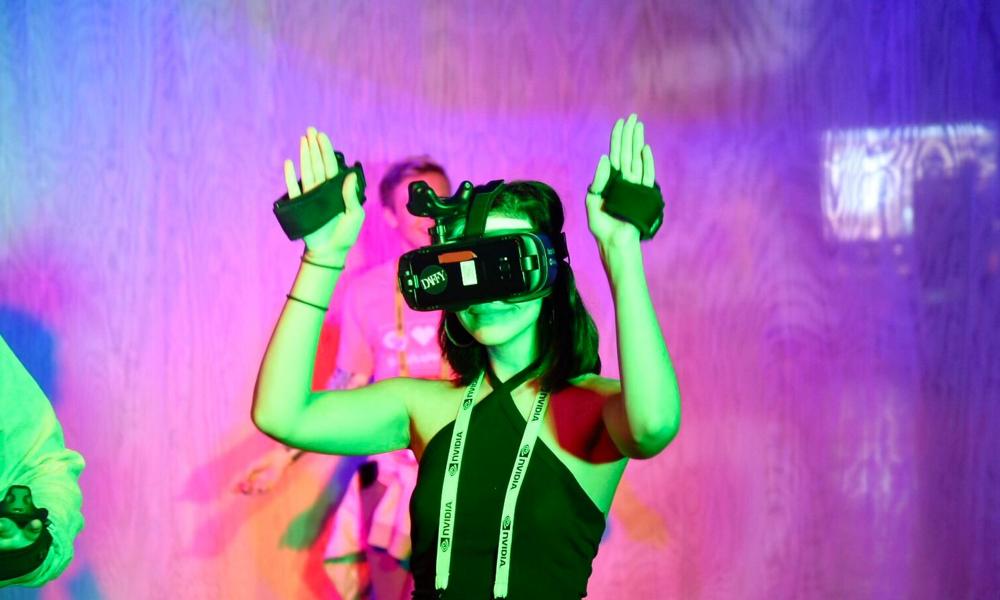
Although the promise and potential of VR/AR is far from being fully realized in 2020, according to a report from CCS Insight, consumers were expected to purchase over 22 million VR and AR headset and glasses this year. Heavy investment from the likes of Samsung, Google, Facebook and Apple continues to bode well for this complex area of art and entertainment. Of course, artists and animators have continued to push the creative limits of the technology, and festivals such as Tribeca, Cannes, Annecy and SIGGRAPH play an important role in spotlighting innovative projects from animated VR creators around the world.
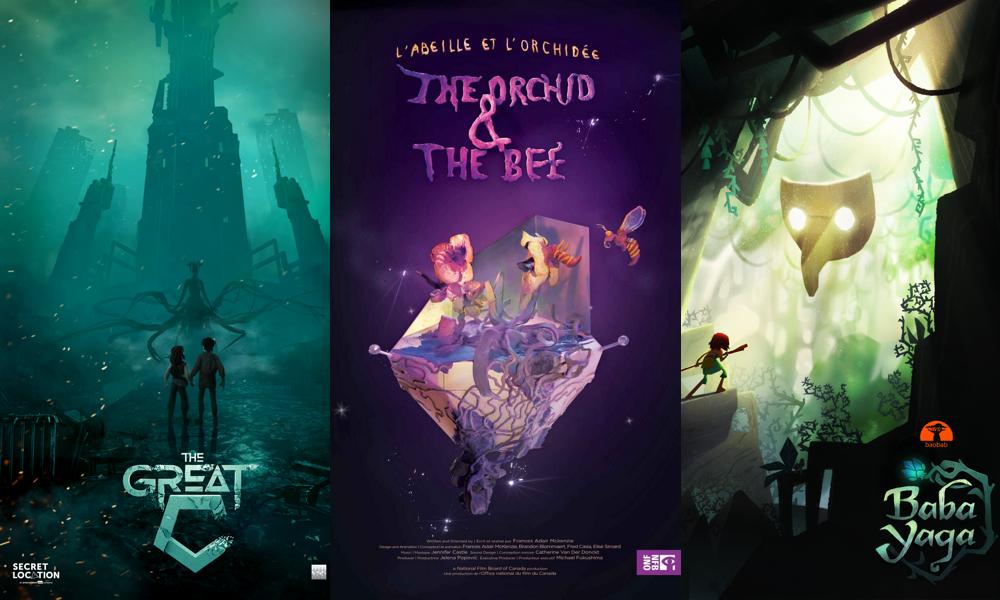
One of the prolific pioneers in the field is Northern California’s six-time-Emmy-winning Baobab Studios, which has continued to deliver innovative and visually arresting animated VR projects such as Invasion!, Asteroids!, Crow: The Legend, Bonfire and this year’s Baba Yaga. This latest offering is directed by Eric Darnell (Madagascar films, Crow: The Legend, Bonfire) and co-directed by Mathias Chelebourg and is inspired by the Eastern European legend. Featuring the voice of Daisy Ridley, the experience invites audiences to follow their “10-year-old sister Magda” as they search a magical forest for a plant that can cure their mother’s illness. But the user and Magda must also watch out for the evil witch who lives nearby.
“Baba Yaga has been a project that we have been wanting to do for a long time, but we knew it was too ambitious when we first started Baobab Studios five years ago,” Darnell tells Animation Magazine. “I’ve always been interested in the story of Baba Yaga: a fairytale that has not gained the same level of popularity in America as other classic stories and is long overdue to be told in a new way. The witch named Baba Yaga appears with a variety of characterizations in the various fairy tales that include her. Sometimes she is a nasty witch that is a danger to children. Sometimes she is neither good nor bad. And sometimes she is a particularly good witch. We wanted to create a contemporary retelling of the story that leverages off of this history.”
Baba Yaga
Adventures in 2.5D
Baba Yaga is Baobab’s first project with human characters and the studio’s most stylized to date. “To get the theatrical two-and-a-half dimension look we wanted, we had to push the game engine to do things it doesn’t normally do,” explains Darnell. “We adapted many of the storytelling techniques we learned from Invasion! and Bonfire to Baba Yaga, such as how to approach interactivity and how to use motion, character actions, sound and lighting to direct the viewer’s attention.”
To produce the animation, the Baobab team uses a mixture of traditional animation tools along with proprietary technology and pipelines. “Like our past projects, we develop everything to run in a game engine so we can take advantage of a real-time toolset for creating interactive experiences,” says Darnell. “With our studio operating remotely during the pandemic, we also built out a toolset that allows us to quickly review and collaborate together remotely in VR.”
Eric Darnell
According to the veteran director, every project in the studio’s brief history has helped them learn more and experiment with what is possible in VR. “With Invasion! we learned about the power of immersive characters, but interactivity was limited at the time,” he explains.
“Asteroids! and Crow: The Legend confirmed for us the power of making the viewer an interactive character influencing the direction of the story. Crow: The Legend also helped us polish the use of theater and performance techniques to direct the user’s attention. We improved our capabilities of using theatrical lighting to design in our virtual environments. With Bonfire, we took all our past VR insights and added more complex AI to the characters to enhance the interaction and, for the first time, made the viewer the main character of the story.”
The Orchid and the Bee
Adventures in Claymation
The National Film Board of Canada is another active player in the VR field, with titles such as Bear 71, Minotaur and Gymnasia receiving global attention in previous years. This year, the NFB presented director Frances Adair McKenzie’s five-minute project The Orchid and the Bee at Annecy. Produced by Jelena Popović, the short uses stop-motion animation with modelling clay puppets to offer a story that moves from a jellyfish changing its form to a bee that pollinates a flower.
Adair McKenzie began developing the concept for the short about four years ago. “The pre-production work of defining the narrative, technical development and designing the sets took about two years,” she tells us. “From day one of the animation process, to having all the elements spherically composited for VR in Nuke, took a little over a year. Getting a final sound design that we loved and the last color tweaks in online took us into 2020.”
The main inspiration for the project was natural science. “The piece started out on a very apocalyptic trajectory, and I eventually recognized that being in a dark room for years thinking about factory farming would be detrimental,” she says. “I began researching animal ethics, genetics and evolution. This led me to discover some very beautiful and complicated survival tactics present in the natural world. It was Donna Haraway, one of my favorite feminist theorists, who introduced me to the inter-species love affair of the orchid and the bee … I wanted to use this project as an opportunity to emphasize relationships, collaboration, disintegration and growth as a continual process in the natural world.”
Frances Adair McKenzie [Photo: Stacy Lee]
The artist says she was excited about the possibility of working within VR to make a piece representing the beautiful and violent process of transformation to the viewer in a very intimate way. “I feel like stop-motion and clay animation is a form of metamorphosis,” she offers. “So, I wanted to pay homage to this and create a mutating narrative that could, through its materiality, echo the concepts of evolution and mutability that are at the core of its narratives.”
For Adair McKenzie and her team, the biggest challenge was the technical development and digital learning. “Almost everything in the project is real — the animation, the objects and the lighting effects — so it was an intimate and very experimental process,” she explains. “Each phase of the production had to be unravelled with the consideration that it would be integrated into a spherical environment. We built a motorized rotisserie set, which emulated the digital movement for a fixed camera but meant we were stop-motion animating over a rotating three-dimensional object. We adjusted the narrative arcs as we worked, because the sets were being discovered through the process.”
The director hopes her work will pique the audience’s curiosity. “I hope they experience it as a pure, magical sort of immersion,” she notes. “That they can then carry this strange mythical space around with them in the real world. I hope young adults come into contact with it and are totally weirded out and have to wonder at what it is and what it means. I think that encounters with strange works of art, especially at defining moments in our development, are very important, and that we less and less frequently experience media that is without an agenda.”
The Great C
Post-Apocalyptic Vision
The work of sci-fi author Philip K. Dick (The Man in the High Castle, Do Androids Dream of Electric Sheep) was the inspiration for The Great C, a 37-minute work produced by Canada’s Secret Location in partnership with U.S.-based Electric Shepherd. Directed by Steve Miller and produced by Luke Van Osch, the striking piece was awarded the Cannes Film Festival’s Positron Visionary Award this year.
“Many of us at Secret Location are fans of the works of Philip K. Dick,” says Miller. “For a long time, we’d been looking for an opportunity to make a project based on his work. When The Great C became available, we took it. We didn’t know exactly what type of project we were going to make with it, we just knew the concept, setting and theme would work well in VR. We explored several different avenues. We made some prototypes that were more like a game, that had a lot more user-driven interactivity, but in the end we found that doing a cinematic-like experience in VR felt the most exciting and engaging.”
Miller and his team of about 20 worked intently on the project for eight months, and launched it at the Venice Film Festival in late August 2018. The film was rendered in real time using Unreal Engine. “Game engines are a particularly good fit for volumetric VR movies, allowing viewers to immerse themselves in the story world while maintaining six-degrees of freedom movement,” says the helmer.
Steve Miller
“We used a mix of 3D packages to create the art: Maya, Blender, C4D and Modo were used, as well as ZBrush and Substance Designer,” he adds. “As a relatively small, scrappy team, we each tended to work in the software where we were most comfortable, and used fbx and occasionally alembic files to bring it all together in the engine. We also made use of the VR hardware itself, using Vive trackers to do quick and dirty mocap to work out most of the 3D blocking in the scene, which could then be passed off as reference to the animators. I am pleased to say the sultry walk of the story’s female antagonist, Grey, is mostly me!”
Miller says he is pleased that he and his team have created something that blends the pacing and visual language of cinematic storytelling with the immersion of VR. “There were lots of unknowns for what an audience could tolerate in terms of duration, editing and camera movement,” he maintains. “While I think there’s plenty yet to learn and evolve when working in this new medium, I’m overall really happy that I can still sit down and go through it and lose myself in the story.”
Of course, nothing can be as gratifying as an audience that completely becomes absorbed in the experience. “When we first premiered in Venice, our screenings would run until 10 p.m.; at which point a boat would ferry everyone off the island where the festival was held,” Miller remembers. “A gentleman had tried to sneak in a viewing at the end of the night, and begged them to hold the boats so he could see how the story ended! It’s truly humbling to get someone engaged with your story like that, and luckily we were able to get him in for a proper screening the following day!”
A Peek into the Future
The three directors we spoke with all seemed optimistic about the future of the technology and the art form. “VR is going to keep on growing and become more popular as headsets become easier to use and more affordable,” believes Darnell. “Unlike live-action entertainment, animation development works well even when working remotely, especially in our case because we already had a lot of experience working this way. I would expect more studios to embrace the use of animation for their upcoming projects. With powerful and affordable headsets like Oculus Quest ramping up production and with new functionality like hand-tracking rolling out, the level of immersion and interactivity will continue to increase in the months and years to come.”
“I’ve been particularly excited by projects like Wolves in the Walls and Vader Immortal,” where the viewer gets to engage with the characters in a story,” says Miller. “Feeling like you are connecting with fictional characters is such a cool concept, and I’m excited to see those types of interactions get even richer and more involved as we go forward.”
Adair McKenzie says she rides her bike every day past an outdoor VR headset installation, and she can’t think of anything that feels more antiquated right now. “I think that VR is still in its youth,” she points out. “It needs time to be explored by artists and makers, as well as the tools, software and hardware that are accessible and facilitate creativity. I think this moment in time is a make-it-or-break-it sort of situation for VR, and I hope it survives, because it is an interesting tool for therapy and immersive experience, but I cannot predict the outcome!”
Organizers of the rapidly approaching Festival Stop Motion Montreal have announced that, in the name of safety and accessibility, the 12th edition will run as a virtual event from September 14 to 20. In order to serve the ever-growing and faithful stop motion community, and to roll with the pandemic punches, the fest will be available online to the whole international community so that members of the public from far and wide can enjoy the first-ever festival dedicated solely to the art of stop motion from the comfort of their own homes.
Freed by the virtual format, a larger number of films will be showcased this year to highlight the creators and their amazing work over more than 10 hours of screenings — more content than usually offered in physical theatrical programs.
This year’s official list of short films in competition will be revealed in the coming weeks on the festival’s social media channels, along with the professional workshop details and more exciting program announcements. The Festival’s “Home Sweet Home 12th Edition” program will also serve up renowned special guest conference speakers, behind the scenes interviews, new original content created specially for this unique virtual edition as well as online technical skills workshops running Sept. 14-17.
Festival Stop Motion Montreal 2020 is being presented in collaboration with local partner VUCAVU, a Canadian bilingual streaming platform for independent film and video art where festival-goers will be able to access all of the 2020 activities online.
Regular attendees and newcomers alike are warmly invited to join in the celebration of all things stop-motion from the comfort of their couch. Visit www.stopmotionmontreal.com to learn more!
Apple TV+ announced Wednesday a series order for a first-ever animated adaptation of Harriet the Spy, the iconic children’s novel that chronicles the coming-of-age adventures of the irrepressible Harriet M. Welsch. Hailing from The Jim Henson Company and Rehab Entertainment, Harriet the Spy will join Apple’s slate of award-winning series from creative, trusted kids’ storytellers.
Set in New York in the 1960s (when the original book was published), the new series will be voiced by a star-studded cast including Golden Globe and SAG Award nominee Beanie Feldstein, who will star as Harriet — a fiercely independent, adventurous, curious 11-year-old girl. More than anything, Harriet wants to be a writer, and in order to be a good writer, you need to know everything, and in order to know everything, you have to be a spy!
Emmy Award winner Jane Lynch will voice the role of Ole Golly, Harriet’s larger-than-life, no-nonsense nanny. Additional voice talent includes Lacey Chabert as Marion Hawthorne, the ringleader of a group of smug, popular girls at Harriet’s school.
Originally published in 1964, Louise Fitzhugh’s Harriet the Spy has remained an iconic and inspiring children’s novel and series of books for children. The new Apple Original series will be written and executive produced by Will McRobb (co-creator of the award-winning The Adventures of Pete & Pete). Sidney Clifton (Black Panther, Me, Eloise) will be the producer. Lisa Henson and Halle Stanford will executive produce on behalf of The Jim Henson Company, and John W. Hyde and Terissa Kelton will executive produce for Rehab Entertainment. Wendy Moss-Klein and Nancy Steingard of 2 Friends Entertainment will also serve as executive producers. Titmouse Animation Studios will animate the series.
The project marks the first regular v.o. role for Feldstein, whose animation experience so far has been as a guest voice on The Simpsons this year. She arned a Golden Globes nomination this year for Booksmart and shared a SAG Award ensemble cast win for Lady Bird (2017). Feldstein is playing Monica Lewinsky in American Crime Story: Impeachment, set to premiere this fall, and can be seen as acolyte Jenna in the What We Do in the Shadows series.
Lynch has won dozens of awards over her storied career, including a Golden Globe, Primetime Emmy and SAG honors for Glee and several more Primetime Emmy Awards and nominations for credits including The Marvelous Mrs. Maisel (Guest Actress) and Dropping the Soap (Best Actress – Short Form). The flexible performer also has a long list of animation credits: she has voiced roles for TV’s American Dad!, Big Hero 6: The Series, Final Space, The Stinky & Dirty Show, Dallas & Robo and Phineas and Ferb as well as animated features 100% Wolf (coming soon), A Stork’s Journey, Rio, Space Chimps, Ice Age: Dawn of the Dinosaurs, Shrek Forever After, Ralph Breaks the Internet and Wreck-It Ralph, for which she earned three BVA Awards. Lynch received a star on the Hollywood Walk of Fame in 2013.
Chalbert (Party of Five, Mean Girls) has been nominated for six Behind the Voice Actors Awards, for animated series Justice League Action, Kulipari: An Army of Frogs, Transformers: Rescue Bots and Young Justice. Her bubbly, girlish voice can be heard across hundreds of other episodes, movies and video games, from recent projects like Shimmer and Shine, The Lion Guard, Kung Fu Panda: The Paws of Destiny and Voltron: Legendary Defender back to Aaahh!!! Real Monsters, Hey Arnold!, The Lion King 2, Anastasia (Young Anastasia) and The Wild Thornberrys (Eliza Thornberry).
The series order follows recent milestone Daytime Emmy Award wins for Apple TV+ original children’s programs Ghostwriter and Peanuts in Space: Secrets of Apollo 10, making it the first streaming service to win a Daytime Emmy in its first year of eligibility.
Harriet the Spy expands Apple’s partnership with The Jim Henson Company, which includes the premiere of the Apple Original Fraggle Rock: Rock On! and the highly anticipated reboot of the beloved classic series Fraggle Rock.
Apple TV+ is home to a growing offering of original series from renowned franchises in kids and family programming, including Sesame Workshop and Peanuts, and upcoming newly imagined original series based on the stories and illustrations of Maurice Sendak.
The frequent partnership between animation and historical documentary has found a new expression in Coup 53 — an award-winning documentary releasing August 19 which relates he covert action of the CIA and MI6 in Iran in 1953 to successfully overthrow the democratically elected Iranian leader, Mohammad Mossadegh, in order to regain U.S.-U.K. control of oil.
Directed by Taghi Amirani, co-written/edited by cinema legend Walter Murch (The Godfather, Apocalypse Now), exec produced by Paul Zaentz (The English Patient, The Talented Mr. Ripley) and featuring actor Ralph Fiennes, the film is intercut with painterly animation created by British fine artist, animator and director Martyn Pick (Ultramarines: A Warhammer 40,000).
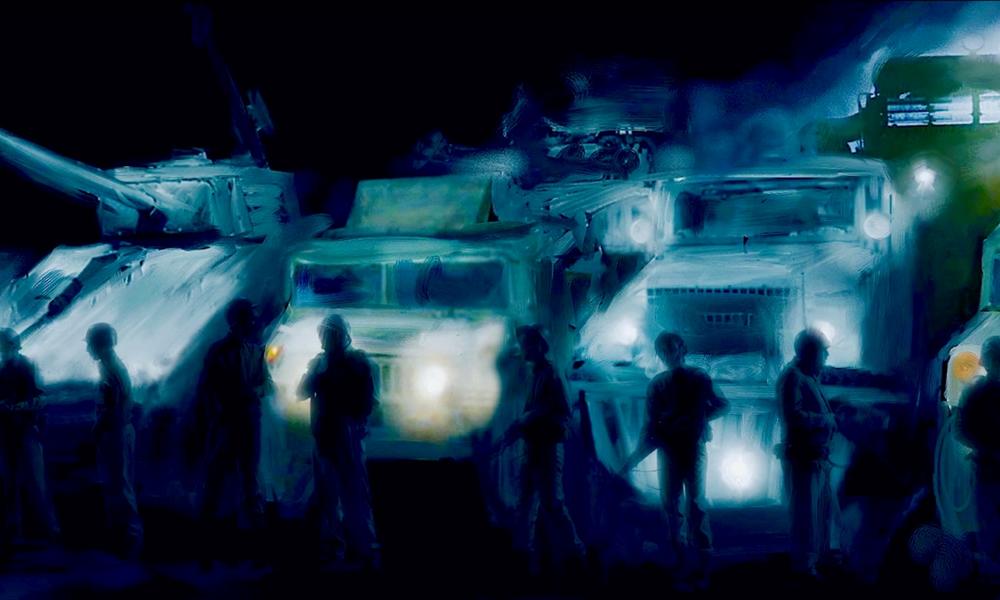
One of the most striking visual elements of the film, the series of dramatic animated sequences are crafted with an aesthetic reminiscent of front line paintings of the 20th century. These scenes serve the documentary by bringing to life witnesses accounts of the unrest where little or no footage exists.
Coup 53
“The Coup 53 painterly animation was about dramatizing recollections of the traumatic events of the 1953 Coup,” Pick explained. “Contemporary painters I looked at were those who deal with memory or history such as Gerhard Richter, Luc Tuymans and Peter Doig. Where images often from a film or photographic source are worked up with oil paint to evoke a sense of a real memory struggling to focus and coalesce within the medium. This captured the subjective nature of the reminiscences. The thick, rich paint impasto and dynamic, forceful brushstrokes of artists such as Frank Auerbach and Frank Kline were referenced to expressionistically visualize the tumultuous violence of these events.”
To create the sequences, Pick first created an extensive color storyboard from which he directed live-action reenactments, utilizing greenscreen footage and mobile phone shots. The digital images were then “smeared” to resemble wet oil paint, and integrated with real paint texture. Finally, the animation was finished with frame-by-frame digital painting completely but a select group of artists.
Coup 53
Pick shot the footage on multi-camera, a novel technique for animation which gave editor Murch plenty of coverage and options for cutting the vibrant sequences into the documentary. Cross-cutting and handheld camera movement helped to create a sense of tossing in the tumult of the coup’s street violence. The final digital paint stage enhanced the intensity of movement and texture.
“We didn’t want the animation to be a literal graphic representation of events. We wanted another-worldly feel, more like flashes of an emotional memory,” said director Amirani. “Our animation director Martyn Pick and his team surpassed all our expectations with their beautiful work.”
You can watch an animation highlights reel from Coup 53, featuring the work of Pick, Sharon Pinsker, Ali Charmi, Kelvin Johnson, Robb Hart, Rachel Gold, Vince Knight, Giulia Scrimieri and Jason Kelvin, here.
Coup 53
Martyn Pick is a filmmaker and artist recognized for a distinctive fusion of live action, fine art and animation. In feature films, commercials and shorts he applies his fluid, cinematic storytelling working across pure live action, computer and hand-drawn animation. He directed the CGI action film Ultramarines: A Warhammer 40,000 Movie (2010) starring Terence Stamp, Sean Pertwee and John Hurt, The Age of Stupid (2009), Film London’s promo for the 2012 Olympics, BBC’s trailers for Euro 2004, Budweiser’s 2001 NBA commercial and the Channel 4 commissioned short Plaza (2000). In CGI he has developed a U.K./Chinese animated franchise and was head of story & voice director on 40 episodes of Robozuna (Netflix/ITV). He has also illustrated the books Witchcraft and Beowulf for Penguin,bringing his art style to publishing, and recently finished directing the live-action horror feature Heckle. Pick studied Film and Fine Art at Saint Martins School of Art.
Martyn Pick
Coup 53 had its rapturously received world premiere at the 2019 Telluride Film Festival, going on to screen at the 2019 BFI London Film Festival and the 2019 Vancouver International Film Festival, where it won the audience award for Most Popular International Documentary. The film was also nominated for Best Documentary at the 2019 British Independent Film Awards, and for the Grierson Award at the BFI London Film Festival. It launches to U.K., U.S., Irish and Canadian audiences on August 19, 2020, the 67th anniversary of the coup in Iran, in a virtual screening.
With a new school year just around the corner, Wacom has announced it has a special treat in store that holds all the excitement and possibility of new tools, friends, lessons and challenges. With the help of Mike Morris, animation all-star and creator of the LightBox Animation Dance Party and Panelpalooza, the tech co is kicking off the school year with the ultimate animation assignment: Cartoon Crunch!
Cartoon Crunchis a reality show-type mini-series about the process, pitfalls and breakthroughs of making cartoons — all in the course of one week. Two teams of four student animators will be selected to take on the task of creating an animated short with the guidance of professional mentors in story, production design and animation (remotely, of course).
Artwork by Mike Morris
The chosen teams will be challenged to create a cartoon that depicts what creative collaborations will look like in the future. The cartoon should be 45 seconds or less. While studio-level sound isn’t expected, participants are encouraged to push their skills to the limit. Each participating student animator will receive a Wacom One and a Wacom-sponsored stipend of $1,500.
Cartoon Crunch is accepting applications from college juniors and seniors in the U.S., Canada and Latin America (excluding Venezuela) looking for their big break into Toon Town. The deadline has been extended to August 21 at 11:59 p.m. PST to allow even more students to join in this unique back-to-school activity. Click here for the full T&C, rules and eligibility requirements.
Artwork by Mike Morris
For those whose animation skills aren’t quite ready for primetime or are simply enthusiasts who want to tune in, Wacom and Morris will be releasing a five-part mini-series over the course of five days, with live watch parties each day. After each episode, a live Q&A with the professional mentor featured in the episode of that day will take questions from the chat and offer general production tips. And for the final celebration: a special Popcorn Premiere Party which will include a short panel with the Cartoon Crunch student animators and the debut of their final animations!
A group of Japan’s most notable anime production/distribution companies have joined forces to launch a new digital content hub for fans in the form of a new YouTube channel dubbed AnimeLog, or AniLog. The new destination is currently available in Japan, with plans to roll out English and Chinese-language subtitled content to reach more anime fans around the world.
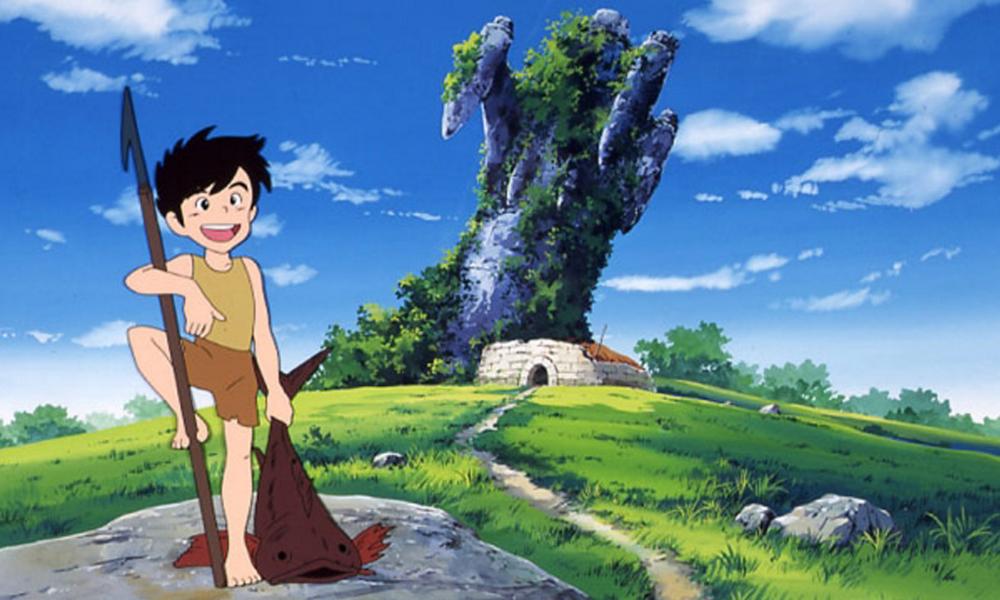
With well-known banners like Toei Animation, Tezuka Productions, Kodansha, Nippon Animation, Shogakukan-Shueisha Prod. and Shinei Animation on board, AnimeLog/AniLog aims to make 3,000 titles from 30 companies available to online viewers by 2022. Launch titles include Black Jack, based on the manga by Osamu Tezuka, the Hayao Miyazaki-directed 1970s series Future Boy Conan from Nippon, Astro Boy, Lucy of the Southern Rainbow and Aesop’s Fables.
While many of these companies have set up their own YouTube channels, the partner studios believe that combining their catalogs and joining forces will accelerate audience and ad revenue growth. AnimeLog was launched last Friday by corporate digital strategy specialist AnalyzeLog, which has already worked with some of these studios, striking numerous business and investment deals since its formation in 2018 with backing from Next10 Ventures (U.S.) and its founder, Benjamin Grubbs.
Fans can follow the AnimeLog Twitter feed for new title announcements. Visit the Japanese YouTube channel here.
Herbivore social media sensation The Tiny Chef is bringing his culinary adventures to Nickelodeon in a brand-new series. The Tiny Chef Show (working title) will follow the talented chef as he whips up tasty ‘weshipees’ and the world’s tiniest plant-based dishes from his tree-stump home. Produced in association with Imagine Kids+Family, Tiny Chef Productions, and Nickelodeon Animation Studio, the series will premiere on Nick’s preschool platforms in the U.S., as well as Nickelodeon and Nick Jr. channels internationally.
“We cannot wait to tell The Tiny Chef this amazing news. Though we’re a little worried his tiny heart may burst with joy so we’ll make sure he’s sitting down. It’s been The Tiny Chef’s dream to have his own cooking show and now Nickelodeon is making that come true. This next chapter in The Chef’s journey will be so exciting and thrilling for all of us,” commented ‘The Tiny Team.’
The Tiny Chef Show will be executive produced by Imagine Entertainment Executive Chairmen Brian Grazer and Ron Howard, Imagine Kids+Family President Stephanie Sperber, as well as Kristen Bell, Morgan Sackett, and Tiny Chef creators Rachel Larsen, Adam Reid and cinematographer Ozlem Akturk for Tiny Chef Productions.
The Tiny Chef Show
“The Tiny Chef stole my heart when he taught me how to make a tiny apron, and I know he will take everyone’s hearts like he took mine,” said Ramsey Naito, Executive Vice President, Nickelodeon Animation Production and Development. “Brian Robbins and I want to thank everyone at Imagine Kids+Family as we welcome The Chef to Nickelodeon.”
“We have worked with some of the biggest stars in the business, and we could not be more excited to also now work with the tiniest! The Chef and his team have created a vibrant, inclusive and community-based world, and we at Imagine are thrilled to share it with audiences, big and small,” said Grazer and Howard, jointly. “Brian Robbins and his team at Nickelodeon created the gold standard in kids’ entertainment and the perfect home for this series.”
“We knew from the first meeting that Chef and his show would be best served by partnering with the creative team at Nickelodeon,” said Sperber. “They made Chef feel like a star and Imagine Kids+Family couldn’t be more excited to partner with the Nickelodeon team to make his cooking show a reality.”
The Tiny Chef Show marks Nickelodeon’s second project with Imagine Kids+Family, following the previously announced live-action adventure series, The Astronauts. Production of The Tiny Chef Show for Nickelodeon Animation Studio is overseen by Eryk Casemiro, Senior Vice President, Nickelodeon Preschool and by Elly Kramer for Imagine Kids+Family.
SIGGRAPH 2020’s conference chair Kristy Pron hopes this year’s virtual attendees will get everything they always get from the event — with the exception of the physically being in a major urban conference hall. Pron, who is a media arts and pipeline developer for Walt Disney Imagineering, says that while it was a bit challenging to have to switch gears and start planning a virtual event in light of the COVID-19 situation, she is confident that the experience, which kicks off August 17, will be a positive and enriching one.
“We were lucky because we had a couple of months to make a decision and that’s why we pushed back the date from July to August, because we had so much content to deal with,” Pron says. “We talked to several other events which had made the switch to virtual and learned from their experiences. Time zones, for example, are a huge issue to deal with, since we’re trying to find the best solution for everyone to experience the conference, regardless of where they live around the world.”
Kristy Pron
The organizers were able to pivot around the original theme of the event, “Think Beyond,” and applied it to the new virtual, stay-at-home situation. “We wanted everyone to really think beyond the usual areas of animation and production and expand the focus to CG in the world of science, automotive, theme parks and education,” explains Pron. “But when we went virtual, the theme lent itself to how we deliver content as well. In fact, I think attendees are able to get a lot more out of the experience this year, because you can see more things and if you miss any of the live sessions, you can watch them in playback.”
One of the areas that will benefit from the new format is the Technical Papers section of the confab. According to Pron, the papers will be released on demand during the first week of the event, and during the second week, four authors will be available to participate in special Q&A sessions. The Computer Animation Festival will also get a bigger than usual reach since a wider at-home audience will be able to take in the selection than the customary conference theater arena.
Pron and her team are also working hard to retain the job recruitment and mentorship aspects of the program. “We will be engaging students through a special virtual job fair in the exhibition area of the website,” she notes. “I was a student volunteer myself, so I recognize what a vital part of the experience it is. We’re working at connecting volunteers with mentors in the industry and to encourage the community and networking aspects of SIGGRAPH online.”
SIGGRAPH 2020
And what kind of tips does the conference chair have for at-home attendees of the confab? “I would say, try to pace yourself,” Pron notes. “During the first week, go through the material and get the lay of the land, since the show will be on for two weeks this year. Then, you can go back and catch everything during the second week. Most of the content will be available 60 days after August 28, so there are plenty of opportunities to take in the content and also to keep the conversation going for the rest of the year. I hope everyone gets the inspiration that they usually get from SIGGRAPH. The event is all about community, learning and the opportunity to experience new things. That’s what I want everyone to have until next year when we can have SIGGRAPH in person again.”
A Digital Cornucopia
SIGGRAPH’s Computer Animation Festival director Munkhtsetseg Nandigjav answered a few of our questions about this year’s lineup:
How long have you been working on curating the festival this year?
From early on, I wanted this year’s Electronic Theater program to be driven heavily by stories that are dramatic, entertaining, educational and inspirational. I also hoped the selections would speak truth in the ways that they’re engaging and inviting our diverse audience in.
Between early January with the opening of submissions and mid-July with finalizing the lineup post-jury, I spent many nights and weekends watching the content repeatedly. It was a process that ran about seven months. This length of time was also partially due to the pandemic causing us to adjust our timeline for the conference.
Munkhtsetseg Nandigjav
What are some of the big highlights of this year’s program?
One of the biggest highlights of this year is that we are presenting the show virtually to a global audience, which is something we’ve never done before. While it was a bit disappointing to cancel the in-person show, I’m excited to see how we might be able to reach a larger audience than we thought possible. Continuing last year’s efforts to focus on diversity, we made significant progress in 2020. I’m proud that not only is our program content diverse — representing a number of different categories — but the characters presented and stories told are diverse. Furthermore, when it came to reviewing the content, we had nine female reviewers out of 20 total, who offered varying expertise in advance of the jury, and a 50 percent female jury, each of whom are amazingly accomplished, inspiring women.
In an effort to acknowledge the work of often-underrepresented categories, we have established a “Special Recognition” designation for which the jury selected the honoree. The chosen piece to be recognized with this designation in 2020 is “Stem Cells: The heroes in Crohn’s perianal fistula treatment,” which falls within the “Visualization (Conceptual Animation)” category.
Since its early days, the SIGGRAPH Computer Animation Festival has been home for showcasing advances in computer graphics and the best computer-generated imagery of the past year. Many well-known and well-regarded short films have even premiered at SIGGRAPH conferences. In keeping with this tradition, I’m excited to be presenting three world premieres in 2020: Windup from Unity Technologies, Automaton from Pixar Animation Studios and Visual ASMR from Onesal Studio.
Last but not least, we will be offering a virtual Directors Panel following the streaming premiere on Monday, 24 August. The panel will take place at noon Pacific on Thursday, 27 August, and will be available to Ultimate pass holders. Get ready to hear from five directors as they discuss the making of their incredible work.
Windup
Do you have any personal favorites?
I’m proud of all of the pieces that will be presented in the show this year, and think each is great in its own way. Each selection adds significance to the greater story of the Electronic Theater, and several of them have inspired and connected with me on a deeper, personal level, including:
To: Gerard from DreamWorks Animation – This short film represents a lovely story about how a simple act of kindness can make such a huge impact in the lives of others and in oneself. Especially during this time, I think a story like this brings hope by beautifully showcasing the goodness in humankind.
Loop from Pixar Animation Studios – Loop tells its story with bravery and positivity, acknowledging what it’s like to both be and know a person with autism, and suggesting a perspective we all could learn something from. It is a hugely educational piece that I think will help to make positive changes in conversations all around in our society.
Worlds Beyond Earth from the American Museum of Natural History – This data-driven scientific visualization is absolutely astonishing with breathtaking scenes! It tells a beautiful story about the dynamic nature of worlds around the solar system. I find it exciting to see how more complex information can be communicated through such high-quality visuals.
Windup from Unity Technologies – One of the world-premiere selections, this short film was rendered in real time and is one of the pieces that I continuously find myself crying over … even after watching it multiple times. The young girl’s struggle with health and her father’s every effort and unwillingness to give up to save his daughter was a story of my early life. Not to mention, my dad also is an engineer. It’s incredible to see this beautiful story come out the year I’m directing the show. Windup is also a strong representation of how quickly we’re advancing with real-time technology and the possibilities in uses of real time in filmmaking.
Loop
How long will the shorts and panels remain on the website for the virtual audience?
The show will premiere on the evening of Monday, 24 August and will remain available throughout the week worldwide. However, ticket holders will need to unlock their tickets by Friday evening (28 August), by 8:59 pm Pacific to be exact. Once a ticket is unlocked, each ticket holder will have 48 hours of access to the show reel. Our streaming partner, Eventive, will allow our audience to view the show on their smart TVs and just about any other device.
What is your take on the CG animation scene in 2020? Did you notice any significant trends?
Year after year, we have stronger photorealistic CG animation, both in feature length films as well as in game cinematics. In particular, I noticed a trend that a significant amount of work was done on digital human faces, such as age manipulation, in films that came out over the past year. Beyond digital humans, I’m impressed to see the quality of scenes coming from students. In particular, a hyper realistic world in The Beauty, our Jury’s Choice award winner, was exceptionally well done. The level of production process these students are working through to create films is truly impressive, not to mention their unique approaches to storytelling.
Overwatch Zero Hour cinematic
What are some of the big VR offerings this year and how are they different from previous years?
Our SIGGRAPH 2020 VR Theater Director Monica Cappiello has prepared 10 powerful pieces as part of the lineup this year. Something that’s unique about the 2020 VR Theater selections is that many of the pieces are emotional, inspirational and have strong cultural contexts to their stories. In addition to some incredible VR documentaries, there are some truly stand-out approaches to story, including Battlescar – Punk Was Invented by Girls from Atlas V and Feather by Keisuke Itoh. A piece I am particularly excited about is 1st Step – From Earth to the Moon, which follows the story of the Apollo mission. In this VR documentary, viewers can see and experience space through the eyes of the astronauts. Aligned with this content, we also have Apollo 13 View of the Moon in 4K as part of the Electronic Theater lineup.
Any tips for animators who’d like to see their shorts featured next year?
Solid story is still key to any strong work, followed by successful execution of the idea. I hope this year’s show will inspire storytellers and young, emerging animators around the world about the impact that creators can make through the stories we tell. As the world evolves, the festival will continue to appreciate stories that are mindful, stories that are inclusive, stories that engage their audience and, hopefully, stories that touch hearts and lives and ultimately inspire positive actions in others.
You can find out more about this year’s virtual event at s2020.SIGGRAPH.org.
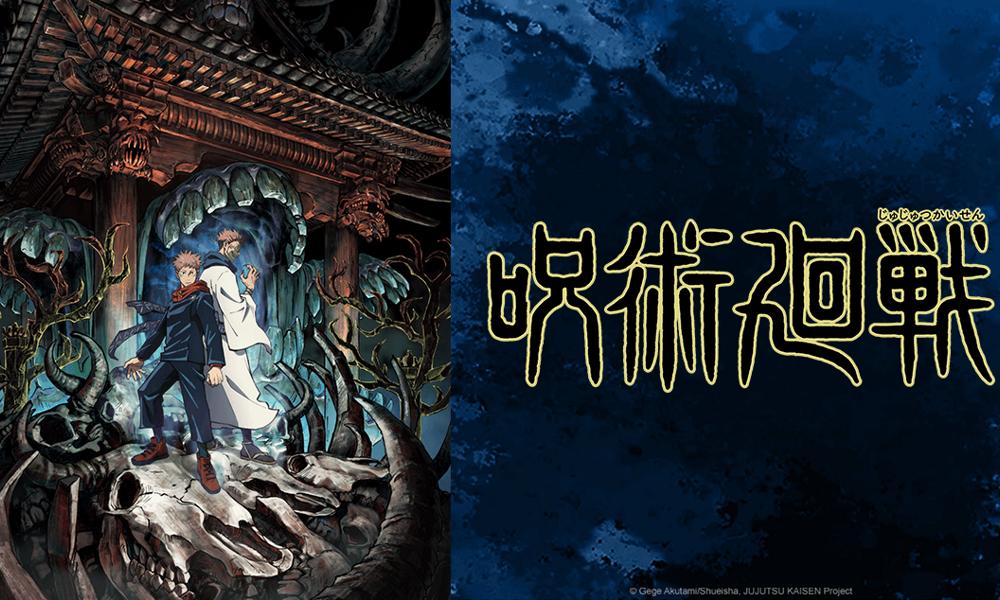
Crunchyroll is announcing today that the highly-anticipated anime Jujutsu Kaisen will head to the platform exclusively as part of Crunchyroll’s upcoming anime season this October. The series will be available to the anime community worldwide, outside of Asia. This dark fantasy / horror series follows the life of teenager Yuji Itadori, who finds himself entangled in an epic battle between sorcerers and powerful curses, even becoming possessed himself!
“Crunchyroll has a community of more than 70 million registered users with more than 40 million followers across social, so we’re deeply connected to the stories and genres we know will resonate with our fans,” said John Leonhardt, Head of Consumer Products, Crunchyroll. “The upcoming series Jujutsu Kaisen is an action-packed horror adventure and is available for license across categories. We know the global anime community will be so excited to enjoy a range of consumer products to celebrate their love for this series.”
Synopsis: Hardship, regret, shame: the negative feelings that humans feel become Curses that lurk in our everyday lives. The Curses run rampant throughout the world, capable of leading people to terrible misfortune and even death. What’s more, the Curses can only be exorcised by another Curse.
Itadori Yuji is a boy with tremendous physical strength, though he lives a completely ordinary high school life. One day, to save a friend who has been attacked by Curses, he eats the finger of the Double-Faced Specter, taking the Curse into his own soul. From then on, he shares one body with the Double-Faced Specter. Guided by the most powerful of sorcerers, Gojo Satoru, Itadori is admitted to the Tokyo Metropolitan Technical High School of Sorcery, an organization that fights the Curses… and thus begins the heroic tale of a boy who became a Curse to exorcise a Curse, a life from which he could never turn back.
Powerhouse studio MAPPA provide the animation, with Sunghoo Park as series director. MAPPA and Park recently teamed up for Crunchyroll Original series The God of High School, so fans are in for an otherworldly treat once the show premieres exclusively on Crunchyroll this fall.
The manga for Jujutsu Kaisen (published by Shueisha in Japan and VIZ Media in the U.S.) launched in 2018 and, as of June 2020, more than 6.5 million copies are currently in circulation.
Jujutsu Kaisen is available for license across all categories, worldwide outside of Asia. Interested parties are encouraged to reach out to the Crunchyroll team for more information.
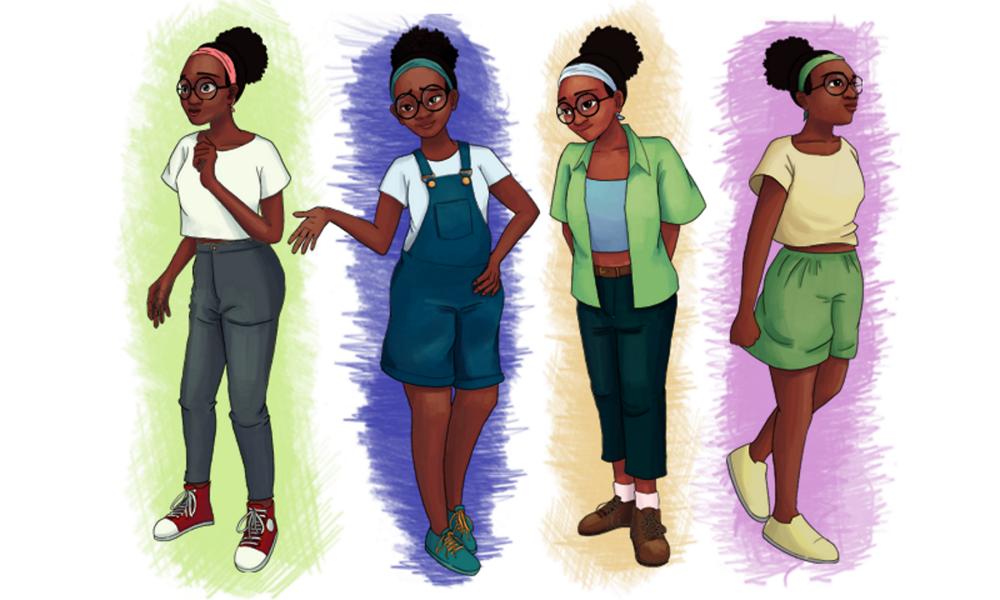
In a new first-look video, Ado Ato Pictures Creative Director Tamara Shogaolu takes us behind-the-scenes and along on her journey to create the studio’s recently greenlit XR original, Anouschka. The project
“I created the interactive animated project Anouschka to bring to life a Black girl who is truly magical,” Shogaolu explains in the video. “I’m really excited to be working with a team of amazing Black women on this project. One of the writers is Sandy Bosmans who is a well-known spoken word artist here in the Netherlands, and we’re also working with Ellie Vanderburg, who is a New York-based playwright who I actually went to high school [with], where we were both very nerdy Black girls — and we are finally able to bring our nerdiness to the screen,” she adds with a laugh.
In the video, we hear from Bosmans and Vanderburg about what the impact of this project, centered on a teenage Black girl discovering her true power, means to them and to audiences hungry to see themselves represented in inspiring stories. Producer Riyad Alnwili also comments on the novel ways the project will allow groups of viewers to explore and interact with the story in a myriad of ways.
The interactive story follows Amara, a Black teenager from Amsterdam’s Bijlmermeer (Bijlmer) neighborhood, as she embarks on a magical journey of self-discovery through time and space. Amara must travel back and connect with generations of women that preceded her in order to save her grandmother and twin brother from a multi-generational family curse. She discovers her family’s ancestry and magical powers along the way and reconnects with her roots while also learning more about her present.
Anouschka is written by Elinor T. Vanderburg and Sandy Bosmans, produced by Jamari Perry and Riyad Alnwili, and directed by Shogaolu. Production is underway in Amsterdam, supported by the NL Film Fonds and Dutch Foundation for Literature.
The project is still fundraising via Kickstarter and through direct donations. Visit www.adoatopictures.com/anouschka to learn more.
Stefan Kraus, CEO of German software developer BiteTheBytes, answered a few of our questions about the latest version of his company’s fantastic terrain and landscape generating tool World Creator, which is used by major studios such as Bioware, Blizzard, Bandai Namco, Cinesite, Hybride, Warner Bros. Games and Unity. Here is what we found out:
Animation Magazine: Can you tell us a little bit about the development history of World Creator?
Stefan Kraus: The very first version of World Creator had a different name, Geo Control, and was developed by Johannes Rosenberg. Sadly, after he had a stroke, the product’s development came to a halt for around two years. He contacted us and wanted us to use his code-base to further develop Geo Control. We wanted to help him out and honestly, we liked his product and saw a lot of potential in it. To bring it back to life, we had to create a new brand. So in 2012, we changed the name to World Creator and fixed all open bugs and made it much more stable.
We then decided to re-develop it entirely from scratch, and that’s how World Creator for Unity was born. Initially it was a prototype to prove that terrain and landscape generation can be done well on the GPU — in 2015 we made a product out of it for the Unity Engine. But the main and long-term goal was a stand-alone application which can be utilized not only by Unity users. So after the Unity plugin, we started the development of World Creator 2 in 2016 and released an awesome terrain and landscape generator in early 2018. World Creator 2 was a game changer due to its real-time generation capabilities. Now, two years later, World Creator 3 will be released by the end of 2020, bringing terrain and landscape generation again to the next level with new outstanding and breath-taking features.
What are some of the improvements and added features we can look forward to in version 3 later this year?
Honestly, there is a lot! I personally look forward to our new erosion and sediment system. Quality has improved drastically, and the best about all this is that we were also able to improve the performance. World Creator 2 is still the fastest generator, but World Creator 3 is about 2.5 times faster than the previous version. The reason is that we developed our own engine specialized on terrain and landscape creation performed on the GPU — so just like in World Creator 2, everything in World Creator 3 will be real time. In addition, we added a new workflow for creating landscapes; this time, using biomes. So with version 3 you will be able to set up different biomes allowing you to define real-world situations.
A biome can be anything — think of a desert biome including an oasis with a lake, nice vegetation, sand dunes and some rocks … or a forest containing different tree species with different textures underneath, flowers and grass surrounding the trees with different textures as well, and so on. It is a fully flexible hierarchical system, and you can save your biomes as templates and share it with others. Artists will be able to create their own biome settings and share it with others that can import them into their own projects. We have a real-time path-tracer that creates photoreal renders instantly, new design and sculpting tools that allow you to create exactly the terrain you want, a new powerful and ultra-flexible UI system, fully customizable export options allowing you to adapt the export settings to your own workflow.
Also, the long-awaited support for Wacom tablets will be available. One of the most powerful extensions in World Creator 3 will be the new hierarchy-based distribution system allowing artists to combine many different distributions such as flow, several noise patterns and post-processing techniques such as blur, and a lot more. World Creator 3 also has a tile-based creation system — there are no limits in terrain size and resolution anymore. This also applies to textures, colors and even distribution rules. World Creator 3 will ship with tons of filters, distribution rules and ready-to-use biomes for your productions. It will be an amazing package.
We also never had a clue about how many fantastic artists are out there — from hobbyists to professionals. I personally think what they most like is the real time. Everyone can design a terrain shape without having to wait multiple minutes or hours for a single iteration — with World Creator they get it instantly. This allows them to be way more creative, and yes, it is also a lot of fun to see all changes instantly. It’s like an ultimate playground, a perfect mix of design by hand and procedural content creation.
Artwork by David Aguero (davidaguero.com.ar)
What was the response to the two previous versions of World Creator?
The response to World Creator for Unity was really amazing — once released in the Unity Asset Store it sold multiple hundred times immediately. The response to the standalone version of World Creator was also outstanding — within a very short period of time, the largest gaming and movie companies were attracted to the capabilities and with them almost everyone followed.
How long has BiteTheBytes been around and what do you specialize in?
We originally founded BiteTheBytes in 2008 but it goes back to 2004 when we started making short real-time animations for the international demo scene as students. From the beginning, our main focus was the visualization of large terrain and landscapes for real-time applications in general. It all started with a new algorithm to render vast areas, planets or even entire galaxies. We soon figured out that not only is the visualization a problem, but also the generation of so much data. So, we shifted to creating landscapes, always in mind that everything has to be real time. One of the benefits of digital art is that you can play around with settings and try things out. You don’t want to wait several minutes or even hours until something has finished loading, so we deeply concentrated our software to be able to do everything instantly.
What do you find your clients are looking for in 2020 most of all?
We realize that a lot of our customers and the industry in general is looking for more tools that support the creation of procedurally generated assets — and they must look as realistic as possible, created as fast as possible. Also, a good workflow between several tools is required as well — this could be done by bridge tools or by direct integrations. We also realize that the demand of photoreal rendering capabilities has grown a lot as well: I think that the new GPUs supporting real-time ray-tracing will make this demand grow even larger.
What is your take on the state of digital arts and visual effects in 2020?
I think I will pass this question over to our artist Aaron Westwood, who did all the amazing renders for our marketing and is also the one man army behind our upcoming World Creator short film.
He says, “Not so much from an industry point of view but from a macro perspective on the artist level, it would be about developing an individual style and an aesthetic. As software becomes more attainable and user friendly, it leads to a saturated market which is amazing for popularity. However, it is important not to just stick to trends, because you’ll get lost in the ocean.”
What do you personally enjoy most about World Creator?
Everything! Even now, when creating some feature videos or renders for maintaining our social communities, I just get blown away when using it: Honestly, it is pure fun and I still discover filter combinations that create absolutely lovely terrain shapes that put a huge grin on my face — and that is after years of using it almost daily.
And not to forget the community, the people and companies using it: The entire BiteTheBytes team is so proud to be part of something that is used in games, movies and art-works. For me personally, this is a dream come true and I am simply blown away by what people create with World Creator — a big “THANK YOU!” to all of our customers, our community and those who support us.
For more info, visit bitethebytes.net and world-creator.com.
Stoopid Buddy Stoodios, founded by Seth Green, John Harvatine IV, Matthew Senreich and Eric Towner, announced Tuesday that advertising veteran Steve Bastien has been named Head of Buddy Spots, the studio’s commercial division focusing on stop-motion, 2D, puppets and experiential installments.
Bastien, an advertising executive with 20-plus years’ experience, joins Stoopid Buddy Stoodios from Midnight Oil, where he served as Group Account Director. During his career, Bastien has overseen a wide range of accounts, including Disney, Electronic Arts, Microsoft, Netflix, Sony and Warner Brothers.
“Steve is an exceptionally talented executive with a wealth of experience,” said Co- Founder Eric Towner. “His understanding of branding, coupled with his leadership and creativity, makes him the perfect addition to our Clio Award-winning team.”
Bastien will join Producer Leigh Kelly in driving the Buddy Spots division forward. Buddy Spots has quickly become one of the premiere commercial studios for animation, having created spots for Carl’s Jr., Pepperidge Farms and Target. In 2019, the division won a Clio Award for The Predator Holiday Special, which was created for 20th Century Fox.
“Stoopid Buddy Stoodios is known for their unbridled creativity and humor, with a triple- A reputation and incredible culture,” said Bastien. “I look forward to working with Seth, Matt, Harv, Towner and the entire Stoopid Buddy Stoodios team.”
Buddy Spots is currently in production on a number of projects, including one for Microsoft Xbox and a new spot for Pepperidge Farms.
Get ready to step into the world of Disney-Pixar’s Toy Story, The Incredibles, Up and more as Loot Crate celebrates the continuing legacy of Pixar Animation with a three part series of one-time-only limited-edition crates. Unbox the new Disney-Pixar Limited Edition Series and celebrate the magic of Pixar’s stories, films and characters with exclusive collectibles, apparel and gear you can’t find anywhere else!
For the first crate, Loot Crate opens the door to adventure with gear and collectibles from beloved films including Disney-Pixar’s Up, WALL-E, Monsters, Inc., The Incredibles and more.
Fans can order this series of one-time-only crates by September 30 at 9 p.m. PST — before the limited edition sells out. Each Pixar Loot Crate costs $49.99 plus shipping and handling. Supplies are limited. The first crate is expected to ship in December 2020, with crates monthly thereafter.
The New York Comic Con has joined the ranks of all of this year’s events that have gone virtual. The event organizers announced today that they are canceling the annual in-person convention this year at the Javits Center and instead will host an all-digital event set for October 8-11.
Organizer ReedPop will be partnering with YouTube, offering exclusive live streams of panels set for NYCC’s YouTube channel. Fans will be able to participate in talent Q&As using the video platform’s Community and Live Chat features.
Among the events planning to participate at the online event are Starz’ series American Gods, CBS All Access’ Star Trek universe series, DreamWorks Animation, Hulu and FX. More content will be announced as we get closer to the event date. The virtual Comic Con will also include fan meet-and-greets, live Q&As, personalized autographs, videos, and professional workshops. ReedPop will also offer a virtual marketplace here exhibitors and creators can share their newest items.
“We are thoroughly disappointed that we can’t gather together, in-person for the New York Comic Con we love to build and our fans love to revel in,” said ReedPop president Lance Fensterman. “We look forward to this weekend all year long, just like you, and with this being our 15th edition, we were particularly excited. I will miss walking up and down artist alley and seeing friends that I’ve made since we were in the basement at the Javits Center. While this year will definitely be a different experience, we are going to look to bring the best and most engaging event to our fans, exhibitors, and studios through our partnership with YouTube.”









![Frances Adair McKenzie [Photo: Stacy Lee]](https://www.dev.animationmagazine.net/wordpress/wp-content/uploads/frances-adair-mckenzie.jpg)