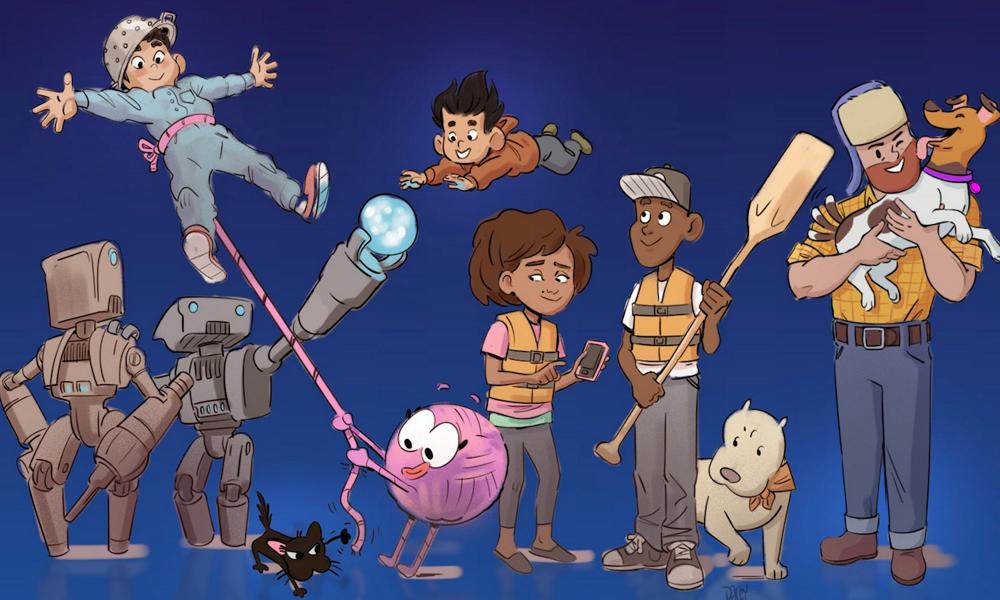
As a part of a Big Hero 6 The Series takeover on Disney XD, Disney Television Animation (DTVA) launched its first episode of season two of Baymax Dreams on August 3. Created by a multiplatform real-time animation team of artists and technicians with a variety of film, TV, VR and interactive backgrounds, these new short-form adventures were created using innovative workflows and game engine abilities for faster iteration and rendering, streamlined content re-use and interactive experiences.
“Our group focuses on developing workflows and pipelines that adapt evolving content creations tools and techniques from other mediums, and integrates them into short-form and episodic content that meets Disney Television Animation’s quality bar,” said Andy Wood, Producer, Disney Television Animation.
Baymax Dreams premiered in 2018 as a series of three shorts based on the Emmy Award-nominated television series, Big Hero 6 The Series. The first season capitalized on real-time rendering technology functionality, employing non-linear workflows and tools frequently used in the gaming industry, all supported by Unity Technologies and Disney’s Direct to Consumer & International Technology (DTCI) group. The spinoff project earned collaborator Unity Technologies its first Emmy Award for Technology and Engineering.
Since 2018, many of these capabilities have been advanced further and brought in-house by Disney’s DTCI and TVA, while continuing to partner with Unity has allowed sustained speed and creative freedom so Disney’s teams can pursue innovative ways for fans to engage with content.
Season two of Baymax Dreams brings those innovations and enhancements to life. Highlights include new and innovative capabilities in visual effects, lighting and shading. The result is that this season’s shorts exhibit premium quality, despite being produced – in a fraction of the time – using the game engine.
“We’ve said from the start of our little experiment, technical innovation is the core goal, but we’re not going to inspire lasting evolution unless the creative quality captures imaginations,” said Gino Guzzardo, Executive Director, Multiplatform Content, Disney Television Animation. “That cross-section of creativity and technology is in the history we’ve inherited as modern Disney storytellers, so we’re constantly pushing ourselves to carry that tradition forward on the Multiplatform Content team at Disney Television Animation.”
Kaki Navarre, DTCI’s Director of Content Technology, added, “At DTCI Technology, developing innovative capabilities and partnering with our colleagues across the company, like this instance with Disney Television Animation is a top opportunity. Real-time engines are revolutionizing what is possible at the intersection of content creation and development. The adoption of this forward-looking workflow opens a new frontier of production technology and lays the foundation for future innovation around viewing experiences on our digital platforms.”
Using Unity’s VFX Graph & Shader Graph, TVA’s artists were able achieve creative results in a user interface that would previously have only been possible using code. The screen on Baymax’s stomach, the firepit, even the detail of the weather of the sky are all more detailed and lifelike – contributing to a more dynamic and engaging viewer experience. Using Unity’s High Definition Lighting Pipeline (HDRP), light layers and light flags allowed artists to make refined light-directing decisions, elevating the traditional “physically-based” lighting approach typical in games. With all these high-detail assets, developing a pipeline to efficiently ingest and validate them was enormously important. Tools that DTCI Technology developed gave the creative team at TVA an intuitive interface that significantly streamlined the handoff between digital content creation tools and the game engine while seamlessly linking to existing production tracking tools.
Baymax Dreams S2 also introduces human characters for the first time. The DTVA and DTCI teams used humanoid animation – achieving the benefits of top-quality animation combined with a real-time feedback loop. DTCI Technology also created a number of artist-friendly tools to help speed up this creative process, enabling Disney artists to efficiently export sequences of animation from the game engine along with entire editorial decision lists that could be read and edited in traditional editing tools. Leveraging the game engine and the real-time feedback loop, the standard challenges accomplishing precise character animation can be mitigated faster, speeding up the entire production process without compromising quality.
Following its on-air debut, the first episode of the new Baymax Dreams season will launch on YouTube on Saturday, August 8.
NBCUniversal International Networks (NBCUIN) and African pay-TV operator StarTimes today announced the launch of DreamWorks – the 24-hour channel dedicated to kids and family entertainment – on the StarTimes platform across Sub-Saharan Africa. Part of NBCUIN’s portfolio of channels, the DreamWorks channel will be available from August 3, bringing the best in animated TV series to African viewers.
“Collaborating with StarTimes on bringing DreamWorks channel’s award-winning shows and beloved characters to Sub-Saharan Africa is a key milestone for our business,” commented Lee Raftery, Managing Director, NBCUIN EMEA. “We look forward to bringing young viewers the DreamWorks experience, with its compelling slate of adventurous and imaginative animated series, all in one family destination.”
Lily Meng, head of StarTimes Media Division, said, “We are excited to bring DreamWorks to Africa. This launch demonstrates our continuous commitment to providing premium content to African families. And it comes at a very timely moment, while most kids and parents are staying home.”
DreamWorks Animation is recognized the world over for its inventive, animated storytelling and beloved characters. The DreamWorks channel brings these fan-favorite heroes to the small screen to star in their own Emmy Award-winning original TV series for the whole family. Now, with the launch of the channel on StarTimes, viewers can look forward to the channel’s signature series including Dragons: Race To The Edge, All Hail King Julien and The Adventures of Puss in Boots as well as Dinotrux and Noddy Toyland Detective.
Celebrated indie animator Don Hertzfeldt (It’s Such a Beautiful Day, Rejected) has unveiled a teaser trailer for a third installment of his metaphysical, futuristic shorts series World of Tomorrow, tweeting, “It’s almost time.” The clip shows us a figure slogging through an alien landscape, surrounded by stilled, blurry clones. After he stumbles at last, the distorted voice of Emily (Julia Pott) cuts through a black screen to say, “I have searched through time for you.”
The teaser also reveals the subtitle: World of Tomorrow Episode Three: The Absent Destination of David Prime.
The first episode premiered at the Sundance Film Festival in 2015 as Hertzfeldt’s first digitally-animated, earning broad acclaim on the festival circuit. Incorporating his trademark stick figure characters into colorful spacescapes and perplexing geometric backgrounds. The short centers on a little girl named Emily (dubbed Emily Prime), who is taken along by one of her clone descendants on a mind-bending tour of her distant future. World of Tomorrow earned Hertzfeldt his second Oscar nomination as well as two awards each from Annecy and Ottawa, the Annie Award for Best Animated Short Subject, AFI Fest Grand Jury Prize for Animated Short, and many other honors.
World of Tomorrow Episode Two: The Burden of Other People’s Thoughts followed in 2017. In the sequel, Emily Prime is visited by another genetic copy, Emily 6 (also Pott) from an even-more distant future, who enlists the youngster’s help to restore her deteriorating clone mind by exploring each others’ psyches. Like the first short, Burden was written around non sequitur recordings of Hertzfeldt’s young niece, Winona Mae, the voice of Emily Prime.
Learn more about Hertzfeldt’s work and follow new announcements via Twitter @donhertzfeldt or at his Bitter Films website,
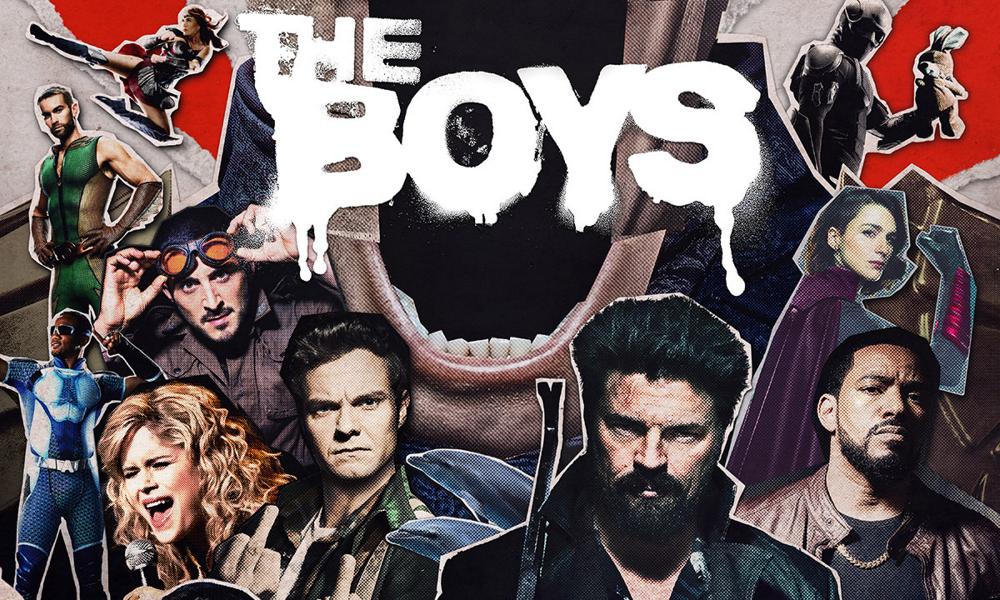
Amazon Prime Video has debuted the official trailer and key art for the second season of The Boys — an even more intense, more insane return to a gritty world where powerful superhumans are nothing like the heroes of comic books. The first three episodes of season two premiere Friday, September 4, with new episodes available each Friday following, culminating in an epic season finale on October 9.
Season 2 finds The Boys on the run from the law, hunted by the Supes, and desperately trying to regroup and fight back against Vought. In hiding, Hughie (Jack Quaid), Mother’s Milk (Laz Alonso), Frenchie (Tomer Capon) and Kimiko (Karen Fukuhara) try to adjust to a new normal, with Butcher (Karl Urban) nowhere to be found. Meanwhile, Starlight (Erin Moriarty) must navigate her place in The Seven as Homelander (Antony Starr) sets his sights on taking complete control. His power is threatened with the addition of Stormfront (Aya Cash), a social media-savvy new Supe, who has an agenda of her own. On top of that, the Supervillain threat takes center stage and makes waves as Vought seeks to capitalize on the nation’s paranoia.
The Supes of The Seven also include Queen Maeve (Dominique McElligott), A-Train (Jessie T. Usher), The Deep (Chace Crawford) and Black Noir (Nathan Mitchell). Recurring stars in season two include Claudia Doumit, Goran Visnijc, Malcolm Barrett, Colby Minifie, Shantel VanSanten, Cameron Crovetti, PJ Byrne, Laila Robins and Giancarlo Esposito returning as Vought boss Stan Edgar, among others.
The eight-episode Amazon Original series will be available exclusively on Prime Video in more than 200 territories around the world, and is produced by Amazon Studios and Sony Pictures Television Studios with Point Grey Pictures, Kripke Enterprises and Original Film.
America’s favorite mad scientist and his grandson return for more misadventures when the latest season of Adult Swim’s hit series Rick and Morty: Season 4 arrives on Blu-ray and DVD on September 22. From creators Justin Roiland (Solar Opposites) and Dan Harmon (Community), go on an intergalactic journey across the multiverse with the award-winning comedy, featuring all 10 episodes from Season 4 and outrageous bonus content including A Day at Rick and Morty: Inside Season 4, Inside the Episode for every episode, Creating Snake Jazz, and more.
Also available to own on Digital, Rick and Morty: Season 4 will soon arrive on DVD for $24.98 SRP ($29.98 in Canada) and Blu-ray for $29.98 SRP ($39.99 in Canada), which includes a Digital Copy (U.S. only).
“Rick and Morty remains a ratings leader for Adult Swim and retains an enormously loyal fan base season after season,” said Mary Ellen Thomas, WBHE Senior Vice President, Originals, Animation & Family Marketing. “The award-winning series that has spawned comic books, video games, tabletop games, merchandise, music videos and more brings fans a hilarious fresh slate of exciting adventures this season that is sure to bring laughter into your homes!”
Buckle in for disappointment because there’s no way these episodes will be good enough for how long you waited. But maybe they will be? It’s season four! It’s sexy and smooth. Buckle in! Did I already say that? Definitely stay buckled in.
***This article originally appeared in the August ’20 issue of Animation Magazine (No. 302)***
There’s a hidden rule written somewhere that all fantasy epics must end with a fantastic apocalyptical battle which determines the fate of the denizens of their worlds. Wizards — the third chapter of Guillermo del Toro’s much-hailed series Tales of Arcadia, which began with Trollhunters (three seasons, 52 episodes) in Dec. 2016, and continued with 3Below (two seasons, 24 episodes) — promises to deliver all of that and much more to Netflix viewers in July.
“It has been a long journey since Jim first woke up and rode his bike to school with his best friend Toby D.,” says exec producer Chad Hammes. “As we progressed through making the Arcadia trilogy, each series required us to push ourselves harder and harder, further increasing the narrative experience, production quality and complexity — and then Guillermo pushed us even harder! Wizards looks, feels and sounds like a bunch of mini feature films.”
Wizards
As the show’s exec producers explain, the team already knew that they were going to explore the world of Wizards even back when they were still writing and producing Trollhunters, but the first official meeting on the third chapter of the trilogy with del Toro took place in February of 2017. “We met with Guillermo and started the creative ball rolling,” says Hammes, whose many credits include Spaceballs: The Animated Series and DreamWorks’ Dragons. “How long did it take? That’s kind of hard to say since we are always in production. It’s necessary to be working on the next episodic series while still completing production on the previous episodic series. Animation takes so long, it all seems like a blur!”
A Medieval Quest
Series veteran exec producer Marc Guggenheim, who also worked on the previous two Tales of Arcadia shows, points out, “Wizards is an interesting hybrid. On one level, it functions as a de facto Season Four of Trollhunters insofar as Jim, Claire and Blinky are back. But it’s also its own animal at the same time, particularly with the medieval setting and time travel element.”
Chad Hammes and Mark Guggenheim
Hammes adds, “Wizards is different from Trollhunters and 3Below in many ways. Visually, Arthurian times is vastly different from the sleepy, not so sleepy town of Arcadia Oaks or the Akaridion sci-Fi world of civil war. Narratively, Trollhunters is a story of a hero’s journey. 3Below is more of a fish out of water story with strong messages about ‘belonging’ and ‘differences’. Wizards has a bit of a more sophisticated narrative for our audience which has grown in age over the years of our productions.”
Wizards
The producers both mention that the show’s animation team has been able to produce a visually stunning conclusion to the epic tale. “We always had this plan and there’s something really satisfying about crafting a narrative for a tight 10-episode season,” says Guggenheim, whose numerous credits include D.C.’s Legends of Tomorrow, Arrow, Vixen, Supergirl and Law & Order. “I’m continually blown away by the quality of the episodes and I’m glad they’re finally getting out into the world.”
For Hammes, the medieval world of Wizards allowed a chance to explore timeless themes of honor, grit, dark magic and fantasy. “The show’s primitive environments can be very challenging in CG animation. On one hand the medieval world is made up of limited resources (being in Arthurian times), while on the other hand magic makes the world limitless,” he says.
“On the one hand, we’ve gotten the chance to create a fully-realized medieval period that has allowed our artists, animators and designers to create some truly stunning, next-level images,” adds Guggenheim. “I don’t want to spoil where the series goes, but it truly is a third chapter of a trilogy. Elements from all three Tales of Arcadia series get woven together by the end.”
Wizards
Of course, the writers/producers also realized that they had a huge responsibility to the fans to offer a satisfying conclusion to the multiple Emmy- and Annie-winning show. “The television and feature film landscapes are littered with failed third chapters and unsatisfying endings to trilogies,” says Guggenheim. “So the most daunting thing was to stick the landing. And there was an added degree of difficulty to the way we had to stick it because of something very exciting I can’t yet talk about!”
Hammes also mentions that the creative team strove to keep the audience wanting more. “After 78 compelling episodes of Trollhunters and 3Below, Wizards needed to fill some big shoes, and Guillermo reminded us of this — often,” says the producer. “When creating the final chapter to a trilogy there were challenges in trying to improve the overall look of the show due to the thousands of assets and large cast of characters (many built years ago) that need to visually hold-up in the new world with the newest character designs and tech.” Wizards
The Arcadian Generation
So, what do the animation veterans think is the secret of Arcadia’s timeless appeal for audiences? Guggenheim says he is not sure if he’s equipped to answer that, but he thinks it might have to do because the show appeals to fans of all ages and deals with universal themes like growth and acceptance. “Everyone who works on the show loves it and I think the audience can sense that and respond in kind,” he adds.
“I think we did as good a job as one can do when making an animated children’s show that captures a significant amount of viewers in all quadrants,” notes Hammes. “Sometimes when I watch a good series, I can sense that the crew loved working on the project. We have an incredible crew and incredible partner studios. Many of them have been with us from the beginning of Trollhunters.”
Wizards
Hammes and Guggenheim are quite optimistic about the state of animation in 2020. “It feels like animation is the only kind of production we’re going to be seeing for a while, in light of the current pandemic,” says Guggenheim. Hammes chimes in, “We’re finding really interesting ways to keep productions working while we are in these unique social times. Honestly, the past few months have been busier than ever for me in this industry.” He also leaves us with these words of advice for animation newbies: “Work really hard. Work for good people … Or, at the very least, work for someone who you can always learn from!”
Wizards: Tales of Arcadia premieres on Netflix on August 7.
Comedian, Emmy-nominated TV host and author W. Kamau Bell (United Shades of America) and award-winning documentary filmmaker Jacob Kornbluth (Inequality for All, Saving Capitalism) have released an original, informational animated series titled Talk Boring to Me. The six-episode collection examines the most relevant social issues facing the U.S. in easy-to-understand videos that capture Bell’s trademark humor, undercut with teachable moments.
The Census explains the importance of counting Americans and the impact it has on, well, everything. Fair Count (www.faircount.org) was founded by Stacey Abrams to ensure that hard-to-count populations are tallied during the 2020 U.S. Census, which will shape how taxpayer dollars are spent and trigger the redrawing of the state’s political maps.
Food is bountiful in the U.S., but the rise of agribusiness has hit the farming community hard and has given rise to massive food insecurity nationwide. Feeding America (www.feedingamerica.org) is on a mission to help millions of people facing hunger and to reduce food waste.
Public Education exposes the economic reasons for educational inequity and what can be done to fix a broken system. DonorsChoose (www.donorschoose.org/kamau) empowers public school teachers from across the country to request much-needed materials and experiences for their students.
Gig Economy tracks the con of the gig economy and the myth of the side hustle as getting ahead. Get the real scoop about worker’s rights from Gig Workers Rising (gigworkersrising.org) and National Domestic Workers Alliance (www.myalia.org).
Asylum reminds us of the (forgotten) principles of America as a place of refuge for those fleeing oppression and persecution. The ACLU’s whole job is to defend and preserve human rights and thankfully they are active and on it right now (https://action.aclu.org/send-message/congress-support-asylum-seekers).
Homelessness is oftentimes attributed to mental illness or drug addiction, but it’s deeper than that and all comes down to math. Western Regional Advocacy Project (wraphome.org) exposes and eliminates the root causes of civil and human rights abuses of people experiencing poverty and homelessness in our communities and NationalHomeless.org is building a movement to end homelessness.
Talk Boring to Me is produced and written by presenter Bell and director Kornbluth, and the series is designed and animated by Bay Area studio Idle Hands. Bell and Kornbluth previously collaborated with the animation team at Idle Hands and Kornbluth’s Inequality Media partner, Robert Reich, on A Tale of Two Tickets — winner of the 2019 Shorty Award for Social Justice.
***This article originally appeared in the August ’20 issue of Animation Magazine (No. 302)***
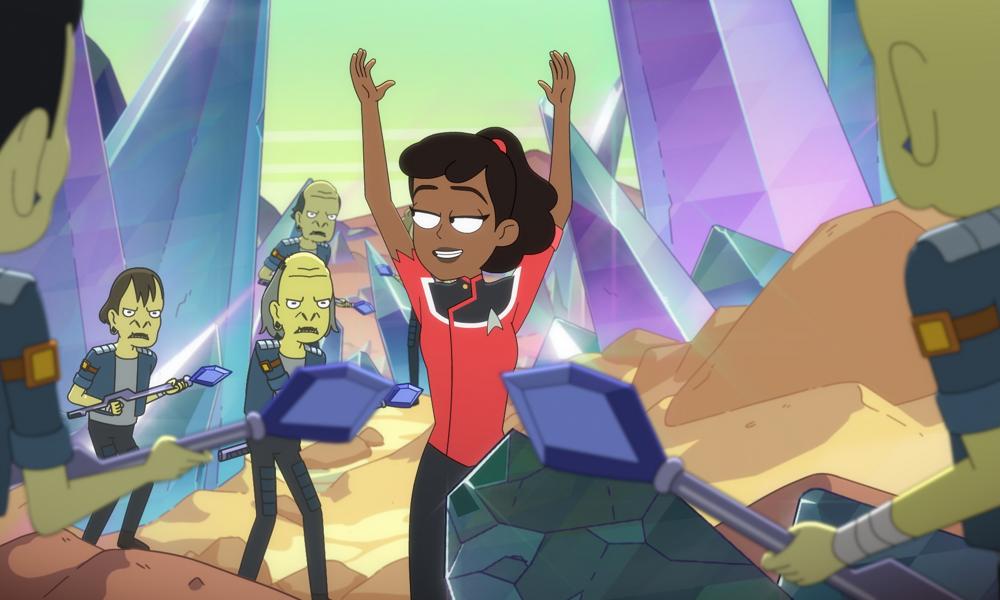
Imagine being the successful showrunner of Adult Swim’s popular toon Rick and Morty, and you take a casual meeting with Star Trek franchise exec producer Alex Kurtzman. After chatting with you, he loves your idea for an animated comedy spinoff of the sci-fi property so much that he decides you should go ahead and do it. That’s exactly what happened to toon veteran Mike McMahan, whose other hot new sci-fi show Solar Opposites recently got greenlit for two more seasons on Hulu.
McMahan, a huge sci-fi fan and Star Trek aficionado, says he jumped at the chance to pitch his ideal animated scenario, a spinoff that would focus on the support crew of the U.S.S. Cerritos in the year 2380 to the CBS All Access team. “Years ago, when I was just starting out, I used to write Star Trek scripts on my own, not even thinking about who was going to make them, since this was long before the resurgence of the franchise,” he tells Animation Magazine in a recent phone interview. “I even had a Twitter Star Trek parody account. I love the fun side of Star Trek and all the amazing characters. So I pitched my idea about what I would love in a Star Trek show, and [Kurtzman] said, ‘Looks like we have another Star Trek show on our hands!’ It was nice because I went into the meeting not thinking that I had to pitch anything. I thought I was just going to talk to them about animation. I am always happy to take meetings to chat about animation and demystify it, and let people understand that it’s very similar to any other collaborative creative project.”
That was in January of 2018, right before McMahan became the showrunner for the fourth season of Rick and Morty. “I thought it was part of a development deal and I was just having so much fun, and you never think the shows will get picked up, but then Solar Opposites got picked up and a few weeks later, Star Trek was greenlit for two seasons. When I was writing Star Trek, I was getting cuts of Solar Opposites. I got a crash course of doing everything remotely because I loved both shows. Of course, I had to step down from doing Rick and Morty, and the gears were all put into place in order to do both things at once. I don’t get a lot of sleep, but I get to do what I love!”
Mike McMahan
Titmouse Triumph
The show’s animation is produced by Titmouse at both its L.A. and Vancouver studios. “I went up north to visit them, and they do a fantastic job. I really love [studio head] Chris Prynoski and everybody that I worked with at Titmouse. I was a big fan of them for Venture Bros., so I was nerding out to be working with them.”
McMahan says he is a huge fan of ’90s era Trek, and that’s why he set the show in the year 2380. (Star Trek: The Next Generation was set in 2364.) “In this show, you get everything you want from Star Trek,” says the exec producer. “Mysteries, adventure, ethics, honesty and morality. We are very careful not to break anything. We are definitely not making fun of Star Trek and you can definitely fit Lower Decks into a proper timeline of all the other shows and movies in the franchise.”
Part of the challenge for McMahan and the team was creating Starfleet officers that feel like they don’t undermine the existing work that people have done to create characters in the Star Trek galaxy, but they’re characters that audiences haven’t seen before. “They had to have points of views that create comedic tension and situations. Setting the show in part of the ship that we’ve only seen a couple of times in a couple of episodes — the lower decks where you have the least important people on the show — allowed us to do so. In fact, the episode titled “Lower Decks” from TNG is by far one of my favorite Star Trek episodes. I thought, why don’t we make a show about these characters?”
Star Trek: Lower Decks
Tawny Newsome, Jack Quaid, Noël Wells and Eugene Cordero voice the lower decks crew members of the Cerritos, while Dawnn Lewis, Jerry O’Connell, Fred Tatasciore and Gillian Vigman also provide voices for the show.
McMahan points out that the world of Star Trek is open to all kinds of characters and personalities. “Kirk is very different from Picard, which means Starfleet takes all kinds of people, and the people we have on Lower Decks are just very funny to watch!”
The show designers and artists also had an interesting dilemma. What would this new animated version of Star Trek look like? “We wanted the show to look like it would fit in a primetime animated comedy block, but it’s not scatological — it’s Star Trek,” says McMahan. “As an added nerdy element, all the sci-fi for the show needed to look legit and imbue the show with this sense of wonder. The humans needed to look relaxed and comforting, kind of like Matt Groening’s Life in Hell comics. So, the look of the show had to be a mixture of honest Star Trek fleet designs and broad, comedic, adult primetime animated visuals.”
Star Trek: Lower Decks
Fans of the original series will be happy to know that McMahan and his team of writers and designers have packed each episode with lots of winks and throwbacks to all the many Trek TV shows and movies that have come before. “There are so many references you can make a VH1 Pop-Up Video for the series,” he says. “At the same time, you don’t really need to know much about the original show to enjoy Lower Decks. They will feel just like science fiction texture in a world that the characters understand.”
McMahan, who won an Emmy for the “Pickle Rick” episode of Rick and Morty in 2018, says he and his 10 writers on the show loved doing their homework and watching old episodes of the series for research and inspiration. “Who knew I was going to be able to play in this playground?” he asks. “So, now I’m going to play the s*** out of it. I’m going to have as much fun as I possibly can. I will probably never ever get my own dramatic Star Trek show, so if they are going to let me play with the toys, I’m going to play with them! Even big fans will have to watch it multiple times to get everything. There is one reference in the whole season that you will only understand if you read all about the history and making of the show. It’s not even in the final screen — it’s about the development phase!”
Star Trek: Lower Decks
Daring Designs
“One of the great things about having our writers and art team work in the same office is that we were able to collaborate on many of the details of the show,” he says. “For example, we all know what Klingons look like in the live-action show. But we tried to push that look beyond that guy-in-the-costume look, because we are animated. We can make Klingons look even cooler!”
As McMahan gets ready for the world to discover his new animated take on a world imagined by Gene Roddenberry 54 years ago, what he hopes for the most is that audiences will enjoy the ride. “I grew up loving the characters in Star Trek, and I really love the characters we all created and the stories we are telling about them,” he says. “I thought we knew what we were doing in the beginning, but as we kept watching, it became more and more Star Trek than I thought possible. By the end of the first season, I love them so much that I can spend years with them. So, I really hope whether you know a ton about the show or you can’t tell the difference between Star Trek and Stargate, you’ll fall in love with these new characters and their stories. I hope the show engages you, no pun intended!”
Star Trek: Lower Decks will premiere on CBS All Access on August 6.
Comedy Central released the official trailer for Loafy, the original, improvised animated digital series created, written and voiced by Bobby Moynihan (Saturday Night Live, DuckTales, We Bare Bears), who also executive produces the series alongside Luke Kelly-Clyne and Kevin Healey’s Big Breakfast, a recent acquisition of Propagate Content. The animation is produced by Cartuna (Human Kind Of, Liverspots and Astronots, Magical Girl Friendship Squad).
Loafy stars the titular weed-dealing manatee who runs a drug empire from his water tank at the Center Park Zoo ,and features the voices of an all-star guest cast including Cecily Strong, Taran Killam, Kevin Smith, Jay Pharoah, Nina West, Ron Funches, Tom Green, Jason Mewes, Hannah Simone, Eugene Cordero, Will McGlaughlin, Shannon O’Neill and more.
The eight episode series will rollout across all Comedy Central digital and social platforms beginning August 8.
The Screen Actors Guild-American Federation of Television & Radio Artists (SAG-AFTRA) and the Alliance of Motion Picture and Television Producers (AMPTP) have reached a tentative agreement on the 2020 SAG-AFTRA TV Animation Contracts.
The new TV Animation agreements cover animated programs produced for television, including network television, basic cable and streaming platforms such as Hulu, Netflix and Amazon Prime.
The previous TV Animation agreement, which was originally set to expire on June 30, was extended until July 30. SAG-AFTRA held Wages and Working Conditions meetings via Zoom on July 15 and 16.
The new three-year agreement, which will now go to the SAG-AFTRA Executive Committee for approval, will apply retroactively to July 1 and extend through June 30, 2023. The deal builds off of the recently-concluded live-action agreements and incorporates the applicable gains of that agreement, including:
Wage increases of 2.5% in the first year, 3% in the second year and 3% in the third year.
A 1% increase in the contribution rate to the SAG-AFTRA Health Plan and optional wage diversions in years 2 and 3 that allow the union to shift .5% from the wage increase to the contribution rate for the SAG-AFTRA Health Plan or the SAG Pension Plan/AFTRA Retirement Fund.
A 26% improvement in residuals for high-budget animated programs made for subscription streaming services like Amazon and Hulu.
A further reduction of the budget threshold that triggers high-budget coverage for half-hour animated programs made for subscription streaming services from $550,000 to $500,000.
The agreement also incorporates the change to the broadcast syndication residual from a fixed residual to a revenue-based residual at 6% of distributor’s gross receipts, the same formula that applies to content moving to basic cable. The new formula was the key concession that paid for the increase in streaming residuals, an exchange that positions SAG-AFTRA animation voice actors to grow their residuals in the fastest growing area of their work while increasing opportunities for animated programs to be exhibited in broadcast syndication, which is a declining market.
In addition to incorporating the gains of the live-action agreements, the new animation deal also includes a significant animation-specific breakthrough in the requirement to pay scale for animated programs made for new media. Now, animated programs made for subscription streaming services that do not qualify as “high-budget” – because they do not reach the minimum required runtime of 20 minutes or do not reach the new budget threshold of $500,000 – will nevertheless be required to pay scale if they are at least 11 minutes long and have a budget of at least $25,000 per minute. That means that 11-minute animated programs made for subscription streaming services – a standard length for some shows – will need to pay scale at budget levels as low as $275,000.
The new deal also includes an animation-specific gain in the payments for “interstitial bits” – animated programs less than two minutes in length – increasing the required cycle payments between 5.4% and 20% in exchange for including new media as a permitted exhibition platform.
Negotiations with AMPTP began on July 27. SAG-AFTRA Chief Contracts Officer Ray Rodriguez served as lead negotiator for the union and Bob Bergen and David Sobolov co-chaired the member-led negotiating committee.
“This is a future-focused deal that builds off our successful television and film contract negotiations and even breaks new ground in the application of scale minimums to animated programs made for subscription streaming services, a very important bread-and-butter issue for our members and a strategic breakthrough that is unique to this contract,” said SAG-AFTRA President Gabrielle Carteris. “Congratulations to Bob and David, the rest of our outstanding animation negotiating committee, and our community of talented animation voice actors whose solidarity and engagement is what ultimately made these gains possible.”
The terms of the tentative agreement will be presented to the Executive Committee of the SAG-AFTRA National Board and, pending Executive Committee approval, will be submitted for ratification by the affected members.
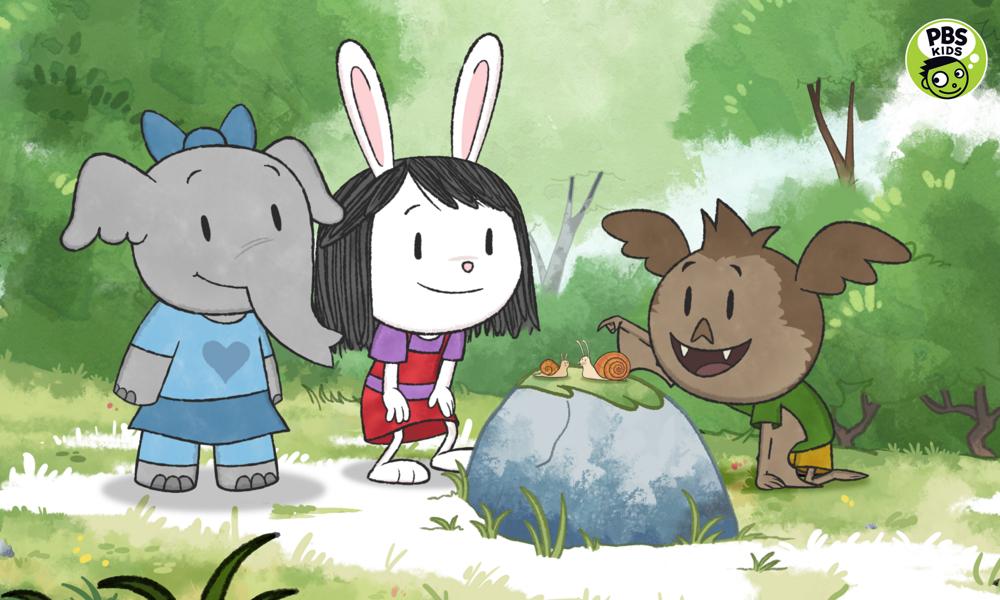
Preschoolers and their families from coast-to-coast will take a trip to Animal Town this Labor Day with the premiere of the newest PBS KIDS series, Elinor Wonders Why (40 x half-hours [2 x 11′]). The animated show encourages children to follow their curiosity, ask questions, figure out the answers, and learn about the natural world around them using their science inquiry skills. The multiplatform series is created by celebrated cartoonist and robotics engineer Jorge Cham (PHD Comics) and physicist and educator Daniel Whiteson, the co-hosts of podcast Daniel & Jorge Explain the Universe and authors of We Have No Idea, produced in partnership with Pipeline Studios.
Elinor Wonders Why will debut nationwide on PBS stations, the PBS KIDS 24/7 channel and PBS KIDS digital platforms Monday, September 7, with a special one-hour premiere that kicks off a week of new episodes.
“Elinor Wonders Why helps give parents the confidence to say, ‘I don’t know the answer. Let’s explore it together,’” said Whiteson. “Asking questions and investigating the answer are at the core of scientific discovery, and we designed the series to model and encourage children, parents and educators to do just that together.”
“Much like my own daughter, Elinor, who inspired the series’ main character, kids everywhere love to wonder about things around them and find out the answers,” said Cham. “Our hope is that the show will help foster the natural curiosity of young children and make them want to explore and learn, just like Elinor and her friends do in these stories.”
In the upcoming premiere, Elinor, the most curious and observant bunny rabbit in Animal Town, plays hide-and-go-seek with her friends and finds out how animals hide in nature; investigates a strange nighttime sound made by an owl and realizes many fascinating creatures are doing interesting things at night; makes “Backyard Soup” with vegetables from her family’s garden; and sells lots of cupcakes by learning how flowers attract bees, through color and smell, and applying those concepts to baking.
“We’re so excited to invite audiences nationwide into the fascinating world of Animal Town and introduce them to Elinor and her friends as they ask questions and explore the remarkable ways that our everyday lives are connected to nature,” said Linda Simensky, Head of PBS KIDS Content, PBS. “Kids learn best when their parents and caretakers are engaged in their learning. Elinor Wonders Whywill spark preschoolers’ curiosity with an innovative science inquiry curriculum and will encourage the adults in children’s lives to help them answer their questions by exploring together.”
Developed for children ages 3-5, Elinor Wonders Why centers on the adventures of Elinor and her pals, Ari, a funny and imaginative bat; and Olive, a perceptive and warm elephant. As young viewers explore Animal Town along with Elinor, Ari and Olive, they will meet all kinds of interesting, funny, and quirky characters, each with a lesson to share about respecting others, the importance of diversity, caring for the environment and working together to solve problems. Elinor models the foundational practices of science inquiry and engineering design in each episode, using her amazing powers of observation and willingness to ask questions. When she encounters something she doesn’t understand, like why birds have feathers or how tiny ants build massive anthills, she perseveres until she figures it out. In discovering the answers, Elinor often learns something about nature’s ingenious inventions and how they can relate to aspects of our designed world, as well as what it takes to live in a community.
The four stories in the one-hour premiere Sept. 7 are:
Hiding in Plain Sight: Elinor and her friends are playing Hide-and-Go-Seek at recess, but no matter where they hide, the Goat twins always seem to find them. The kids decide they need a to find a better way to hide, so they observe some animals who are camouflaged, prompting Elinor to realize that she, Olive and Ari can use their shapes, colors and patterns to hide themselves in plain sight, so that the Goat Twins can’t spot them.
Owl Girl: Elinor isn’t sure what she’s going to be for Costume Day, but it has to be something INTERESTING. That night, Elinor is awakened by a strange “Whooo!” sound coming from outside, so she and her mom go out to investigate. While looking for the source of the strange sound, Elinor is surprised at how many things are happening outside at night while she sleeps. Suddenly, they hear the sound again and look up to see an owl soaring in the sky, which inspires Elinor to figure out exactly what she wants to be for the costume parade.
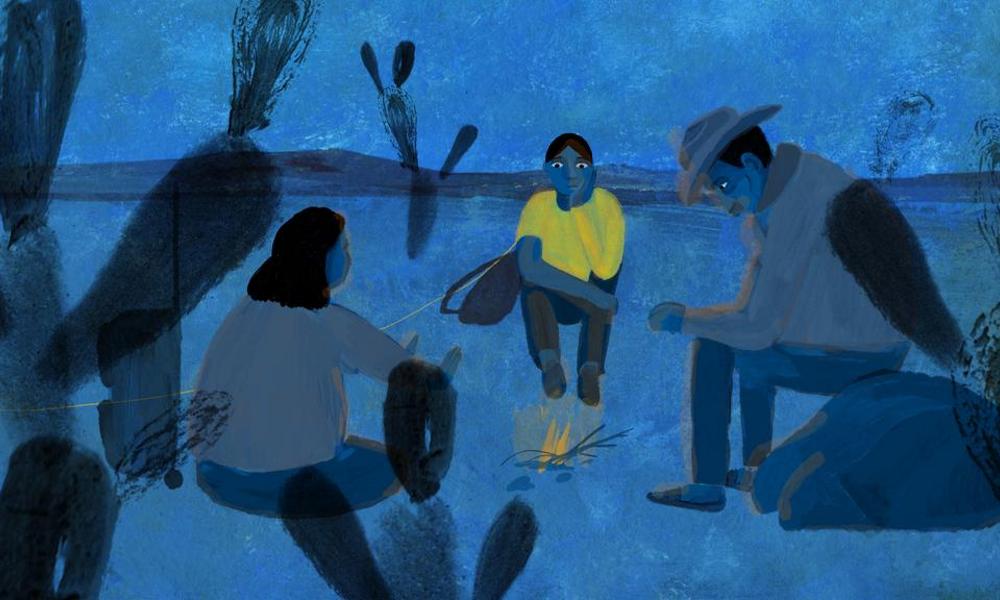
Backyard Soup: Elinor loves making “Backyard Soup,” because all the ingredients come from their backyard garden. She’s eager to try the same recipe when she visits her grandma and grandpa, but their backyard is a lot different than Elinor’s, because they live in the desert. Elinor learns that different plants grow in different environments as she makes a whole different “Backyard Soup” with her grandparents, where the main ingredient is cactus!
Colorful and Tasty: Elinor and her friends are selling lots of yummy cupcakes, but the problem is no one is buying any. The kids don’t understand what’s wrong, because everyone loves cupcakes. After observing how flowers attract bees through color and smell, they go back to their bake sale and decorate the table with fantastic colors, and use a fan to spread the aroma of the cupcakes. Before they know it, the place is “buzzing” and they sell every cupcake!
Funding was provided by a grant from the Corporation for Public Broadcasting and a grant from the U.S. Department of Education as part of the Ready To Learn Initiative, a federal program that supports the development of innovative educational television and digital media targeted to preschool and early elementary school children and their families.
Also debuting in September will be digital content for kids, parents and teachers. Games will be available on pbskids.org and on the free PBS KIDS Games App, along with clips and full episodes streaming across PBS KIDS’ video platforms, including the free PBS KIDS Video App. Parent resources, including tips and hands-on activities to extend the learning at home, will be available on the PBS KIDS for Parents site, and PBS LearningMedia will offer classroom-ready materials for teachers, including video excerpts, games, teaching tips and printable activities.
The official selection for the upcoming Bucheon International Animation Festival, with a total of 100 short films (44 int’l shorts, 29 graduate films, 12 TV & commissioned works and 15 Korean films) picked from 2,501 submissions representing 99 countries. BIAF2020 will be held October 23-27.
Notable titles this year include Cannes Official Selection Blue Fear and Cannes Cinéfondation selections Tamou, Pile and When We Leave, as well as Critics’ Week pick Maalbeek and Venice Film Festival contender Sogni al Campo. BIAF2020 will also screen the directorial debut of Toy Story 4 screenwriter Will McCormak, If Anything Happens I Love You.
BIAF2020 will offer more than KRW 52 million (approx. $44,000 USD) awarded across six categories. The feature film selections will be announced during the Sept. 9 press conference.
Blue Fear
Blue Fear | Marie Jacotey, Lola Halifa-Legrand (France)A couple on the roads of Provence. Nils is driving Flora to his parents’ for the first time when they get ambushed. While she’s made prisoner, he flees. During a night in the pinewood, she has to face her doubts.
If Anything Happens I Love You
If Anything Happens I Love You | Will McCormack, Michael Govier (U.S.) Grieving parents struggle with the loss of their daughter after a school shooting. An elegy on grief. Produced by Gary Gilbert (La La Land) with voice casting by Oscar winner Laura Dern (Marriage Story).
Maalbeek
Maalbeek | Ismaël Joffroy Chandoutis (France)Sabine is looking for a missing image: A day that has left its mark forever and that everyone remembers but her. But maybe this absence is what allows her to move on with her life?
Sogni al Campo
Sogni al Campo | Magda Guidi, Mara Cerri (France/Italy) A boy looks for his cat along a river. He will not find it. He’s about to die, and has moved away from everything to find intimacy.
Additional international competition short films listed below. You can see all the selections for the Short, Graduate, TV & Commissioned and Korean Short programs here.
Int’l Competition – Short Film
A Cat Called Jam | Lorraine Lordan (Ireland)
Altötting | Andreas Hykade (Germany, Portugal, Canada)
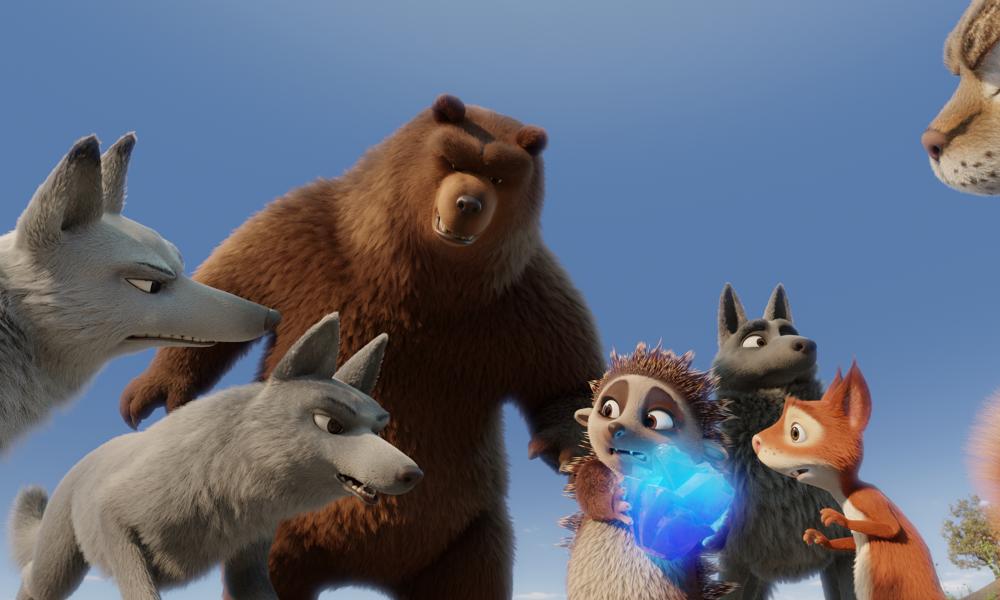
The new German-Belgian animated featureLatte & the Magic Waterstone debuted on Netflix this past Friday. Directed by Regina Welker and Nina Wels, the children’s film is based on a book by Sebastian Lybeck and follows the adventures of a hedgehog named Latte and his anxious squirrel friend Tjum, who set out to reclaim a magic stone stolen by a bear king. We had the chance to chat with CG-animated movie’s directors in an email interview. Here is what they had to tell us about their charming project:
Regina Welker & Nina Weis
Congrats on your movie’s debut on Netflix this month. Can you tell us about how you each got involved with the movie?
Regina Welker: I have known the film’s exec producer Lilian Klages for some years. We worked together for the first funding trailer of Latte, which was big fun. I immediately fell in love with Latte and her friends and I was super excited when I was asked to also direct Latte as my first feature film.
Nina Wels: Early in 2017, about four months before production start, I was asked by the producers Lilian Klages and Thomas Müller, if I would like to direct this movie written by Andrea Deppert and Martin Behnke based on a very successful and well-known children book from Sebastian Lybeck together with Regina. After we met for the first time, we both agreed this was an exciting and great story that we’d really like to tell and we started developing our ideas.
When did you start working on it and how long did it take to complete?
Regina: The first concept/funding trailer was created about five years ago. The production of the feature film started in late summer 2017 that’s when I joined as a director. And swoosh! I was sitting in the final sound mix with final picture in April 2019. Well, time passed super fast!
Which animation studios worked on the movie?
Regina: The production and coordination was mainly split between Eagle Eye in Germany and Grid Animation in Belgium. Over six production companies were involved and took care of different tasks. We had MotionWorks in Halle (Germany) doing storyboards and layout, Woodblock in Ludwigsburg (Germany) working on the designs, Tinker Magic in Spain were responsible for rigging, philmCGI in India helped a lot with the animation, Daywalker Studios in Cologne (Germany) did the entire sets and shading until it all went back to Grid in Belgium who did the whole light/render/comp to final picture.
Latte & the Magic Waterstone
What were the visual influences of the project?
Regina: For me, the combination of an illustrative and fantastic world with magical colors in a nearly realistic set with tactile characters was the challenge in this project. And there you see the two big influences: pure nature like forests, stones, fur on the one hand and colorful magic fairy tales on the other hand. We worked a lot with the lighting to get the chaotic reality of (for example) a forest into a nice visual language. A lot of nature photography with all its tiny details or surface structures and super interesting animal pictures (for example, some strange frogs) have been main references. But also artwork from Pascal Campion, the look of the short film The Dam Keeper or Garden Party as well as some animated commercials have been a nice inspiration on colors and lighting.
Nina: We were also inspired by the light and atmosphere of Northern European woods and other European countrysides.
What would you say was your biggest challenge on this feature?
Regina: The biggest challenge was to have a strong and stubborn main character who still is funny and lovable and has a weak spot. Latte has so many different character traits, which makes her super interesting but also difficult to balance her behavior. She can be loud and strong, but also silent and emotional. On the production side, the biggest challenge was that all different departments were spread around the world and we had to present the vision and get everything aligned.
Nina: It was important for us not to get away from our vision for this film. Like most European animation productions with a much smaller budget than animated feature films have in the U.S., we had to deal with a lot of compromises. In the end all the studios helped us with their amazing work and enthusiasm to get this done.
Latte & the Magic Waterstone
How was the reception of the movie in Germany and Europe?
Regina: It was released in Germany a bit after Frozen II from Disney, which maybe took away some attention, but all in all it was very well received. Especially our premiere at the Schlingel children’s film festival in Chemnitz (Germany) was super exciting and the kids loved it. So, what else could you wish for? We also had a pretty big audience in France — I guess everyone liked our French dance instructor bear! Some other European countries unfortunately didn’t get a cinematic release as scheduled due to the pandemic lockdowns. But, maybe it will still happen, at least online.
Nina: Luckily, Latte had its cinema release in Germany and France a few months before corona hit the world. I was so happy to see that it played in France as well as it did in Germany – a very good start. But then, as we all know, everything changed.
Who are your biggest animation influences and sources of inspiration?
Regina: I guess inspiration for animation and characters are always real people and situations. Because animation is a perfect language to tell true stories in a metaphorical way. Influences from the artificial side are of course many different animations — we had snippets from Despicable Me or How to Train Your Dragon in our references for Latte.
I also love to go to film festivals and watch all these beautiful short films with so many different styles. This surely is one of the biggest influences.
Nina: Throughout the years, I was mostly inspired by anime from directors such as Makoto Shinkai or Mamoru Hosoda both story wise and visually. I am also a big fan of Dean DeBlois’ work, among others.
Latte & the Magic Waterstone
What do you hope audiences will take away from the movie?
Regina: First of all, I hope the audience will have a good time while watching the movie. Furthermore, we have a lot of important topics from environmental protection to friendship and family belonging. In terms of respect and acceptance, Latte has such a positive message, so I hope there are situations in the film the audience gets touched and emotionally involved by.
Nina: The message that a real friend you can count on is one of the most important and wonderful things you can get in life.
How do you feel about the fact that in 2020, we are beginning to see more animated features directed by women?
Regina: It’s all about respect and acceptance for everyone. Women can do cool and creative work if they get the chance to. And all following female generations shouldn’t be involved in this discussion anymore. I did this movie because I’m a director not because I’m a female director. We also have a female main character, not with a special intention, but it just worked better in our character setup. And to be honest, she is such a cool kid, you don’t care if she is female or male.
Nina: Hey world, get used to it! In Europe, a lot has changed over the last decade, more animated features are directed by women and increasingly the teams at the studios are more and more balanced between female and male artists. It won’t be big news for so long anymore.
What are you working on next?
Regina: I’m writing some of my own stuff for a TV show and some commercial projects, but I’m also talking with Lilian about new feature projects. Latte the hedgehog talks a lot in the movie, but she sure has much more to tell!
Nina: At the moment Kristina Yee, a talented writer and director from Ireland, and I are developing the story for a feature film. It’s an original story based on one of my ideas influenced by my love for anime. A second project for which I already wrote the script is in the funding stage and this fall I will take over the animation direction for another animated feature (which is directed by a woman as well).
***This article originally appeared in the August ’20 issue of Animation Magazine (No. 302)***
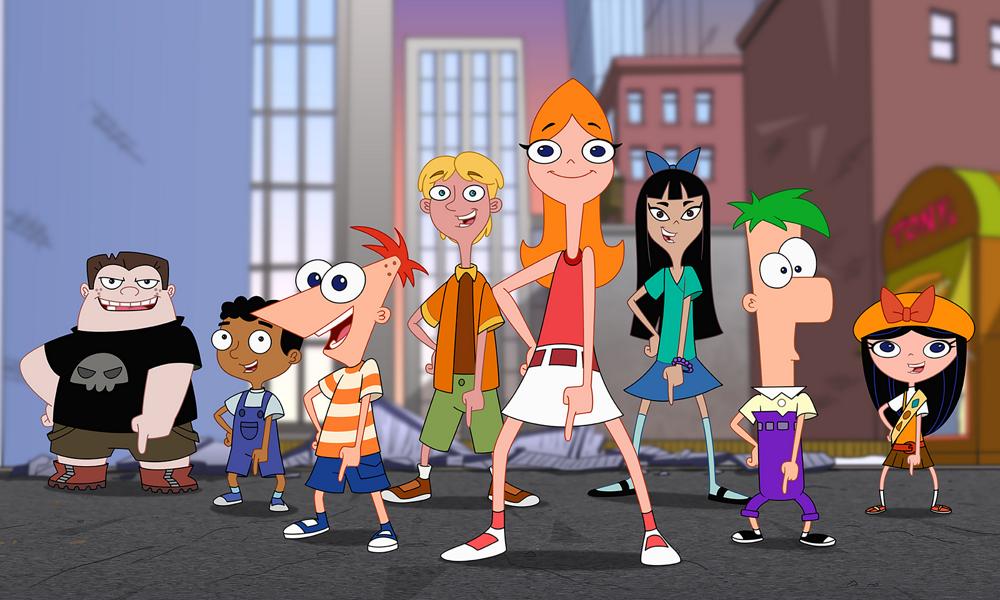
It’s hard to believe that it has been 13 years since toon veterans Dan Povenmire and Jeff “Swampy” Marsh introduced the world to the beloved stepbrothers Phineas and Ferb and their put-upon big sister, Candace. This summer, fans of the show will be able to enjoy a spanking new 2D-animated movie featuring the mixed family unit, in which Candace is abducted by some very kooky aliens.
Phineas and Ferb The Movie: Candace Against the Universe, which debuts on Disney+ in August, brings back original voice stars Ashley Tisdale (Candace), Vincent Martella (Phineas), Caroline Rhea (mom Linda), Dee Bradley Baker (Perry the Platypus), Alyson Stoner (Isabella), Maulik Pancholy (Baljeet), as well as David Errigo Jr. as Ferb. Of course, Povenmire and Marsh also return as the insane Dr. Heinz Doofenshmirtz and Major Monogram. Adding even more star quality to the mix are guest voices Ali Wong, Wayne Brady, Diedrich Bader and Thomas Middleditch.
Povenmire and Marsh had worked together on The Simpsons and Rocko’s Modern Life, and spent many years pitching their concept for the original show to various studios until Disney greenlit their idea in the early 2000s. Audiences immediately warmed up to the clever writing, memorable characters and the catchy songs the duo wrote for the series. Phineas and Ferb ran for 222 episodes, from 2007 until 2015 and inspired another movie (Phineas and Ferb the Movie: Across the 2nd Dimension), a spin-off talk show, as well as numerous games and tie-in toys and books.
In a recent phone interview, Ponvemire and Marsh told Animag that when the execs in charge asked them to dust off the characters and prepare a movie for Disney+, they couldn’t say no. “Disney+ was looking for projects that would appeal both to kids and adults, and our show has a multi-generational appeal,” says Povenmire. “In fact, about 47 percent of our audience was adults, with or without their children. We had done the show for 10 years, and thought that we had done enough with these characters. But then, we realized we kind of missed them. So we started thinking about a fun premise that would appeal to everyone, even those who weren’t familiar with the show.”
Dan Povenmire and Jeff “Swampy” Marsh
To Boldly Go…
The creators wanted to try a situation that they hadn’t fully explored before, but when you have done every possible scenario for 222 episodes, you have to really stretch your creative muscles. “We had gone to a lot of places and done a lot with these characters, so we wanted to make sure we had something new to say, but didn’t want to violate any of the characters’ set-ups and rules of their world,” says Marsh. Adds Povenmire, “There’s this joke in an episode of South Park about how every time they want to do something, they realized that The Simpsons had already done it. For us, the first week in our writers’ room, we came up with these ideas and our writers said, ‘Oh, sorry, we did that in season one. We did that in the third episode!” So we became our own Simpsons!” Marsh responds, “We made it too difficult for ourselves.”
One plotline they had never explored was putting anyone in any sort of danger on the series. “We had never done a real rescue story, so we started thinking, what if Candace is in trouble and the boys have to save her?” says Povenmire. “What if she was abducted by aliens? Then, we could build this whole new world and have fun with sci-fi scenarios.”
In fact, the duo managed to have a lot of fun with sci-fi tropes, as they always do in their shows. “We had fun spoofing this TV show within the movie, which is a throwback to the ‘50s and ‘60s science-fiction shows and movies, and then we also have this lusher, weird planet which they all go to,” says Povenmire. “Most of the giant trees are mushrooms. Everything is based on fungus there, which in retrospect made us look smart: There’s a plot point that there is no carbon dioxide on that planet. We had put all of these fungi there, but we found out that according to Wikipedia, fungus doesn’t produce any carbon dioxide.” Marsh jokes, “I remember thinking about that much in advance. We were much cleverer than you think!”
Phineas and Ferb The Movie: Candace Against the Universe
Another cool element was the talented guest stars who joined the project. “Ali Wong came in and knocked it out of the park,” notes Povenmire. “We’re big fans of hers, and she really hit every comic beat exactly the way we wanted it. I knew Thomas Middleditch as the guy from Silicon Valley. But then I saw him on this great improv series on Netflix called Middleditch and Schwartz, and he was spectacular. So, he nailed his part, too. Then, there’s Diedrich Bader, with whom we also worked on Milo Murphy’s Law. He brought something so strange to his role of Borthos that we weren’t really expecting, but we laughed every time he did any of his lines.”
The two creators point out that one of the reasons these characters and the original show were such a hit with audiences was because they avoided being snide or mean. As Povenmire recalls, “Between the time we came up with the show and when it was put on the air, SpongeBob happened. I worked on that show, and from the beginning, I knew that show was going to be a big hit, because I loved that character so much. He was genuinely a nice, positive character.”
“We really wanted to see if we could do something edgy when all the humor wasn’t based on the jerks and the idiots,” says Marsh. “That seemed to be what everyone connected with the show wanted. It was cool, it was funny and intelligent. The jokes weren’t based on meanness and idiocy. Parents felt it was a safe place for their kids to go, but we didn’t do it in a way that talked down to the kids. We never cut a joke because somebody thought it was too intelligent or might have gone over our audience’s head. It’s OK if we aim a few jokes at the parents … or the engineering or philosophy students!”
Phineas and Ferb The Movie: Candace Against the Universe
Songs in the Key of Danville
The two creators also say they really enjoyed filling their show with fun, catchy songs that stuck in viewers’ heads. “It was so good to get back to writing Phineas and Ferb songs,” says Povenmire. “Swampy and I have done about 400 songs together. We can really do them fast together. For this movie, we collaborated with some great musicians: our original composer Danny Jacob, songwriters Karey Kirkpatrick (Something Rotten!), Emanuel Kiriakou (Whitney Houston’s “I Look to You”) and Kate Micucci (Garfunkel and Oates).”
Naturally, like everyone else working in the industry, the creators had to deal with the COVID-19 shutdowns and getting used to communicating with everyone virtually instead of in person. The directors praise the ease and convenience of working with tools like SyncSketch and Evercast to draw and collaborate with their creative teams from home. “I do love that we are going through this animation boom right now,” says Povenmire. “We had another boom in the 1990s, but that one was a false bubble. The tough part is finding people when you’re staffing up your show, because everyone is already working.”
Phineas and Ferb The Movie: Candace Against the Universe
“I hope people will enjoy our movie. Maybe they might be nostalgic for their childhood during these traumatic times,” he concludes. “I hope it makes them feel safe and that they think it’s both funny and moving, and that it cheers people up and makes them sing and dance.”
“A lot of people who grew up with Phineas and Ferb may now have kids of their own,” adds Marsh. “I hope they watch the movie together with their children and a new generation gets to know these characters.”
Phineas and Ferb The Movie: Candace Against the Universe premieres on Disney+ on Friday, Aug. 28. All four seasons of the original animated series and Phineas and Ferb the Movie: Across the 2nd Dimension are streaming on Disney+. Disney XD will also air all episodes of the show from Aug. 25 to the movie premiere.
***These articles originally ran in the August ’20 issue of Animation Magazine (No. 302)***
A New Benchmark in LGBTQ Visibility
Steven Clay Hunter’s well-received short Out features Disney’s first openly gay lead character.
Last May, writer/director Steven Clay Hunter’s SparkShorts film Out received a lot of attention when it debuted on Disney+. The charming short centers on a young gay man who decides to come out to his parents after his mind is magically swapped with his dog’s. Out was a benchmark for both Disney and Pixar for featuring a gay lead character, and fans responded enthusiastically to the project. As one viewer noted on Twitter, “Out has been played more than five times at home, creating a great conversation with my four-year-old son, and it ended up with him saying, ‘Everyone can love anyone and I love it.’”
Out
Hunter is a veteran of Pixar movies (his credits include Toy Story 2, Finding Nemo, WALL·E and Brave), and also worked as an animator on SparkShorts’ Smash and Grab and Purl. He says he learned a lot about story working with directors Brian Larsen and Kristen Lester. “One of the things they taught me was that when beginning to write a story, ask yourself what theme it is you’re most interested in,” explains the director. “What is it you want to talk about most as a human being? And when it was my chance to pitch an idea, I sat down and all I kept coming up with were coming-out stories. It just felt like something I needed to talk about and sort out emotionally and mentally through animation.”
The nine-minute short took Hunter and producer Max Sachar about two years to make. “We had a whole bunch of folks help us out throughout the making of the film, but the core team was quite small. We had maybe 18 people max and that core team worked on it over the course of anywhere from six weeks to a year.”
Steve Hunter
Taking a Page from Mary Blair
Hunter revisited his childhood to find inspiration for the short’s charming visual style as he wanted to tell a story for his inner seven-year old. “When it came time to think about what kind of look I wanted, I thought about the Little Golden Books we used to read as kids and that led me to Mary Blair’s painting style,” he notes. “Especially her Alice in Wonderland paintings, which are absolutely gorgeous!”
“I love the freedom that the SparkShorts program gives us as artists,” says Hunter. Of course, there were some challenges along the way. For one, he didn’t know whether they were going to achieve the painted look they were aiming for. They hadn’t created this specific watercolor-like visual with the pipeline at Pixar and there was no guarantee they could pull it off in the time frame they had. “But our core team led by DP of lighting Andrew Pienaar managed to figure out how to make it work,” he adds. “I really wanted to have a hand-painted feel to the depth of field, but we really didn’t think we’d be able to do it. Then one Monday, our look development supervisor Colin Thompson came in with a big grin on his face and said, ‘I think I figured it out.’ And he did and it looks gorgeous!”
Out
Hunter, who is 51 and came out as a gay man when he was 27, says he and his producer have been completely overwhelmed by the love and support the short has received. This has included “everything from older LGBTQ folks who love it and wish they’d seen a film like this when they were younger to notes from parents, gay and straight, who tell us about the amazing discussions about love that they have with their kids after watching Out,” he says. “But mostly I love the fanart!”
“We made Out thinking wouldn’t this be a nice gift to the world — a story about a family together?” Hunter adds. “Today it feels like this kind of story is what the world needs, now more than ever. Hopefully, it’s just the beginning, there’s a lot more LGBTQ stories to tell!”
Out and the other six SparkShorts are available for streaming on Disney+. For more info, visit Pixar.com/SparkShorts.
Poignant Tales that Inspire and Innovate
An overview of the SparkShorts program at Pixar
When Pixar’s SparkShorts program was established two years ago, it set out to provide a new avenue for fresh storytellers, explore new storytelling techniques and to play with new production workflows. As Pixar president Jim Morris said at the time, “These films are unlike anything we’ve ever done at Pixar, providing an opportunity to unlock the potential of individual artists and their inventive filmmaking approaches on a smaller scale than our normal fare.”
As of July, animation fans have been treated to seven of these excellent, distinctive shorts. The program began on a high note with Kristen Lester’s short Purl, which received the Best of Show honor at SIGGRAPH last year and was nominated for a Humanitas Prize. The timing for the short, which made a strong statement about the importance of female voices in male-dominated workplaces, was perfect. It arrived as Pixar was trying to redefine its “boys’ club” image after John Lasseter’s exit from the studio.
Purl
Lester told Animation Magazine that the short was inspired by her own experiences as a woman working in animation. “I was often the only woman in the room early on in my career,” she said in a 2019 interview. “So, I wanted to make a short that reflected that experience. Being a first-time director, our short schedule and our limited budget were some of our challenges, but I was lucky to have such a supportive team that helped me deal with them.”
Purl was followed by Brian Larson’s Smash and Grab, a charming tale about two robots trying to escape their soul-killing jobs, and Kitbull, Rosana Sullivan’s heart-warming tale of the friendship between an abused pitbull and a stray kitten. Sullivan’s short went on to receive an Academy Award nomination for Best Animated Short.
“I think the SparkShorts program is different in that it is an initiative that spotlights stories that are personal, told by a group of diverse creatives and allow for a broad range of voice to tackle wide-ranging subject matter like animal abuse, autism, depression, homosexuality, immigration and gender equality,” says Bobby Rubio, who directed the program’s fourth short, Float. “Stories like these aren’t your typical animation fair, especially coming from a major studio. I felt like we were the offshoot independent group that was given carte blanche to tell whatever story we wanted to tell.”
Rubio says since SparkShorts started out without the Disney+ connection, there was no guarantee that anyone was going to see these shorts. “So my crew and I were doing this to show that we had an amazing story to tell and we wanted to do our very best to prove we had what it takes to make an awesome film with limited time and budget,” he points out. “I was a first-time director and most of my staff had their first experience in a leading role on Float. So the program also gave opportunities to artists and creatives to prove that we were capable of our roles and could deliver a great product!”
Bobby Rubio
The Pixar veteran says directing Float reignited his passion of creating and telling his own stories. “I am grateful to the SparkShorts program, because it gave me, a person of color, the opportunity to tell a story with Filipino American lead characters (the first time for Pixar and any major animation studio) and let me tell a story about families that are different from the typical family.”
The writer-director points out that the child “floating” in his short was a metaphor for being different from others. “I wrote and based the story on my own personal relationship with my son, who is on the autism spectrum,” explains Rubio. “The message that I was trying to spread is to love, accept and celebrate our differences! Ever since the short has been streaming on Disney+, I have received many notes and messages from viewers on how Float has resonated with them and how much the short means to them. I’ve received so much positive recognition and support from friends and peers at Pixar and the animation industry, and I hope that I get another opportunity to direct in the near future, because I’m definitely ready for the challenge.”
Float
Erica Milsom’s Loop was another first for the studio. The short centers on two kids who find themselves on a lake, unable to move forward until they find a new way to connect. It broke new ground by showcasing Pixar’s first non-verbal autistic character. Milsom tells us that it was important for the studio to find storytellers that had something to say, and then encourage them to find their own stories and styles. “When you allow someone to access a sophisticated toolset and master craftspeople, but you say ‘We want to see what you will make,’ — you’re going to learn something new about both what your tools and your craftspeople are capable of,” she explains. “So, that transformation of what kinds of stories we could tell at Pixar is beautifully expressed in the SparkShorts program.”
Erica Milsom
Milsom says Pixar is full of people who aim high in our storytelling and look for stories that leave audiences with something to think about or remember or carry with them as they travel through life. “So in the end, I think the SparkShorts are experiments in how wide-ranging our storytelling can be if we give a new community of creators the tools and see what they do to redefine the medium,” she adds.
For the director, one of the high points of her experience was being able to work with autistic actors and advisors together through art. “Learning from our advisors at the Autistic Self Advocacy Network, and working together with our voice actress, Madison Bandy, to find the best expression of our character’s experience was really fun and engaging. And then, leading this awesome filmmaking team as they soaked up the insight and found our interpretation on film, with the benefit of their well-honed craft and expertise, was amazing. I feel so proud of what these two communities were able to bring to life through this connection.”
Loop
Edwin Chang’s powerful short Wind was inspired by his own father’s experiences who emigrated from North to South Korea and then to the U.S. He says the SparkShorts program exists to give voice to a new and diverse set of storytellers and to enable them with creative freedom. “This freedom allows for stories that are more experimental, more risky and more personal than any shorts Pixar has done before,” says Chang. “In my case, it allowed me to transfigure my own family’s story into one in a world of magical realism.”
Chang says it was quite rewarding to collaborate with others at the studio and to see their work make the film blossom in surprising ways. “Many moments stand out — the first time I saw a painting of the world inspiring its scale and wonder; when a character first moved with life; when the lighting imbued the images with weight and emotion — the talent of the crew came together to create something beyond any expectations,” says the director.
Edwin Chang
The short received a wide range of reactions and emotions during its early screenings. “These reactions revealed how one’s own history and background can deeply shape how one experiences a story,” explains Chang, who is currently working on one of Pixar’s feature films. “Elements like familial sacrifice and filial piety, which I hadn’t even realized were innate to my own upbringing, were less familiar to others and needed to be communicated more clearly. Ultimately, though, I was happy to see that audiences, of many different backgrounds, connected with it on a personal level above anything else, remembering their own grandparents and family who had enabled them to reach where they are today.”
Wind
Delivering Mini-Movies with Deep Impact
By Lindsey Collins
I was wrapping up as producer of Finding Dory and transitioning into a new role as head of development here at Pixar. One of the things I felt was really important was to find ways to give opportunities to a broader group of storytellers at the studio. I worked with our president, Jim Morris, and the rest of the creative leadership, and came up with SparkShorts, a quicker and less resource-intensive “experimental” shorts program that would allow us to make two or three shorts per year instead of just the one theatrical short like we had been doing. And with more storytelling opportunities, we’re able to tell a more diverse group of stories.
SparkShorts are like the indie-filmmaking wing of Pixar. There’s complete creative freedom. Filmmakers are able to assemble their own brain trust, build their own teams, and there’s no pressure to deliver a final product of a certain style. Initially we didn’t even know if anyone outside of Pixar would see any of these. So filmmakers are really able to express themselves creatively, in terms of the stories they want to tell, the style and look they wish to employ, or the technology they might want to test out.
Each one of these shorts is unique in terms of its story and visual style. As amazing as our theatrical shorts are, there was definitely a pressure to make something that would look as polished and perfect as our feature films. Because of this they took longer to make and Pixar’s creative leadership was much more involved in guiding them along. With SparkShorts there’s no pressure to meet a visual standard. Kitbull was hand drawn. Out has a very painterly look. The title character in Purl is animated on twos and fours. The creative expression is really unchecked.
KitBull
The SparkShorts directors and producers are people at the studio that we have our eye on. Maybe they’ve pitched shorts in the past. Or they’ve really excelled at another creative role at the studio and we want to give them a chance to tell their own story. When we find someone who’s passionate about an idea and we put them in a room with other incredibly talented people, with minimal oversight and a tight budget, it allows us to take some risks in a relatively safe way. Disney+ was eager to include Pixar content on the service, so they asked us if we had anything in the pipeline besides our feature films. We told them about our SparkShorts, and screened the first few for them, and they loved them immediately. The timing was perfect and we’re thrilled that all of our SparkShorts so far are now able to reach a broad audience through Disney+.
Each one of our SparkShorts has been a very personal story. We’re dealing with some emotional issues here: inequality in the workplace, autism, immigration, coming out. Many of these topics are rarely addressed in mainstream animation. So my hope is — and so far this has been the case — that these shorts speak to people in a deeply resonant way. And that people are able to see their own stories represented on screen in a way maybe they haven’t before.
Lindsey Collins is the VP of Development and Producer at Pixar who oversees the SparkShorts program.
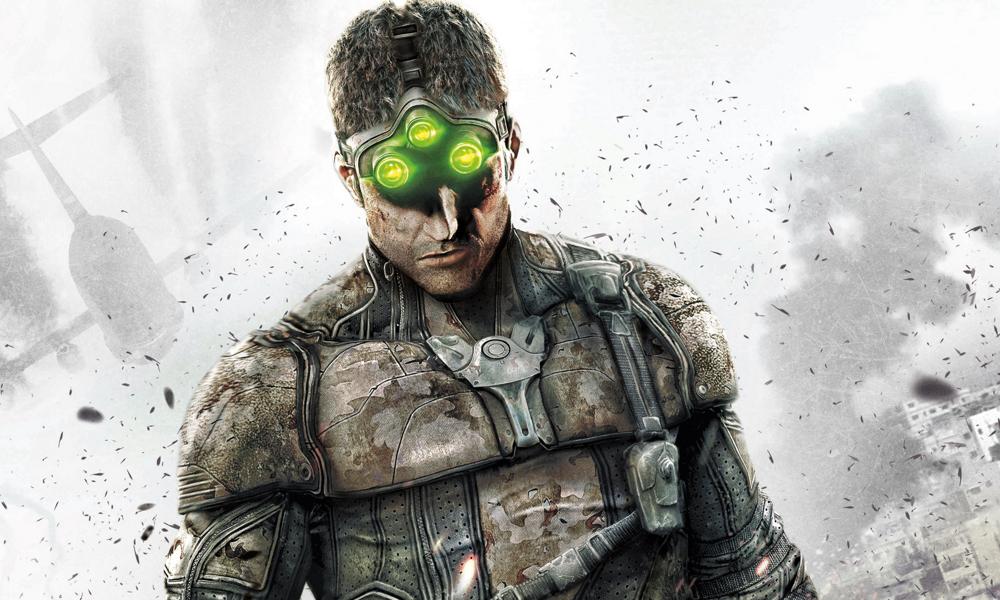
Netflix is joining forces with videogame powerhouse Ubisoft (Assassin’s Creed) to bring the hit Splinter Cell game world to streaming in a new anime adaptation. The series, which has a two season order, will be written and executive produced by Derek Kolstad, writer on the John Wick film franchise and upcoming Disney+/Marvel series The Falcon and the Winter Soldier.
Tom Clancy’s Splinter Cell is an award-winning stealth game franchise first released in 2002 which follows Sam Fisher (voiced in the first six titles by Michael Ironside) — an elite agent in a fictional black-ops branch of the NSA called the Third Echelon. The series has sold over 30 million copies. The most recent sequel, Blacklist, came out in 2013. Sam Fisher’s adventures have also inspired a line of tie-in novels.
A feature film was announced in development 15 years ago. At one point Doug Liman (Edge of Tomorrow, The Bourne Identity) was attached to direct and Tom Hardy cast as Sam Fisher. A rewrite was reportedly completed in 2017.
The highly anticipated new immersive, animated story experience from Baobab Studios, Baba Yaga, will celebrate its world premiere as part of the Venice International Film Festival’s “Venice VR expanded” program. This latest effort from the studio behind Asteroids!, Crow: The Legend and Bonfire introduces viewers to this inscrutable witch of Eastern European folklore by placing them directly in the story, driving how it unfolds.
In Baba Yaga, viewers will be invited as a main character into a haunting fairytale world completely reimagined, and their choices will determine the ending of this story of love, fortitude and magic. Sometimes a force for evil, sometimes a force for good, the enigmatic witch Baba Yaga uses her powers to stop the villagers whose settlement encroaches upon her enchanted forest. When the viewer’s mother, the village chief, falls deathly ill, it is up to them and their sister Magda to do the unthinkable — enter the forest, uncover its hidden mysteries and get the cure from Baba Yaga. Ultimately, every decision the viewer makes matters…even whether humanity and nature can live in balance.
Directed by Baobab Studios co-founder Eric Darnell and co-directed by Mathias Chelebourg, Baba Yaga is a contemporary portrayal of the Eastern European legend inspired by illustrative 2D pop-up animation, hand-drawn and stop-motion styles, creating a modern visual language for VR inspired by classic animation. Leveraging the studio’s award-winning animation pioneers and interactive gaming veterans, Baba Yaga blends theater, cinema, interactivity, AI, and animation into a unique experience that explores themes of empowerment and environmentalism.
This year, the Venice fest organizers have opted to offer the 44 VR program selections representing 24 countries (31 projects in competition, nine out of competition, four projects developed during Biennale College Cinema editions and one supported by a Biennale grant) entirely online. The innovative digital platform is supported by HTC Viveport, Facebook’s Oculus, VRChat and VRrOOm. See all selections here.
A Taste of Hunger | Christoffer Boe, David Adler (Denmark/Sweden/France)
Hush | Vibeke Bryld (Denmark)
Goodbye Mr. Octopus | Amaury Campion (France/U.S.)
Om Devi: Sheroes Revolution | Claudio Casale (Italy/India)
African Space Makers | The Nrb Bus Collective (Kenya/Germany)
Baba Yaga | Eric Darnell, Mathias Chelebourg (U.S.)
Killing a Superstar | Fan Fan (China)
Gnomes and Goblins | Jon Favreau, Jake Rowell (U.S.)
Agence | Pietro Gagliano (Canada)
In the Land of the Flabby Schnook | Francis Gelinas (Canada)
Dreamin’ Zone | Fabienne Glezendanner (France/Switzerland/Germany/S. Korea)
Replacements | Jonathan Hagard (Japan/Germany/Indonesia)
Paper Birds | German Heller, Federico Carlini (Argentina)
Great Hoax: The Moon Landing | John Hsu, Marco Lococo (Taiwan/Argentina)
Beat | Keisuke Itoh (Japan)
La Comedie Virtuelle | Gilles Jobin (Switzerland)
The Hangman at Home | Michelle Kranot, Uri Kranot (Denmark/France/Canada)
Once Upon a Sea | Adi Lavy (Israel/Canada)
The Metamovie Presents: Alien Rescue | Jason Moore (U.S.)
4 Feet High | Maria Belen Poncio, Rosario Perazolo Masjoan (Argentina/France)
Ajax All Powerful | Ethan Shaftel (U.S./China)
Minimum Mass | Raqi Syed, Areito Echevvaria (New Zealand/France/U.S.)
We Live Here | Rose Troche (U.S.)
Man Under Bridge | Hanna Vastinsalo (Finland)
Recoding Entropia | Francois Vautier (France)
Kinshasa Now | Marc-Henri Wajnberg (Belgium/Congo)
One More Minute | Wan Daming (China)
Mirror: The Signal | Pierre Zandrowicz (France)
Venice was one of the first film festivals in the world to demonstrate interest in virtual reality. The development of the VR Theater in 2016 sparked enormous interest among the participants of the Venice Production Bridge. Starting in 2017, La Biennale di Venezia launched the first VR competition in an A-list festival. This year, the exclusively online accessibility of the Venice VR Expanded section represents a new commitment and a new challenge.
The Venice Int’l Film Festival takes place Sept. 2-12 (labiennale.org/en).
More about Baba Yaga and Baobab Studios at ww.baobabstudios.com
Leading kids’ entertainment specialist CAKE and award-winning Canadian producer Fresh TV have announced a third season of Total Dramarama, the prequel to the multi-award-winning franchise Total Drama. A further 52 adventures are in production and set to premiere on Cartoon Network U.S. and TELETOON in Canada mid-year 2021.
Aimed at 6- to 11-year olds, Total Dramarama ages down the original show’s teen characters into troublesome toddlers. In this latest season, two more Total Drama characters, Sugar and Lightning, return as tiny versions of themselves to join Owen, Courtney, Duncan, Izzy, Beth, Leshawna and the rest of the gang, as they run riot under the slapdash supervision of Chef Hatchet!
Total Dramarama first launched on Cartoon Network U.S. and TELETOON in 2018 and was an instant hit. The second season premiered earlier this spring and ranks third among all Cartoon Network shows (year-to-date), based on reach, with kids 6-11. The series was rolled out on Cartoon Network in Germany, Austria, Switzerland, Benelux, Eastern Europe, Latin America and APAC. International broadcasters include POP in the U.K. Teletoon and Canal + in France, K2 and DeA Kids in Italy, Super3 in Spain, ABC in Australia and Noga in Israel.
Created by Tom McGillis and Jennifer Pertsch, Total Dramarama is produced by Fresh TV, in association with TELETOON and Cartoon Network U.S. and distributed internationally by CAKE.
“Three seasons in three years!” remarked Ed Galton, CCO & Managing Director of CAKE. “This has been an incredible journey for Total Dramarama and the ongoing Fresh TV- TELETOON-Cartoon Network-CAKE partnership. Together, we are delighted to introduce the latest instalment of this successful franchise. With two more toddlers joining daycare, the stories promise to be more hilarious and outrageous than ever!”
Skydance Animation has named Shane Prigmore to the newly created position of Senior Vice President of Development for Animation. An animation veteran of Walt Disney Television Animation, DreamWorks Animation, Warner Bros. Animation and LAIKA, Annie Award winner Prigmore will be responsible for overseeing the creative development of all feature films and television series for the studio’s ambitious production slate.
Prigmore is the most recent creative executive to join Skydance Animation’s growing roster of award-winning talent as the studio expands its global reach with the recent formation of Skydance Animation Madrid.
“We are thrilled to have Shane join our team at this pivotal time as we continue to increase our film and series production,” said Skydance Animation President Holly Edwards. “He is well-respected in the animation industry and we are confident his creative instincts and wealth of experience will be an incredible resource as he partners with the studio’s directors and series creators.”
“This is an amazing opportunity to work with David [Ellison], John [Lasseter] and Holly, and I believe deeply in this shared vision for the future of animated storytelling,” said Prigmore. “Skydance Animation’s very real commitment to creative excellence and innovation is only matched by their mission to create the most impactful animated stories possible.”
For more than 25 years, Prigmore has been a respected creative leader in the animation industry, contributing to film, television and streaming projects in virtually every aspect of the creative process. Before joining Skydance, Prigmore served as VP, Creative at Walt Disney Television Animation where he drove the development of animated content across multiple platforms. At WDTVA, his team was responsible for bringing to life the critically acclaimed DuckTales, Big City Greens, Amphibia and The Owl House as well as the upcoming Curse of Molly McGee, Phineas & Ferb the Movie: Candace Against the Universe, Monsters at Work and Marvel’s Moon Girl & Devil Dinosaur.
Prigmore is a two-time Annie Award winner for his work on LAIKA’s stop-motion feature Coraline and DreamWorks Animation’s The Croods. Prigmore has also contributed his many talents to projects such as: The Iron Giant, How to Train Your Dragon, Foster’s Home for Imaginary Friends, Tangled: The Series, The Lord of the Rings: The Two Towers, The Proud Family, The Boxtrolls and The LEGO Movie.
With more than 350 creatives across two continents, Skydance Animation’s upcoming feature slate includes Luck, directed by Peggy Holmes (Tinker Bell and The Secret of the Wings, The Pirate Fairy), about the unluckiest girl alive who stumbles upon the never-before-seen world of good and bad luck and must join together with magical creatures to uncover a force more powerful than even luck itself; Spellbound (working title), directed by Vicky Jenson (Shrek, Shark Tale), about a world of magic where a young girl must break the spell that has split her kingdom in two; and Pookoo (working title), written and directed by Nathan Greno (Tangled).
In addition, Skydance Animation has a slate of soon-to-be-announced, high-end television series in various stages of development.
About a month after confirming physical editions for the fall, Reed Midem has announced that MIPCOM and its preceding weekend event MIP Junior will be folded into a concurrent three-day format dubbed MIPCOM Rendezvous Cannes, taking place October 12-14 (Mon.-Wed.) — a day less than previously anticipated.
As part of the changes meant to mitigate ongoing COVID-19 risks, the familiar sea of exhibition stands in and around the Palais des Festival will not be part of the markets this year. The show floor will instead be an open-space lounge for in-person business meetings. The event will also offer a curated program of conferences and screenings.
Building on Reed Midem’s own pivot to a virtual spring confab with MIPTV Online+ (and the wide-rippling seismic shift to online festivals and conferences around the world this year), the event will hybridize its plans by offering a new digital compliment, MIPCOM Online+.
“We want to help the international television community get back to business and the combination of face-to-face at MIPCOM Rendezvous Cannes and digital MIPCOM Online+ makes this possible,” said Laurine Garaude, Television Division Director for Reed Midem. “We understand that some people will be unable to travel to Cannes, so they can be part of the MIPCOM experience digitally. New health and safety guidelines meant considerable disruption and extra costs for exhibitors and their stands, so we decided there will be no exhibition stands at MIPCOM Rendezvous Cannes.”
Major studios have been announcing they would skip the fall markets due to concerns about the pandemic. These include Sony Pictures Television, Fremantle, BBC Studios and ITV Studios. The run of negative headlines prompted further updates to MIP’s safety plans.
Exhibitors who had already booked a stand for MIPCOM 2020 will be offered refunds or credits for the Rendezvous of future MIP markets.