Catherine Lepage’s NFB animated short Le mal du siècle (The Great Malaise) will receive its international premiere in competition at the prestigious 70th annual Berlin International Film Festival (February 20 to March 1, 2020). The film was selected to screen in the Generation 14plus program, which gives young audiences an opportunity to watch a diverse offering of powerful, relevant stories that are cinematically innovative and unconventional.
“It was my secret dream to have my premiere in Berlin, and I am absolutely thrilled that they have selected The Great Malaise!” said Lepage. “The NFB gave me the opportunity to follow my instincts in making my first film, and this honor has confirmed for me that if art is personal and honest it can achieve something universal.”
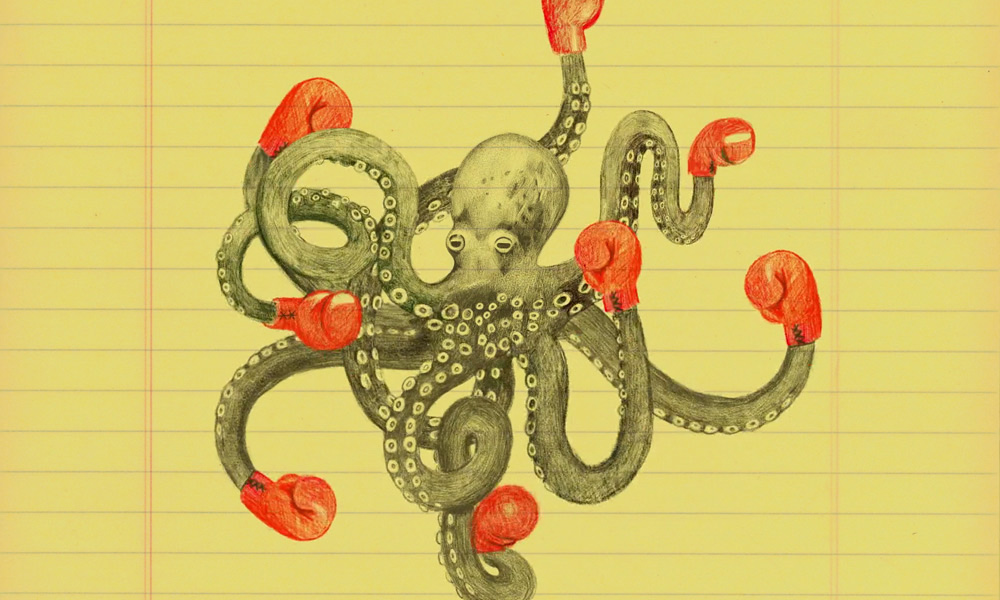
The 5’19” short juxtaposes a young woman describing herself and her life in glowing terms, while the visual narrative tells a different story, powerfully illustrating the heavy burden of anxiety carried by this worried overachiever.
The Great Malaise is the first film by Lepage, an illustrator and author whose books like 12 mois sans intérêt, Fines tranches d’angoisse (Thin Slices of Anxiety) and Zoothérapie, have been translated and published around the world. The short had its world premiere on home turf, at the 2019 Montreal Animated Film Summit, where it won People’s Choice Award (international competition) and Jury Special Mention (Canadian competition) honors.
“Catherine Lepage’s sensitivity, her immense visual talent, and her intelligence as a storyteller set her apart as an animation filmmaker to watch,” said Marc Bertrand, Producer at the NFB. “I hope we’ll get a chance to work together again soon. In her first film, Catherine offers a humorous take on a very troubling problem that can affect anyone.”
The cute and colorful “Da Hamstas” characters created by Dutch artist Saskia Keiser in 2017 are ready to spread even more happiness around the world, as Happy Ink have signed a partnership with Los Angeles-based AMGI Animation Studios to develop, produce and distribute an original animated series inspired by Hamsta World, heading to video streaming platforms worldwide.
Animation veteran Colin Brady heads the experienced animation team. A former lead animator, animation director, supervising animator and co-director for Pixar, Industrial Light & Magic and others, Brady’s credits include blockbusters like Toy Story, Toy Story 2 and A Bug’s Life.
“The entire AMGI Animation team is rolling up our sleeves to work on Da Hamstas. As a parent myself, I have years of personal experience observing the natural playfulness and joy that a character brand like Hamsta World can bring to kids. We’re having a lot of fun exploring premises, music and 3D environments for the Hamsta characters!” said Brady.
Keiser, CEO of Happy Ink, commented, “I am beyond excited to be working with this outstanding team known for its top-notch animation and spearheaded by Colin Brady. Partnering with Animagic, I just know my funny Hamstas are in the safe hands of a remarkably talented and experienced group of people. We are absolutely thrilled to enter a 3D Hamsta world that will make our fans around the globe feel right at home.”
The creative team at Animagic is working on adapting the eight different Hamstas to 3D, and is drafting stories in close collaboration with brand creator Keiser.
“The proliferation of video streaming services has created a huge demand for original video entertainment, especially for children’s animation,” noted Brad Bushell, Director of Licensing in the U.S. and Canada for Happy Ink. “So, market conditions make this the right time for Hamsta to partner with Animagic to produce fun stories presented through world class animation. It’s a perfect partnership at a perfect time.”
The Visual Effects Society (VES) announced its 2020 Board of Directors officers. The officers, who comprise the VES Board Executive Committee, were elected at the January 2020 Board meeting. Mike Chambers was re-elected as Board Chair.
“Our Society is proud and fortunate to have strong, impassioned leadership represented on our Executive Committee,” said Eric Roth, VES Director. “This dedicated group of professionals gives their considerable expertise and volunteer time to our organization. And I’m excited about their collective vision and plans to advance our global membership even further.”
Joining Chambers are: 1st Vice Chair Lisa Cooke, 2nd Vice Chair Emma Clifton Perry, Treasurer Laurie Blavin and Secretary Rita Cahill.
Mike Chambers (Chair) is a freelance visual effects producer and independent VFX consultant, specializing in large-scale feature film productions. He is currently in post-production on Tenet, his fourth collaboration with esteemed writer-producer-director Christopher Nolan. Other recent credits include Greyhound, Dunkirk, Alice Through The Looking Glass, Transcendence and The Dark Knight Rises. Chambers has contributed to the visual effects efforts on numerous Academy & BAFTA award-winning films, and he has personally won three VES Awards for Best Visual Effects, on Dunkirk, Inception and The Day After Tomorrow. He was also nominated for his work on I Am Legend.
Chambers is beginning his sixth term as Chair of the VES. He has been a member for over 20 years, serving multiple terms on the Board of Directors, and he has previously served on the Executive Committee as both Vice Chair and Secretary. He is also a member of The Academy of Motion Picture Arts & Sciences (AMPAS) and the Producers Guild of America (PGA).
Lisa Cooke (1st Vice Chair) has spent more than 20 years as an animation/VFX producer, creative consultant, screenwriter and actor. Firmly believing that it is vital for science to effectively communicate its truths to a broader audience, she started Green Ray Media, and for the last 10-plus years, has been using animation and VFX to help science communicate the amazing stories it has to tell.
In the past, Cooke has worked for clients including Lucasfilm, Fox, Nickelodeon Films, ABC, CBS, Paramount and Universal, and in the VFX and animation industry for companies including Pixar, Glasgow-based Digital Animations Group, and Tippett Studio. As Senior Producer at Reardon Studios, she helped bring the MOVA Contour reality capture to the film industry.
Cooke has also taught story structure at the SF Academy of Art, JFK University and Ex’pression College, and is a member of the Screen Actors Guild. She served six years on the Bay Area Board of Managers before joining the VES Board of Directors, where she serves as Chair of the Archive Committee and was 2nd Vice Chair in 2019.
Emma Clifton Perry (2nd Vice Chair) is a senior compositor with more than 15 years experience working across feature films, longform/TV series, commercials and advertising.
Clifton Perry has worked both in house with FOX and at VFX facilities worldwide including WETA Digital, Framestore, MPC, Rising Sun Pictures, DrD, Method Studios and The Mill, amongst others working both as an artist and in leadership roles. She is currently based in Wellington New Zealand, offering remote compositing and VFX consulting services worldwide. She also provides guest lecturing services to various universities, having herself studied at the NCCA, Bournemouth University, U.K.
In recent years Clifton Perry has served several terms as Chair, Co-Chair and Secretary/Treasurer on the VES New Zealand Board of Managers. She is currently in her fourth year on the VES Board of Directors.
Laurie Blavin’s (Treasurer) 20-year career spans the culture, creativity and technology of both Hollywood and Silicon Valley. A proven leader with expertise in building and managing creative and technical teams, she counsels companies and professionals in strategy, brand value stewardship, and full-cycle staffing and recruiting for international companies large and small, startup and established businesses. She is passionate about humanizing the technology side of organizations, while supporting the seeming chaos that sometimes accompanies visionary innovation.
On the VFX and entertainment front, Blavin has worked at or for DreamWorks Animation, The Orphanage, Scanline VFX, MPC and Technicolor. Prior to focusing on VFX, she worked at AOL, Vivid Studios, Walmart.com and Blurb.
Away from work, Blavin is a collector and curator of fine photography and spends time behind the camera on personal projects. This is Blavin’s first term on the VES Board of Directors.
Rita Cahill (Secretary) is an international business and marketing/PR consultant for a number of U.S., Chinese, Canadian, U.K. and E.U. companies for visual effects and animation projects. Current and former clients include companies in the feature film, television, VR and game industries, as well as government and educational entities. She is also a partner in MakeBelieve Entertainment, a film development company and serves as executive producer on a number of international projects.
Previously, Cahill was the VP Marketing for Cinesite, where she oversaw the marketing of four divisions of the pioneering digital studio’s services. Prior to Cinesite, Cahill was a founding Board member of the Mill Valley Film Festival/California Film Institute and remains on the Institute’s Emeritus Board of Directors. Cahill was also the Founding Consultant on the formation and establishment of the Singapore International Film Festival.
This is Cahill’s sixth term as Secretary. Previously, Cahill served as Chair or Co-Chair of the VES Summit for eight years.
www.visualeffectssociety.com
Rita CahillMike ChambersLisa CookeLaurie BlavinEmma Clifton Perry
Warner Bros. Animation has revealed a new movie project inspired by the iconic Mortal Kombat arcade, film, TV and comics series. Titled Mortal Kombat Legends: Scorpion’s Revenge and expected to arrive in the first half of this year, the movie is directed by Ethan Spaulding (Batman: Assault on Arkham, Justice League: Throne of Atlantis) from a script by by Jeremy Adams (Teen Titans Go! Vs. Teen Titans), based on the 1992 game by Ed Boon and John Tobias.
The flick will be star-powered by Joel McHale (Community) as cocky action star Johnny Cage, and Jennifer Carpenter (Dexter, Batman: Gotham By Gaslight) as special forces commander Sonya Blade.
The voice cast also features Jordan Rodrigues (Light as a Feather) as Liu Kang; Patrick Seitz (ThunderCats Roar, Marvel Future Avengers) as Scorpion and Hanzo Hasashi; Steve Blum (Young Justice, Star Wars Rebels) as Sub-Zero; Artt Butler (Star Wars: The Clone Wars) as Shang Tsung; Darin De Paul (3Below, Overwatch) as Quan Chi; Robin Atkin Downes (Guardians of the Galaxy TV series, Voltron Legendary Defender) as Kano; David B. Mitchell (Mortal Kombat 11, Batman Unlimited) as Raiden; Ike Amadi (3Below, Mortal Kombat 11) as Jax Briggs; Kevin Michael Richardson (Young Justice, Mortal Kombat 1995) as Goro; Grey Griffin (DC Super Hero Girls, Young Justice) as Kitana and Satoshi Hasashi; and Fred Tatasciore (Star Wars Resistance, DC Super Hero Girls) as Demon Torturer.
Rick Morales (Batman: Return of the Caped Crusaders, Batman vs. Two-Face) is producer with Jim Krieg (Gotham By Gaslight) as co-producer; co-creator Ed Boon of NetherRealm (formerly Midway Games) is creative consultant.
Warner Bros. acquired Mortal Kombat original company Midway in 2009, bringing one of the biggest games of all time under its company umbrella. WB Interactive Ent. relaunched the series in 2011; last year’s Mortal Kombat 11 was the fifth-best selling game of 2019 across all platforms.
A live-action movie based on the games was released in 1995, spawning two TV series. A new big screen reboot from New Line Cinema is slated for 2021, produced by James Wan and Todd Garner and directed by newcomer Simon McQuoid.
While one of the planned Marvel animated originals for Hulu hit a bump last month, the first project on deck is moving along swimmingly! Deadline reports that M.O.D.O.K., which will open the quartet of adult animated series leading into a big crossover special, has set its voice cast.
Patton Oswalt, who also executive produces, stars as the oft-thwarted “Mental Organism Designed Only for Killing.” In the series, the megalomaniacal supervillain has long pursued his dream of one day conquering the world. But after years of setbacks and failures fighting the Earth’s mightiest heroes, M.O.D.O.K. has run his evil organization A.I.M. into the ground. Ousted as A.I.M.’s leader, while also dealing with his crumbling marriage and family life, he is set to confront his greatest challenge yet: a midlife crisis!
Aimee Garcia (Lucifer) voices M.O.D.O.K.’s wife, Jodie, who is eager to grow her mommy blog-based lifestyle empire. With so much to do, there’s no time to waste being held back by negativity — or your husband.
Ben Schwartz (House of Lies) voices 12-year-old son, Lou — an uninspiring yet overconfident preteen specimen who marches to the beat of his own drum. His father worries about his lack of friends (or hygiene), but is usually just projecting his own insecurities.
Melissa Fumero (Brooklyn Nine-Nine) voices Melissa, the 17-year-old daughter who, despite inheriting M.O.D.O.K.’s memorable looks, rules her school and the world of teen figure skating. Loved and feared by her peers, she secretly yearns for her father’s approval.
Wendi McLendon-Covey (The Goldbergs) is Monica Rappacini, a brilliant mad scientist at A.I.M. and M.O.D.O.K.’s office rival. When GRUMBL acquired A.I.M., she relishes his suffering under new management, but finds common cause when the new boss starts to meddle with her experiments.
Beck Bennet (Saturday Night Live) is said boss: sleek 20-something Austin Van Der Sleet, sent by the Silicon Valley tech giant GRUMBL as a “post-merger-integration-consultant”.
Jon Daly (Curb Your Enthusiasm) voices Super Adaptoid, a snarky android tasked with caring for M.O.D.O.K. yet dreams of overwriting his programming to take a shot at truly living.
And Sam Richardson (Veep), voices “beekeeper”/henchman Gary, an A.I.M. employee fiercely loyal to M.O.D.O.K. despite his inability to remember his name.
I’m not sure how long it has been since I first reviewed Katana. I suspect it was in its formative years, when Foundry acquired it from Sony Pictures Imageworks and brought it into the fold as a lighting and look development tool for everyone to use. The product has made its way into many of the leading visual effects houses. It loads scenes quite quickly, using a deferred loading system with support for alembic and USD. The workflow is flexible and, more importantly, shareable, which means that multiple artists can work within sequences, share assets and shaders, and remain consistent — even when assets are changing. It’s also render agnostic —so regardless of your render poison (RenderMan, 3Delight, Arnold, V-Ray), you aren’t going to have to redo your pipeline.
Version 3.2 has a laundry list of additions and upgrades of which the most substantial is an overhaul to the material creation workflow and UX. In earlier versions, there was a lot of power, but not so much finesse. Katana is inheriting much of the new experience from years of feedback from artists using Nuke and a healthy helping from Houdini.
The shader networks are designed to be dipped in and out of. Diving into nodes allows for more real estate to work with. In and outputs of the node are the left and right sides of the window. After working within the node, you can bounce back up and out to a more macro view of the network. This is essential, because you have the ability to nest shaders within shaders and create new widgets to share. Houdini users will be absolutely familiar. To further clean things up, you can compress or hide network wires, which tidies up the screen, removing the inevitable spaghetti plate of large, unmanageable node trees. Foundry threw in an auto-layout function to snap your nodes into alignment, a dot function to help keep things organized, and a backdrop to assist in grouping pieces of the network, and making for better readability.
While Katana doesn’t care what render engine you are using, the render engine does care how you build the networks, and each renderer has slightly different methodologies. That’s why Katana allows you to switch between renders and have multiple context-specific shader nodes that may use the same textures and upstream nodes, but a renderer-specific output — so you can develop looks for multiple renderers simultaneously.
Katana ships with an interactive license of 3Delight, so you can get started rendering right away. 3Delight NSI is brought up to v1.5 which chats with the viewport, driven by Pixar’s Hydra Viewer and its support for USD (Universal Scene Description). Katana 3.2 makes a leap up to version 19.05 of USD which includes the ability to change the GL system that is rendering to the interactive viewport. The 3DLight upgrade also supports a random walk subsurface scattering model, faster hair, better support for volumes and multi-viewport rendering.
I’m not gonna lie: Katana isn’t the least expensive piece of software out there, especially given that it’s a bit niche. But even if you are a small studio, if you get a job with lots of shots with similar CG environments or assets, the investment may be worth it when you weigh it against the number of artists you’ll have to hire, and the amount of time they’ll have to spend loading scenes, and more time updating them if there are client changes (God forbid).
Foundry’s Katana 3.2
Foundry’s Mari 4.6
Mari is Foundry’s 3D texture and look development tool. Like Katana’s beginnings at Sony Imageworks, Mari was developed at Weta Digital, and then acquired by Foundry, who took the baton and ran with it, sharing it with the rest of the world. It’s exceptionally good at memory management and really responsive. Maybe I’m wrong, but we may be able to blame it (and perhaps Autodesk’s Mudbox) for the industry-wide adoption of UDIM tiles. But what’s new in Mari 4.6?
Frankly, there is a little catch-up going on with the guys over Allegorithmic, but Mari is hardly at a disadvantage. Let’s just call this a friendly little competition. That said, Mari has implemented what it calls Geo-Channels, which are calculations from the geometry of the object being painted. Ambient Occlusion and Curvature, for example, are derived by calculating ray casts, normals and other math-y things to create a map or mask; that, in turn, can be used to drive other textures — like dirt in cracks and crevices, or wear and tear where the model sticks out. In Substance, these are pre-baked to maps and then imported back in to drive Smart Materials. Mari, on the other hand, has the ability to keep these live based on the input geo, although they can be exported to maps through “Bake Points” if you like.
Additional procedural maps such as fractals and noise in various flavors and patterns such as bricks, weaves and scratches have been added. All these textures, whether Geo Channels, procedural, explicitly painted or laid in like decals, are fed into an updated Material System, which parallels Katana in the way that you build shaders. The difference is that the output is meant to act as a light preview of what the shaders will look like once you get them into Katana and rendered in your package of choice. The Texture/Look Dev artists can check the textures and get the shaders to a certain level, and then pass them downstream to Katana where they can be finessed. Using Bake Points, the Mari artist can export out the necessary textures, and the shader can be used as a guideline.
Mari’s shader and texture node networks have also been updated in the same way as Katana has. Because the user experience is the same, it’s easy for the artists to move back and forth between Mari and Katana. And to help prevent round-trips between the two programs, Mari now has 3Delight and V-Ray support, ensuring that the look in Mari will be substantially closer to the final output; removing a whole layer of guesswork and re-developing once it’s in Katana.
While supervising on For All Mankind for Apple TV+, the team at Method was using this workflow, painting in Mari and Look Developing/Lighting in Katana, with RenderMan as the output. It made for quick turnarounds, and consistent results — even when notes were coming in at the very last minute. A team of eight lighters and four texture artists developed a ton of assets and hundreds of stunning visual effects shots.
Todd Sheridan Perry is a VFX supervisor and digital artist who has worked on many acclaimed features such as Black Panther, The Lord of the Rings, Speed Racer and Avengers: Age of Ultron. You can reach him at todd@teaspoonvfx.com.
I’m typing this review on the Acer ConceptD 5 Pro laptop with a Quadro RTX 3000 with 6GB of RAM inside. I don’t know. Is that overkill — for writing Google Docs? I don’t feel like I’m writing any faster. But fortunately, I’ve also installed pieces of the Adobe Creative Cloud, The Foundry’s Nuke and Mari, and Autodesk’s Maya 2019 and Max 2020; just to give me a healthy sampling of how they perform on this dual ninth gen Intel Core i7 proc running at 2.6 Ghz with 32 GB of RAM.
Despite the slim .7 inch physical profile and 4.6 lbs., no one could categorize the ConceptD as “slight.” The 15.6” monitor displays at 4K UHD, which is cool and all, but more important is the rated color accuracy reproducing the Pantone Matching System, and 100% of the Adobe RGB gamut. What that means is that if you are in color-sensitive stuff — specifically color grading in DaVinci, comping in After Effects or Nuke, or photography editing like Lightroom — you are confident that what you are seeing is an accurate representation.
The chassis looks and feels smooth and solid. It has a ceramic coating applied through a MAO (Micro-Arc Oxidation) process, which has to do with a lot of scientific things (which I encourage you to look into if you are into that). The result is a super hard shell that is pleasing to the touch, protective and resistant to the elements, retaining the pristine look of the laptop for longer.
The design is also meant to distribute heat and reduce sound, and for normal processes (like writing this review), the laptop is nearly silent, and I’m cradling it on my lap without any worry about it getting too hot. However, once I fire up 3ds Max and load up a scene with glossy reflections, motion blur, depth of field and rendering through V-Ray Next GPU, it didn’t take too long for the fans to spin up, the bottom to noticeably heat up, and my officemate to say, “Is that your laptop making that noise?” But to be fair, I haven’t run into a laptop (or desktop without liquid cooling) that I can’t get to heat up and scream. But it’s super quiet and cool the rest of the time.
The ConceptD 5 Pro is an absolutely valid mobile equivalent to a workstation. I can have it on set with me (like I do right this very moment), able to bring up shots for the director to look at, and be certain that my display is going to be darn close if not pixel accurate to the DIT. I can develop and audition 3D animation or camera moves — and with the RTX card and progressive rendering, I can be showing accurate (enough) renders interactively.
This review laptop is more robust than the baseline model, but even without the RTX display card or high-capacity 2TB solid state drives, you are still getting a powerful device with a 4K color accurate display and a sleek looking, low-profile mini-workstation for under $2,000. Plus, there is room to upgrade. Website: store.acer.com Price: $1,950 (amazon)
LIFTiD
LIFTiD
I’m going to go off the beaten track here to investigate a product that doesn’t provide faster render times, or better ways to sculpt in 3D, or plugins that create cool particle effects. It’s about something a little deeper and more ubiquitous than any specific art tool. It’s about productivity.
We who work in the visual effects, animation and video game worlds are no stranger to fatigue. We burn ourselves out by working too many hours to hit deadlines that are too short. We try and compensate with caffeine, sugar, energy drinks, microdosing or Adderall — or worse. These will keep you going, but there is a long term cost to your health.
There is a thing called transcranial direct current stimulation (tDCS). It’s kind of all the rage in the neuroscience circles, and there are over 4,000 published studies about its benefits. What it boils down to is a mild electrical stimulation to the cerebral cortex, which primes the neurons (for lack of a more scientific term) to be more likely to fire. The result is increased focus, attention, productivity and memory.
RPW Technology is a New York based startup that has created a product called LIFTiD to tap into this research and deliver a product in the form of a lightweight headband that will provide tDCS through a couple of electrodes. The user wears the device for 20 minutes a day to give those neurons a boost and refocus and re-energize.
I’ve been working with the device for the past month, and while the impact isn’t a bolt of energy like you’d get chugging a Red Bull, the benefits are still noticeable. I realize how “unscientific” this sounds, and yet, it is purely anecdotal and entirely uncontrolled. I’m not tracking what I’m eating, my sleeping habits or whether or not I had my morning coffee. But I will say that I can sense a difference. And that is enough for me to want to continue using it and recommend it to anyone who is into novice-level biohacking and wants to find alternative, non-chemical ways to up your productivity.
Obviously, check precautions before you buy it — there are a few medical and physical conditions that you should pay attention to. (You should only use it once a day for 20 minutes. You shouldn’t use it if you have any electronic implanted medical devices in the brain or head, a pacemaker or a defibrillator. You shouldn’t use it if you have a neurological condition or disease. You shouldn’t use it on any other areas of the body, etc.) You are playing with your brain after all. Website: getliftid.com Price: $149
HBO Max has added The Prince, created by multiple Emmy-nominated producer and writer Gary Janetti (Family Guy, Will & Grace) to its line of animated comedy series on order. Inspired by Janetti’s lampooning Instagram account with nearly a million followers, the series satirizes the life of the British Royal family through the eyes of young heir to the throne Prince George, the eldest child of Prince William and Princess Kate.
Janetti will voice star as Prince George, alongside Orlando Bloom as Prince Harry, Condola Rashad as Meghan Markle (who have recently cut official ties with Buckingham Palace in search of a more normal life), Lucy Punch as Kate Middleton, Tom Hollander as both Prince Philip and Prince Charles, Alan Cumming as George’s butler Owen, Frances De La Tour as Queen Elizabeth, and Iwan Rheon as Prince William.
“We’re so excited to bring the world Gary’s created on Instagram over to HBO Max, where our viewers can discover what his Instagram fans already know – that George can be hilarious, shocking, and surprisingly sweet,” said Sarah Aubrey, head of original content, HBO Max. “We can’t wait to see what Gary does with a bigger canvas to paint on than just a 1:1 square.”
“I’m thrilled to be working at HBO Max and bringing them yet another series about a family ruthlessly fighting for the throne,” said Janetti. The cartoon marks his second project announced with HBO Max, following Brad and Gary Go To… (working title), a travel doc featuring Janetti and his celebrity stylist husband Brad Goreski.
Synopsis: The Prince is a biting, satirical look at the life of Prince George of Cambridge, the youngest heir to the British throne, as he navigates the trials and tribulations of being a royal child. Before George rules Britannia, he’ll be laying down his own laws in Janetti’s comedic take on the future King of England’s childhood as seen from the prince’s own point of view. Because his succession isn’t coming any time soon, in each episode George will find his path in life as a young prince in modern times – from the 775 rooms of Buckingham Palace to his family’s sea of corgis to primary school with commoners. The Prince also features notable characters in George’s life such as his parents the Duke and Duchess of Cambridge, his fourth-in-line-for-the-throne little sister Charlotte, his modern Aunt Meghan and Uncle Harry, his great-grandad Philip, and – who can forget – his Gan Gan Elizabeth.
The series is written and exec produced by Jannetti, author of NYT best seller Do You Mind If I Cancel, and produced by 20th Century Fox Television.
VOID International Animation Film Festival is ready to kick off its fifth edition, showcasing the best and most interesting, creative and thought-provoking animated feature films and shorts from all over the world — any kind of genre, any kind of technique.
From January 30 to February 8, audiences will be immersed in 10 days of animated creation at Cinemateket in Copenhagen, with 10+ features and over 100 shorts on the program. The event will also host masterclasses and talks from the creative professionals bringing impactful stories to world audiences.
While mostly curated for adults, the 2020 festival will present engaging and inspiring family-friendly moes, including opening night film Marona’s Fantastic Tale by Anca Damian, Jean-François Laguionie’s The Prince’s Voyage (Feb. 1), Enzo D’Alò’s Pinocchio — featuring designs by comic-book artist and VOID 2020 guest Lorenzo Mattotti — and Gints’ Zilbalodis’ epic solo feat Away (Feb. 2).
This year’s masterclasses and talks have been arranged to appeal to animation aficionados, students and seasoned pros alike. New partners include Women in Animation, Kickstarter and DR, who will bring in both local and international speakers, like Therese Sachse (DK), Lorenzo Mattotti (IT), Lis Cook (US), Mikkel Mainz (DK), Niklas Kiær (DK), Sarah Joy Jungen (DK), Christen Bach (DK), Sidse Stausholm (DK), Lilian Klages (DE), Esben Toft Jacobsen (DK), Gints Zilbalodis (LV), Peter Wassink (NL).
Also in attendance will be the members of the Lejf Marcussen Award Jury — Annemette Karpen (DK), Martin Wiklund (FR), Ulysse Lefort (FR), Eva Katinka Bognar (HU), Nancy Denney-Phelps (BE) — and of the Graduation Film Competition Jury — Dan Ramsay (UK), Juliette Marchand (FR), Sara Koppel (DK).
Leading on-demand kids’ net Kabillion — available in more than 60 million U.S. homes via cable and in over 40 million connected households through Roku, Apple TV, Amazon, et al — has upped Stevan Levy to President, Programming and Operations. A key member of the company since its inception in 2007, the Emmy Award-winning Levy most recently served as Kabillion’s Vice President of Programming.
“Stevan has been a valuable part of Kabillion’s executive team for more than a dozen years and I can’t think of a better choice for leading our programming and operations during this dynamic time in the kids’ streaming media landscape,” said Mike Young, Co-CEO, Splash Entertainment and Kabillion. “With his impressive major studio track record and great industry connections, Stevan will help ensure the network’s continued success for many years to come.”
“The children’s television ‘playground’ is constantly shifting and Kabillion is well positioned to quickly change with it, giving viewers access to a range of the best entertainment options, including voice-activated on-demand content and beyond,” said Levy. “My goal is to provide Kabillion viewers with a robust slate of world-class programming that they can enjoy wherever they may be, as we continuously work to expand both our content and audiences.”
As President, Programming and Operations at Kabillion, the only independently-owned VOD network ranked among the Top 10 Kids Free On-Demand networks in the U.S., Levy will lead the way in securing quality programming and cementing strategic partnerships to help bring Kabillion and its offerings to more kids and families nationwide. He is committed to making Kabillion available in most homes by the end of the year.
During his tenure at Kabillion, Levy has been instrumental in consistently increasing audience numbers annually, with last year’s figures climbing 22% over the previous period. Under his leadership, the company also expanded its offerings into massively multiplayer online games (MMOs) and mobile applications.
Prior to his term as Kabillion’s VP Programming, Levy was VP of Global Operations and Production, and is credited with realigning the company’s programming strategy, increasing television viewership by more than 1,100% and online viewership by 500%. Prior to joining Kabillion, Levy spent 10 years at The Walt Disney Company, most recently as Producer of Development Production. In this position, he produced more than 80 pilots for Walt Disney Television Animation, including Phineas & Ferb and Kim Possible, and in 2008 won a Daytime Emmy Award for Outstanding New Approaches (Children’s) for I Got a Rocket!.
Disney’ box-office melting Frozen II — which has had a warm reception around the world and taken the top spot on the list of all-time highest-grossing animated movies — is ready to sweeten up your Valentine’s Day on Digital 4K Ultra HD, HD and Movies Anywhere on February 11, and on 4K Ultra HD, Blu-ray and DVD on February 25. The sequel to 2013 Oscar winner Frozen will arrive with a sing-along version and plenty of all-new extras.
In Frozen II, the answer to why Elsa was born with magical powers is calling her and threatening her kingdom. Together with Anna, Kristoff, Olaf and Sven, she sets out on a dangerous but remarkable journey. In Frozen, Elsa feared her powers were too much for the world. In the highly anticipated sequel, she must hope they are enough. From the Academy Award-winning team — directors Jennifer Lee and Chris Buck, producer Peter Del Vecho and songwriters Kristen Anderson-Lopez and Robert Lopez — the new adventure once again features the voices of Idina Menzel, Kristen Bell, Jonathan Groff and Josh Gad.
On top of the Frozen II home release, a Digital bundle including both films will be available in 4K UHD, HD and SD on Feb. 11. All-new toys inspired by the sequel will hit shelves Feb. 22.
Bonus Features (may vary by retailer):
Blu-ray & Digital:
Sing-Along Version of the Movie – Sing along with your favorite songs as you watch the movie.
Song Selection – Jump to your favorite musical moments, with on-screen lyrics. Songs include Oscar-nominated “Into The Unknown,” “All Is Found,” “Some Things Never Change,” “When I Am Older,” “Lost in the Woods,” “Show Yourself” and “The Next Right Thing”
Outtakes – Laugh along with the cast of “Frozen 2” as they record their lines, sing their songs and have fun in the recording booth.
Deleted Scenes – Check out a few scenes that never made the final cut.
Intro – Directors Jennifer Lee and Chris Buck offer a glimpse into their filmmaking process with scenes that didn’t make the final cut.
Prologue – A battle rages between Arendelle and the Northuldra while a mysterious figure challenges King Agnarr.
Secret Room – A secret room reveals even more of Anna and Elsa’s past, including a shocking revelation about their mother.
Elsa’s Dream – Anna’s playful glimpse into Elsa’s dream takes a dark turn.
Hard Nokks – Kristoff reveals his true feelings about life in Arendelle when the Nokk won’t take no for an answer.
A Place of Our Own – Elsa uses her magic to relieve Anna’s lingering doubts about their parents’ faith in her.
Deleted Songs – When it comes to “Frozen 2,” there can never be too much music. Hear some of the songs that got cut from the final film.
Intro – Directors Jennifer Lee and Chris Buck revel in the chance to share a few songs that didn’t make it into the final film.
“Home” – Anna savors every moment as she wanders through this kingdom she calls home.
“I Wanna Get This Right” – Kristoff wants everything to be perfect before he proposes, leaving Anna to wonder, “Will it ever be just right?”
The Spirits of “Frozen 2” – Cast and crew explore the Scandinavian and Nordic mythology that inspired the spirits inhabiting the enchanted forest of “Frozen 2.”
Did You Know??? – Olaf asks us the question “Did You Know” as we discover “Frozen 2” fun facts, Easter eggs and tidbits about the making of the film.
Scoring a Sequel – Composer Christophe Beck combines a 91-piece orchestra with 30 choral voices to create the compelling score for “Frozen 2.”
Gale Tests – They say you can’t see the wind. Only its effects. Filmmakers give it a shot while creating the playful wind spirit, Gale.
Gale Test – A young girl and boy play tag in this fully animated effort to “give personality to something that’s invisible.”
Hand-Drawn Gale Test – A hand-drawn test to bring the precocious wind spirit to life.
Multi-Language Reel: “Into the Unknown” in 29 Languages – Hear Elsa’s soaring call to adventure in 29 different languages
Music Videos – Weezer and Panic! at the Disco lend their voices to a few of the soaring melodies from “Frozen 2.”
“Into the Unkown” (Panic! at the Disco version) – Panic! at the Disco frontman Brendon Urie stars in their version of “Into The Unknown” from “Frozen 2.”
“Lost in the Woods” (Weezer version) – Weezer puts their spin on Kristoff’s epic ballad, “Lost In the Woods.”
Digital Exclusives:
Meet the Lopezes – Meet the award-winning husband-and-wife team behind the incredible songs from “Frozen” and “Frozen 2.”
Deleted Song “Unmeltable Me” – An animatic version of Olaf’s celebratory song about his newfound freedom.
It’s a great day for classic animation fans as we have more info on Warner Archive Collection’s long-anticipated Tex Avery Screwball Classics Blu-Ray release, which is slated for a February 18 release. Using new 1980p HD Masters from 4K scan of archival material, this release focuses on the MGM cartoons of the 1940s and 50s.
The Blu-Ray, which is priced at $21, will feature 19 cartoons:
Tex Avery Classics
Red Hot Riding Hood
Red Hot Riding Hood
Who Killed Who?
What’s Buzzin Buzzard?
Batty Baseball
The Hick Chick
Bad Luck Blackie
Garden Gopher
The Peachy Cobbler
Symphony In Slang
Screwy Squirrel
Screwball Squirrel
The Screwy Truant
Big Heel-Watha
Lonesome Lenny
George & Junior
Hound Hunters
Red Hot Rangers
Droopy
Dumb Hounded
Wags To Riches
The Chump Champ
Daredevil Droopy
Tex Avery Screwball Comedy Classics-Volume One
Run Time 138:00
Subtitles English SDH
Audio Specs DTS HD-Master Audio 2.0 – English
Aspect Ratio 1.37:1, 4 X 3 FULL FRAME
Product Color COLOR
Disc Configuration BD 50
You can now preorder the tile on the Warner Bros. Shop website All
As animation historian Jerry Beck writes, “There were several masters of animation during Hollywood’s golden era. Of the top two geniuses, one created elaborate fairy tales and ornate feature-length fantasias — the other guy was Tex Avery. He just wanted to make you laugh. Having already been integrally involved in the development of Porky Pig, Daffy Duck and Bugs Bunny for Warner Bros., Avery moved to MGM in 1941 to create a set of comedy masterpieces that defined a new slapstick style for animation, inspiring cartoonists, comedians and filmmakers for decades to come. Avery’s unit at Metro Goldwyn Mayer was all about breaking the fourth wall, shattering expectations and making audiences fall down with laughter. His one-shot masterpieces, including Bad Luck Blackie, Red Hot Riding Hood and Symphony in Slang, have proven themselves pure gold. And continuing characters like Droopy, Screwball Squirrel and George & Junior —— not to mention Spike, Red and The Wolf – remain unforgettable comic personas among the top rank of cartoondom. Avery’s cartoons were ahead of their time —— and their time has come. Finally committed to Blu-ray, this first collection of restored Technicolor shorts feels fresh and new, and is funnier than ever. This set will delight young and old — and will amaze a new generation ready to laugh again.”
We’ll have more information on this release in the near future, so keep your eyes peeled!
Two-time Oscar-winning VFX supervisor John Dykstra shares some of the details of bringing the good doctor’s adventures to life.
It seems that every generation deserves its own adaptation of Hugh Lofting’s popular children’s classic The Story of Dr. Dolittle. This year, Robert Downey, Jr. follows in the footsteps of Rex Harrison and Eddie Murphy in a new version of the story, which finds the doc and his animal companions embarking on a journey to find a cure for the ailing Queen Victoria. Legendary visual effects supervisor John Dykstra (Ghost in the Shell) and filmmaker Jonathan Liebesman (Wrath of the Titans) were brought in to provide additional photography and digital effects to expand upon the vision of director Stephen Gaghan (Syriana).
Of course, Dykstra, the winner of two VFX Oscars for his work on the original Star Wars (1977) and Spider-Man 2 (2004) and nominated for Star Trek: The Motion Picture, Stuart Little and Spider-Man, is no stranger to creating a cast of CG creatures. “The animals were smaller,” laughs Dykstra when comparing Dolittle to Godzilla (2014). “They didn’t take-up nearly as many film cans!”
Discussing the prevalence of CG creatures in movies and television shows, Dykstra says, “It all comes back to whether or not the story you’re telling is compelling and whether or not the characters are evocative,” he points out. “All of the things that have transpired in regards to making animals more photorealistic have opened up a whole new realm of storytelling. This is similar to how the advent of conventional digital effects allowed us to do explosions, massive groups of people and nonhuman characters that had an anthropomorphic quality to them in sci-fi movies and shows.”
Dykstra further explains that he dealt with Liebesman directly on this movie. “David Shirk [Ready Player One], the animation supervisor on the project, was the one who had to bridge the transition from Stephen Gaghan to Jonathan Liebesman, as he was on the project from the beginning,” he recalls. “I joined Dolittle after Jonathan had completed additional photography. There were a huge number of shots that needed to be completed within a fairly short period of time and the staff was overwhelmed. I came in as someone who could organize and triage the work that needed to be given the most attention.”
Building a Unified Vision
This wasn’t the first time that Dykstra had been recruited to revisit the postproduction process. “There is no way to make sure that anything works, including making a film from the beginning,” he explains. “It comes down to the relationship you create with the others who are collaborating on the project. You have to find your way. It’s the same as making the film whole again in the sense that there are several inputs in regards to what image should be when it’s finally on the screen. The job of the people who supervise and the director is to take those ideas and coalesce them into something that is greater than the sum of its parts, otherwise, you end up with five different movies!”
In a movie about a doctor that communicates easily with his animal friends, integrating CG characters into the live-action photography was the major challenge. “The key to it once you establish what the story is going to be is figuring out how to integrate the CG creatures in a way that is realistic but don’t call extraordinary attention to themselves, which is tough,” notes Dykstra. “One of the hardest things on this project were the talking animals. There was a huge effort that goes into making these nonhuman characters anthropomorphic in a way that doesn’t look cartoony and gives them a sense of reality. We have a talking ostrich, bear and even a dragonfly.”
The voice cast of Tom Holland, Rami Malek, Emma Thompson, Ralph Fiennes, Octavia Spencer and Marion Cotillard influenced the animation style. “The animator takes the emotional content portrayed in the audio and figures out how to convey it in the character,” says Dykstra. “We didn’t use any motion capture.”
Stuffies to the Rescue
Stuffies, which are little mannequins that can be held and put on a stick for eyeline purposes, were used for the parrot and some of the smaller animals. “In the case of animals that interacted with the live actors, there were performers in green costumes,” says Dykstra. “When coming into contact with the actors, they displaced their clothes or hair or moved them in some way. There was real interaction, so the actor was not having to mime. Then, the animal was animated over the top of the stand-in. There were minor changes to the physical make-up of some of the animals, like the way the fur was groomed or the amount of fur they had. For the most part, the characters were accurate representations of real animals with the exception of the dragon.”
According to Dykstra, the ease of conveying emotion varied from creature to creature. “With a gorilla you have a face that is anthropomorphic and the familiarity that we have with the human face was critical,” he remarks. “A small change in facial expression resulted in a much larger emotional impact. Whereas dragonflies don’t have mouths per se and their eyes are disproportionately large: They don’t look anthropomorphic at all so were less realistically animated, but an effort was made to maintain the way that they fly. We did different things with the camera in regards to depth of field to establish their scale. You want to believe that this bug can talk. You have to find the balance between the stylization that you have to do to make it have emotional context and the realism that you’re pursuing in the execution of the image.”
Some environments took on more significant roles after the additional photography was completed. “We had more scenes on the boat than they had started out with,” reveals Dykstra. “The cave also took on its own personality based on the change of intent of what went on there. We did a ton of production design to bring these elements into this world so there was a certain amount of fanciful addition to the environments.”
Dykstra says one of the director’s favorite effects were the specular reflections on the water. “It’s totally reasonable to have specular reflections on the water, but we put a lot of them in because he liked the personality it created in terms of what the picture felt like,” says Dykstra. “The same thing applies to the colors on the animals in regards to their fur and in the execution of the environments in which the animals perform. We had to make sure that things remained colorful and lively looking.”
Another interesting tidbit: the film’s underwater sequence was photographed dry for wet. “Robert Downey, Jr. was shot against bluescreen on a dry stage and then his head was added into the CG diver suit and helmet,” says the VFX supe. “Everything else underwater was CG.”
MPC and Framestore served as the film’s main visual effects vendors, with Luma Pictures and Lola VFX added later to assist with additional postproduction work. Interestingly enough, the renowned de-aging techniques of Lola VFX came in handy. “The shooting took place over a long period of time and one of the actors was going through puberty,” recalls Dykstra.
The creatures were created as high-resolution models that could withstand extreme close-ups. “The work that MPC and Framestore did on the creation of each of their respective animals was great. When you’re looking at the dragonfly, it’s macrophotography because they’re so small. Suddenly, you’re looking at detail that you would never see with the naked eye. The specifics of how accurately and realistically these characters were modelled and animated was a big challenge.”
Executing the cave environment and creating the dragon also proved to be technically challenging for the VFX team. “There was no paradigm for that,” notes Dykstra. “We were making it up. The cave had bioluminescence in it and a light effect was part of the dragon. Distinguishing between the dragon and cave light effects was particularly hard. This dragon is different in a sense that there is much more integration of bioluminescence. She has a light effect that is inherent in her physicality and echoes her state of mind and anger and pain.”
When asked about some of the highlights, Dykstra says, “In terms of sequences in the film that are exceptional, we did some photography of interaction between ants, Dr. Dolittle and the dragonfly; that’s really fun because it’s in that realm of macrophotography.”
Universal’s Dolittle is currently playing in theaters worldwide. The movie, which reportedly cost $175 million to make, was number two at the box office this weekend, with a $21,950,000 opening weekend in the U.S. and a $56,800,000 total worldwide.
“When you start to think about it when you’re looking at the dragonfly it’s macrophotography: Suddenly, you’re looking at detail that you would never see with the naked eye.”
Every little new tidbit is enough to drive Castlevania fans insane. That’s why it social media was buzzing with the news that Netflix had revealed the first image from the much-anticipated third season of the series.
The new header image of the show showcases four characters, of which only one is recognizable as Carmilla (the character on the far right in the image). Voiced by Jaime Murray, Carmilla is one of the main antagonists of the second season (and a recurring boss from the video game upon which the popular series is based). No word yet about the identity of the three other characters or their loyalties in the show.
Netflix confirmed the 10-episode third season after the debut of Season Two, and it’s known that the show’s director Sam Deats, writer/executive producer Warren Ellis, and executive producers Adi Shankar, Fred Seibert, and Kevin Kolde are all returning. Season Three is scheduled to consist of 10 episodes. The new season must be dropping soon since Texas-based studio Powerhouse Animation also teased the highly-anticipated season premiere on its website earlier this month.
The official synopsis of the show reads, “Trevor Belmont, last survivor of his house, is no longer alone, and he and his misfit comrades race to find a way to save humanity from extinction at the hands of the grief-maddened Dracula and his sinister vampire war council.”
The voice cast includes Richard Armitage as Trevor Belmont, James Callis as Alucard, Graham McTavish as Dracula, Alejandra Reynoso as Sypha Belnades, Matt Frewer as The Bishop and Emily Swallow as Lisa Tepes. The show’s music is by Trevor Morris.Castlevania
French animator Bruno Collet’s stop-motion short Memorable has been receiving accolades and awards since it debuted at Annecy last June. The powerful short, which is one of the five titles competing for the Best Animated Short Oscar this month, centers on an aging painter and his wife, who are trying to cope with advanced dementia. Collet studied fine arts at the Beaux-Arts in Rennes and has worked as a set designer and director on a number of TV series, films and shorts, including Calypso is Like So (a tribute to Robert Mitchum), Rest in Peace, The Day of Glory, and The Little Dragon, an homage to Bruce Lee. We caught up with the talented artist on the day the Oscar nominations were announced!
Congratulations! How does it feel to be an Oscar nominee?
For a “Frenchie” like me who directs short films, to be nominated for an Oscar is like breaking into Fort Knox with a hairpin! It’s truly incredible!
What was the inspiration for Memorable?
It was the discovery of the paintings of William Utermohlen: He was an artist who suffered from Alzheimer’s, but continued to portray himself despite battling with the disease. His paintings reveal the slow evolution of his neurological decline. I found it very moving, and it made me think that it was possible to tell this story through the patient’s feelings and point of view.
What would you say was the biggest challenge for you through the process of making the short?
How long did it take to make this project?
It took about night months: Three months for the construction of the environments and the main characters, three months of shooting (in four stages) and three months of post-production (visual effects, music, etc.)
What would you say was the most challenging part of the process?
The toughest part was giving the puppets a real sense of humanity. The style of animation and the voice cast contributed greatly, but for me, it’s always the eyes that give the characters their depth.
What do you hope audiences will get from your work?
I hope it brings them to tears! No, seriously, I hope they will see it for what it really is, which is a love story.
Who are your animation heroes?
I discovered the magic of stop-motion through the film of Willis O’Brien and Ray Harryhausen, so it is not surprising that my heroes are King-Kong (1933) and Gorgon.
When was the first time you realized you wanted to work in animation?
It was in 1995 that I discovered the world of animation. As a sculptor, I was working in bronze when I was called to make plasticine prototypes. The desire to make films then really seduced me. With its many possibilities, cinema offered me the concrete possibility of building what I had in mind and of really making my dreams come true.
What are you plans for the future?I hope direct an animated feature targeting teens and adult audiences, while continuing to make shorts that allow me to have great creative freedom.
Who do you hope to meet at the big Oscar nominees’ luncheon this month?
If you’re a big Wallace & Gromit fan, and you happen to be in Scotland this Saturday, you may have to check out this year’s Aardman Festival which takes place in Glasgow (Jan. 25). The city’s Yurt Cinema at The Pyramid will pay homage to Nick Park’s beloved duo and other favorites from the popular Bristol studio by screening classics such as A Close Shave, A Matter of Loaf and Death, The Farmer’s Llamas and The Pirates! Band of Misfits.
Families will have a chance to meet Aardman’s lead model maker Jim Parkyn who will lead three different workshops on making Gromit, Shaun the Sheep and Morph throughout the day. The brilliant artist will demonstrate how each character is made and then hand the clay over to participants to make their own version of the beloved characters.
Aardman’s latest feature A Shaun the Sheep Movie: Farmageddon will premiere on Netflix in February. You can read all about the making of the new movie in next month’s issue of Animation Magazine!
Berkeley, Calif.-based GLAS Animation Festival has announced its first round of industry luminaries, which include Mike Judge (Beavis and Butt-Head, King of the Hill) and indie director Carolyn Leaf (Two Sisters, The Street), The fifth edition of the well-attended event, which takes place March 19-22, will welcome an eclectic mix of animation world professionals, indie artists, digital visionaries and academics.
GLAS will unveil its competition selections, curated programs, additional special guests, and the complete festival schedule in the near future. For more details, visit GLASAnimation.com
This year’s guests include:
Mike Judge (Beavis and Butt-Head, King of the Hill, Silicon Valley)
Carolyn Leaf (Two Sisters, The Street),
Gabriel Harel (The Night of the Plastic Bag),
Pia Borg (Silica, Demonic)
Paul Wenninger (Trespass, Uncanny Valley)
Sarina Nihei (Small People with Hats, Rabbit’s Blood)
Carl Burton (Shelter)
Barbara Cerro (Artemis, Delirio Lunar)
Sam Rolfes (Bunny’s Dream, Ashes of Love)
Simón Wilches-Castro (The Emperor’s Newest Clothes, Euphoria)
Skillbard Studio
You can view the GLAS Festival’s 2020 signal film, which is directed by Lénaïg Le Moigne, with sounds by Skillbard here: https://vimeo.com/385722813
French powerhouse animation house Xilam has finalized its acquisition of 50.1% of the capital and voting rights in French CG and 3D animation studio Cube Creative, following exclusive negotiations announced last June. The acquisition will be consolidated in Xilam’s accounts as of 20 January 2020.
With this move, Xilam secures a singular team of talents with expertise in these cutting-edge technologies and a strong brand that is well-established in the market. The merger allows Xilam to continue accelerate its delivery of animation programming and to expand further in the medium term.
Founded in 2002 and based in Levallois-Perret (Hauts-de-Seine), Cube Creative is a fully integrated production studio producing CGI films across a wide range of formats: animated shorts, music videos, advertising spots, large-format films, series and features. Its client roster includes such brands as Cartier, LU, Kellogg’s and Skoll, as well as amusement parks and major French television networks. Cube Creative has developed proprietary productions, including the Athleticus series (Arte), Kaeloo (Canal+, Teletoon+, C8), and Tangranimo (underway for France télévisions), as well as Pfffirates (underway for TF1). The company also has a variety of animated projects in development.
Xilam is one of Europe’s leading animation companies, producing and distributing original children’s and family entertainment content across TV, film and digital media platforms. Founded in 1999 by Marc du Pontavice, the award-winning Paris-based company owns a catalog of more than 2,000 animated series episodes and four feature films, including such brands as Oggy & the Cockroaches, Zig & Sharko, The Daltons and its first preschool series, Paprika. Xilam has had a fantastic year, with its animated feature I Lost My Body, which recently received an Academy Award nomination for Best feature.
The studio is developing a new CG-animated preschool series for Netflix titled Oggy Oggy, based its hit series Oggy and the Cockroaches, which has reached 800 million households around the world over the last 20 years. Its new animated series Mr Magoo recently found a new home in the U.S. on CBS All Access, after signing a deal with DreamWorks Animation’s Classic Meda. Xilam employs over 400 people, including 300 artists, who work in its four studios, located in Paris, Lyon, Angouleme and Ho Chi Minh City in Vietnam.
Studio Ghibli fans around the world got some great news yesterday when Netflix announced that it is expanding its animation library with 21 classic films from the popular Japanese studio. Well, fans in Asia Pacific, Europe, Middle East, Africa and Latin America….since the films won’t be available on Netflix in the U.S., Canada and Japan (where they have found their new home on HBO Max).
Among the titles that will be available outside the U.S., Canada and Japan are My Neighbor Totoro, Princess Mononoke, Spirited Away Arrietty, Howl’s Moving Castle, Ponyo On The Cliff By The Sea and When Marnie Was There. The deal was made with Studio Ghibli’s distribution partner Wild Bunch Intl. This marks the first time this collection of Ghibli films will be subtitled in 28 languages and dubbed in up to 20.
Since it was founded by Isao Takahat and Hayao Miyazaki in 1985, Studio Ghibli has produced 22 feature-length films. Hayao Miyazaki was named one of Time Magazine’s most influential people in 2005 and is currently working on a new movie titled How Do You Live?, inspired by the early 20th century book by Genzaburo Yoshino. Studio Ghibli has two movies in the works this year. You can read about them here.
“In this day and age, there are various great ways a film can reach audiences,” said Ghibli producer Toshio Suzuki. “We’ve listened to our fans and have made the definitive decision to stream our film catalogue. We hope people around the world will discover the world of Studio Ghibli through this experience.”
Aram Yacoubian, Director of Original Animation at Netflix, said, “This is a dream come true for Netflix and millions of our members. Studio Ghibli’s animated films are legendary and have enthralled fans around the world for over 35 years. We’re excited to make them available in more languages across Latin America, Europe, Africa and Asia — so that more people can enjoy this whimsical and wonderful world of animation.”
The rollout schedule is as follows:
February 1: Castle in the Sky (1986) My Neighbor Totoro (1988) Kiki’s Delivery Service (1989) Only Yesterday (1991) Porco Rosso (1992) Ocean Waves (1993) Tales From Earthsea (2006)
March 1: Nausicaä of the Valley of the Wind (1984) Princess Mononoke (1997) My Neighbors the Yamadas (1999) Spirited Away (2001) The Cat Returns (2002) Arrietty (2010) The Tale of the Princess Kaguya (2013)
April 1: Pom Poko (1994) Whisper of the Heart (1995) Howl’s Moving Castle (2004) Ponyo on the Cliff By The Sea (2008) From Up on Poppy Hill (2011) The Wind Rises (2013) When Marnie Was There (2014)
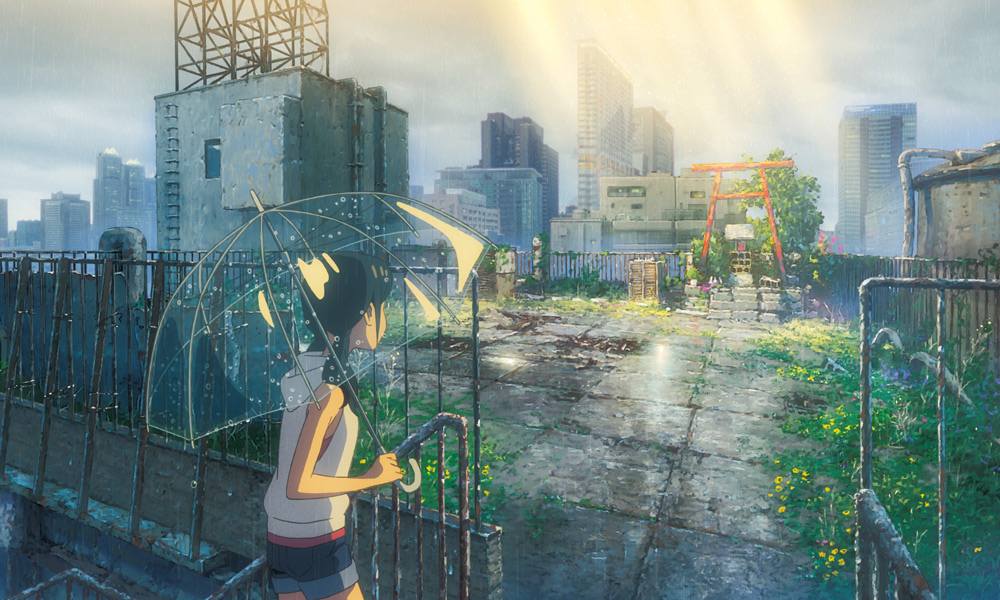
Makoto Shinkai’s acclaimed animated feature Weathering With You proved to be quite popular with audiences in the US. The 2019 Japanese feature, which was released by GKIDS, had an estimated three-day weekend gross of $1,731,372 from 466 theaters and was the 14th most popular title at the box office. The movie had a two-day preview fan screening of $3,046,250 earlier last week, and is projected to make over $5 million over the four-day weekend.
Although the movie didn’t receive a Best Animated Feature Oscar nomination this year, it was Japan’s entry for Best International Feature for 2019. The film is up for four Annie Awards — Best Animated Indie Feature, Achievement in Directing, Writing and Animated Effects. Weathering With You nabbed a 95% rating on Rotten Tomatoes and delivered the highest grossing GKIDS opening of all time, surpassing last year’s sleeper Mary and the Witch’s Flower.
The charming fantasy follows the adventures of a high-school boy who leaves his small town for Tokyo and befriends a girl who appears to be able to manipulate the weather. Shinkai’s popular movie was the highest grossing movie in Japan in 2019, surpassing the box office performance of his previous hit Your Name with a 14 billion yen ($130 million) total. The film also grossed over $40 million in China. Currently, the film’s worldwide total is $182,066,419 million. You can read our interview with the film’s director here.